
Desert Storm, 1990 to 1991
Forty-Three Days in the Gulf
Iraq seized Kuwait in a day in August 1990, and a coalition of 38 countries drove it out with 38 days of bombing and 100 hours of ground combat. This history runs from Iraq's war debts to the uprisings crushed after the cease-fire, and it shows which famous numbers failed when investigators checked them.
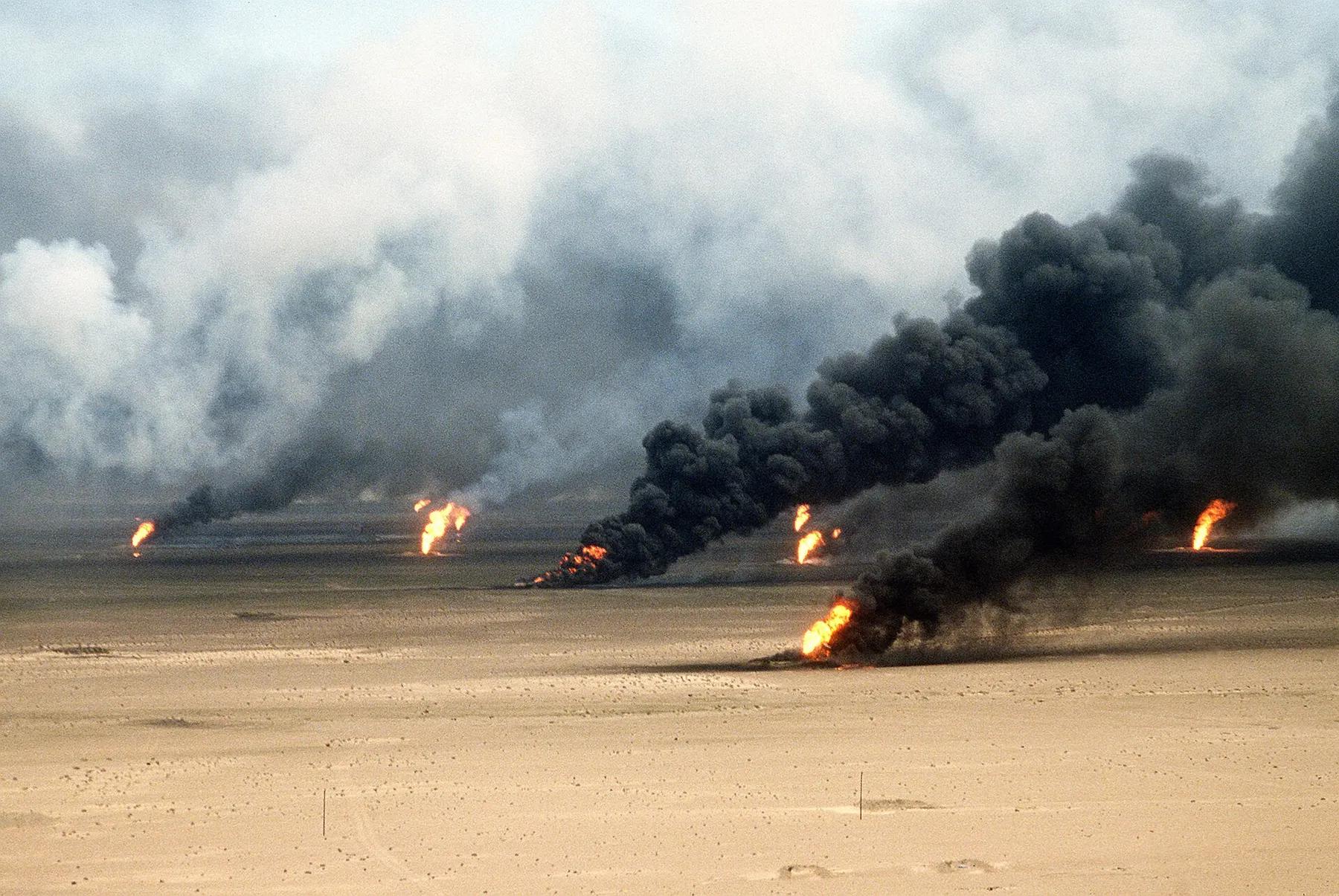
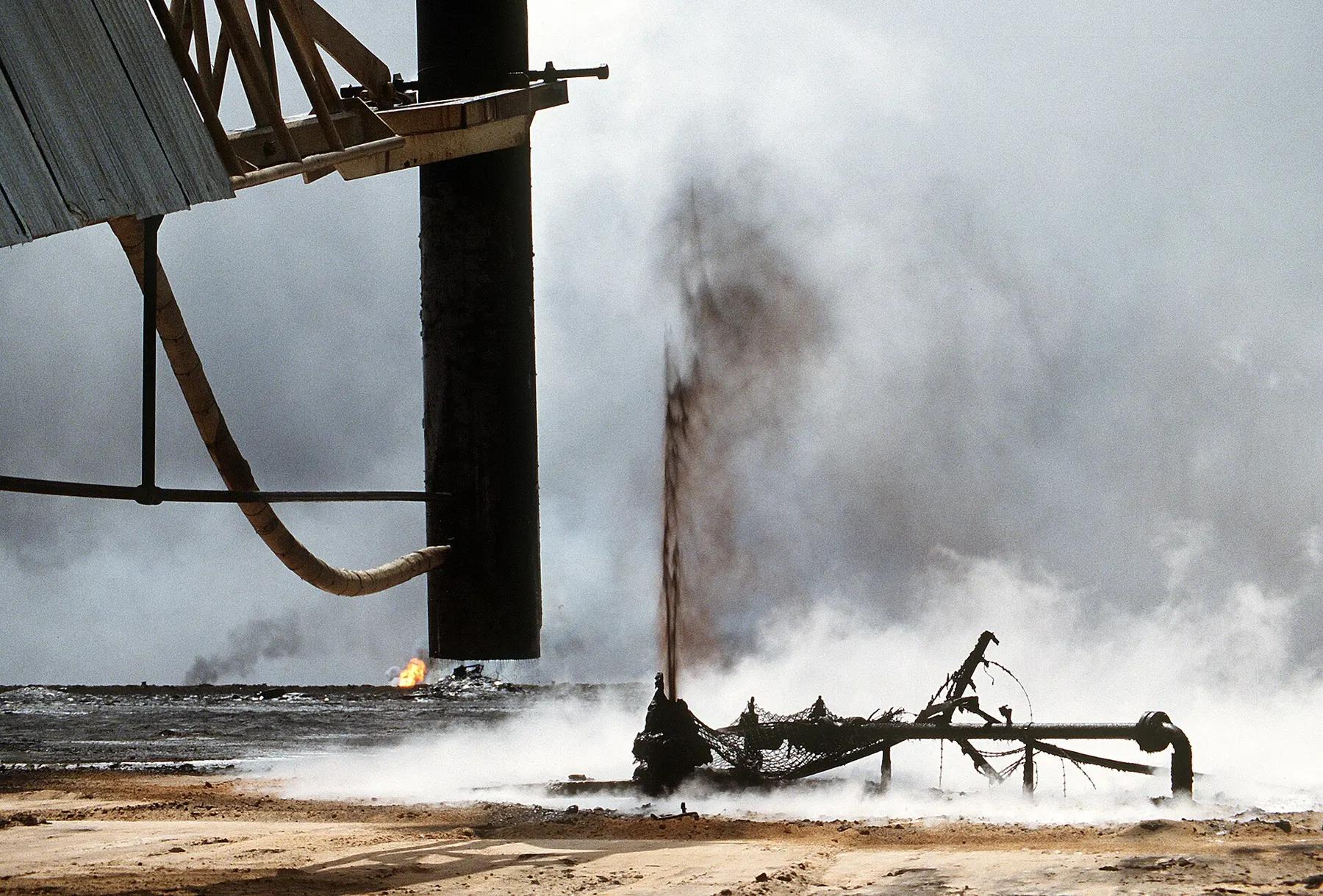
Oil well fires outside Kuwait City, March 21, 1991, three weeks after the fighting stopped. Retreating Iraqi forces set them.
Tech. Sgt. David McLeod, U.S. Air Force. Public domain. SourceWar summary
Result
Coalition victory
- Iraq expelled from Kuwait and the Kuwaiti government restored
- Saddam Hussein stayed in power and crushed the 1991 uprisings
- Nearly 2 million Iraqis fled their homes in 1991
- UN sanctions, weapons inspections and no-fly zones held Iraq for 12 more years
- Also known as
- The Gulf War. Iraq called it the Mother of All Battles.
- Date
- August 2, 1990 to March 3, 1991
- Location
- Kuwait, Iraq, Saudi Arabia and the Persian Gulf, with missile attacks on Israel
| Coalition | Iraq |
|---|---|
| Belligerents | |
|
|
| Fought for | |
| The immediate and unconditional withdrawal of Iraqi forces from Kuwait, the return of Kuwait's government, the security of Saudi Arabia and the Gulf and the protection of American citizens abroad, under the authority of Security Council Resolution 678. | Relief from war debts, higher oil prices, recovery of land and islands it claimed and resistance to what its leaders called an American plan to dominate the region, then, once at war, holding Kuwait and keeping the government alive. |
| Commanders and leaders | |
|
|
| Strength | |
|
|
| Military losses | |
|
|
| Civilian deaths | |
| Iraq: about 3,500 killed directly by the war, 25,000 to 100,000 reported killed in the uprisings and an estimated 70,000 to 111,000 dead from health effects in 1991. Kuwait: 552 to 5,000, more than 1,000 by its own count. Israel and Saudi Arabia: three direct deaths between them. | |
| Also involved | |
| |
Contents
- War summary
- 1Saddam calls in the ambassador1961 to August 1, 1990
- 2The invasion of KuwaitAugust 2 to 28, 1990
- 3Seven months under occupationAugust 1990 to November 1991
- 4King Fahd accepts American troopsAugust 1990 to January 1991
- 5The air campaignJanuary 17 to February 23, 1991
- 6Scuds over Tel Aviv and DhahranJanuary 18 to February 25, 1991
- 7The ground warJanuary 29 to February 28, 1991
- 8From Mutla Ridge to SafwanFebruary 25 to March 3, 1991
- 9Kuwait's oil wells burnJanuary 25 to November 6, 1991
- 10Iraq after the cease-fireMarch 1991 to January 2022
- The arsenal
- Timeline
- After action report
- Sources
Saddam calls in the ambassador
1961 to August 1, 1990
On July 25, 1990, with Iraqi formations massing north of the Kuwaiti border, Saddam Hussein summoned April Glaspie, the U.S. ambassador in Baghdad. The Iraqi government later released its own transcript of the meeting, and The New York Times published it that September. In it Saddam sets out the case he had been building all summer. Iraq owed $40 billion, he said, without counting what Arab states had provided during its war with Iran. Oil had at one stage fallen to $12 a barrel, and $25 was not too much to ask. Kuwait, in his telling, had used the war to take Iraqi land.
“while we were busy at war, the state of Kuwait began to expand at the expense of our territory.”
Eight years of fighting Iran had left Iraq with one of the largest armies in the world and creditors nearly everywhere. The Arab states counted their wartime help, more than $37 billion by the Pentagon's reckoning, as loans. Baghdad counted it as the price of a shield, arguing that Iraq had bled to hold back Iran on behalf of the whole Arab world and owed no one for it. Without rescheduling, payments on the non-Arab debt alone would have consumed more than half of Iraq's estimated $13 billion in oil revenue for 1989, and new lenders had grown reluctant. Each dollar off the price of a barrel came straight out of reconstruction. Tariq Aziz, the foreign minister, later described the choice as stopping debt service and being declared bankrupt or cutting what the country needed to buy, and he called the pressure a deliberate conspiracy.
Kuwait sat at the center of three separate grievances. On July 17 Saddam accused it and the United Arab Emirates of cheating on their oil quotas in collusion with the United States. Iraq also said Kuwait was illegally drawing oil from the Rumaila field, which straddles the frontier. The frontier itself Iraq had never formally accepted. When Britain ended its protectorate in 1961, Iraq's prime minister laid claim to all of Kuwait, and in 1973 Iraqi troops seized the Kuwaiti border post at As-Samitah and left only after Saudi Arabia and the Arab League secured their withdrawal.
Geography gave the claim its urgency. Iraq has almost no coast. The war with Iran had closed the Shatt al-Arab, and the alternative channel to the sea, the Khawr Abd Allah, runs past two low Kuwaiti islands, Warbah and Bubiyan, which Baghdad had repeatedly demanded by transfer or by lease. Kuwait answered that it had done nothing to deny Iraq access to the Gulf and that the frontier was settled.
Glaspie, in the Iraqi transcript, says she understands Iraq's need for funds and goes on to the border dispute, in the sentence most often quoted from the meeting.
“But we have no opinion on the Arab-Arab conflicts, like your border disagreement with Kuwait.”
Did Washington give a green light?
Glaspie and the U.S. record
She testified in 1991 that she had repeatedly warned Saddam against using force. The American cable of the meeting, published in 2011, has her pressing him on why Republican Guard units had gone to the border. The historian Juan Cole read it as limiting the "no opinion" remark to the exact line of the frontier.
Critics of U.S. policy
The Iraqi transcript shows an envoy offering friendship and declining to take a side days before an invasion. On that reading, Saddam had reason to expect that Washington would not respond with force.
Tariq Aziz, who was in the room, rejected the green-light theory from the Iraqi side. He told the PBS program Frontline that Glaspie had said nothing to make Baghdad conclude the Americans would stand aside, and he called that idea nonsense. In the early hours of August 2, he said, the leadership took precautions against immediate American retaliation and moved to protected positions.
Egypt's President Hosni Mubarak arranged a last round of talks, and on August 1 the two delegations met in Saudi Arabia. Izzat Ibrahim al-Duri, speaking for Iraq, walked out, complaining that Kuwait would neither discuss the islands nor forgive its loans. At 0100 the next morning, Kuwait time, the Republican Guard crossed the frontier.
The invasion of Kuwait
August 2 to 28, 1990
Three Republican Guard divisions entered Kuwait together. A mechanized infantry division and an armored division drove south on the Safwan to Abdally axis toward the Al-Jahra pass while a second armored division swung wider to the west. Thirty minutes after the crossing, helicopters carrying special operations troops were over Kuwait City and heading for government buildings, and commandos were coming in from the sea toward the Amir's palace.
- Iraq
- Kuwait
- Saudi Arabia
The invasion routes of August 2, 1990, after the Pentagon's final report, with the oil field and islands at the center of the quarrel. Positions are approximate. Country shapes are Natural Earth, showing today's borders, which follow the line the United Nations demarcated after the war.
Kuwait had gone on full alert after Saddam's speech of July 17 and a week later cut the alert to 25 percent, perhaps in the hope of lowering the temperature. Its army, built around about 165 Chieftain tanks, was overrun within a day. Sheikh Jaber al-Ahmad al-Sabah, the Amir, escaped to Saudi Arabia. His brother Sheikh Fahad al-Ahmad al-Sabah, president of the Kuwait Olympic Committee, was shot dead at the Dasman Palace. Soldiers tried to retake the palace grounds and tanks of the 35th Armored Brigade tried to stand in front of the Guard's columns, and the Pentagon's account of those hours describes resistance that was brave in places and uncoordinated everywhere. It called Kuwaiti losses apparently light and the numbers unknown. A later regional estimate puts the military dead at about 118.
The two main divisions reached the capital by 0530 and joined the commandos, and Kuwait City was secure by 1900. That evening Iraqi tanks were moving down the coast toward the ports. Within four days at least 11 Iraqi divisions were in the country or entering it, more than 200,000 soldiers with more than 2,000 tanks.
New York and Washington moved in the same days. The Security Council adopted Resolution 660 on August 2 by 14 votes to none, condemning the attack and demanding withdrawal. On August 5 President George H. W. Bush told reporters that the aggression would not stand, and on August 6 Resolution 661 imposed sanctions by 13 votes, with Cuba and Yemen abstaining. Baghdad replied on August 8 by announcing that it had annexed Kuwait. On August 28 it proclaimed the country Iraq's 19th governorate, which Saddam's government described as an eternal part of Iraq.
Seven months under occupation
August 1990 to November 1991
Iraq began by emptying the country it now claimed as its own. Kuwait's currency reserves went north to Baghdad by truck convoy, along with holdings of the national museum and government records. According to the U.S. Defense Department, soldiers cleared out the gold and gem markets and the homes of wealthy merchants, and almost every vehicle in Kuwait was taken.
Under Ali Hassan al-Majid, named governor of the occupied territory that August, schools and public buildings became detention and interrogation centers. Amnesty International reported in December 1990 that Iraqi forces had committed widespread human rights abuses since the invasion. The Pentagon's final report describes summary executions and torture that often ended in death, and it records numerous accounts of rape, often in front of family members. Kuwait's government later put the number of civilians murdered at more than 1,000.
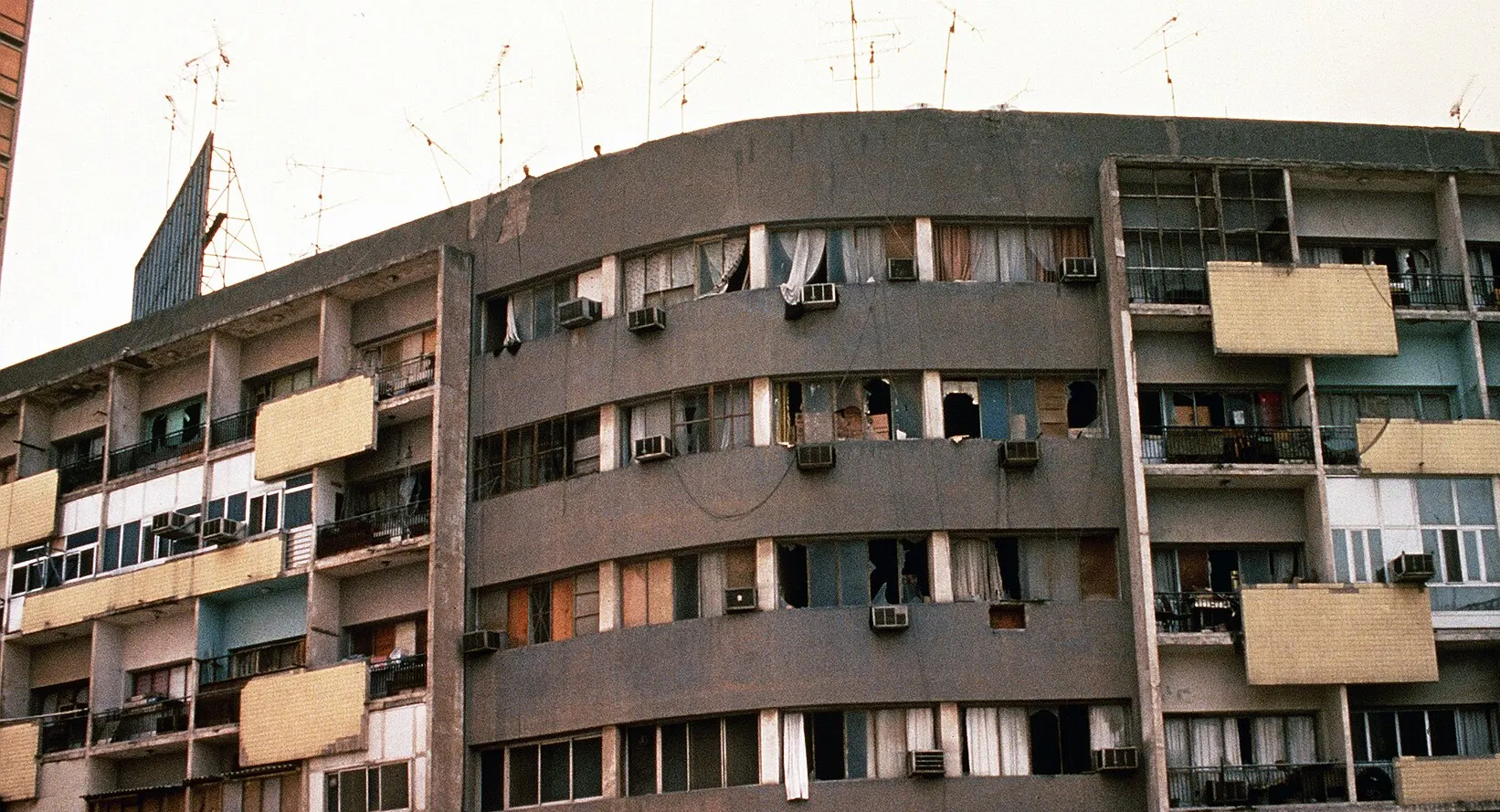
Reports during the occupation said at least 4,000 suspected resisters had been killed, and Middle East Watch, going through the evidence after the war, concluded that such estimates were greatly exaggerated. It established that about 300 of the 7,000 to 9,500 Kuwaitis taken to Iraq had been killed and warned that the figure could rise, since 2,000 to 2,500 people remained unaccounted for. One later tally lists 113 Kuwaiti civilians, 118 soldiers and 439 non-nationals killed. Kuwait's committee on the missing counts about 605 people lost in the invasion, and by 2020 the remains of 246 had been found and identified.
Foreigners in the country and in Iraq became a means of deterrence. About 500 Americans were in Iraq when the invasion came, and many were seized within days. On August 19 Saddam announced that as many as 10,000 Westerners would be moved to strategic sites. Some were sent to power plants, oil installations and military bases, where released detainees described bad food, poor sanitation and exposure to toxic waste. Baghdad called them guests. On December 6, a week after the Security Council set its deadline, Saddam announced that all of them would be freed.
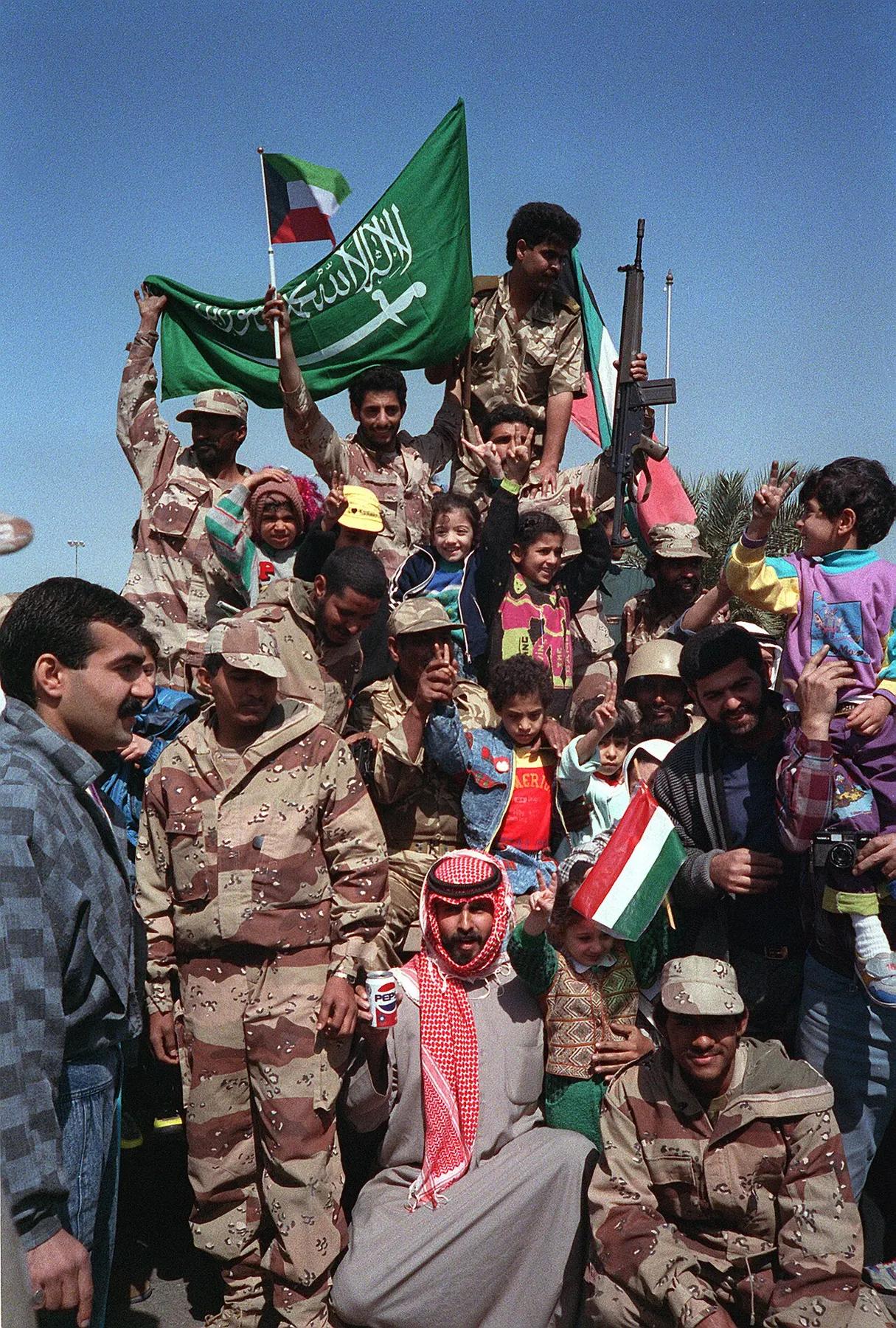
Middle East Watch reported in 1991 that after the liberation Kuwaiti security forces and groups working with them killed scores of non-Kuwaiti residents, some by summary execution, in revenge for alleged collaboration, and 54 unidentified bodies were recorded at one cemetery alone. Martial law courts convicted people on confessions obtained by torture, including a 15-year-old Palestinian. Stateless Bedoon residents were expelled. The Palestinian community, more than 350,000 strong before the invasion, was down to about 80,000 by November 1991, after about 180,000 fled during the occupation and others were pressed out or deported after it.
King Fahd accepts American troops
August 1990 to January 1991
A defense of the Gulf needed Saudi bases, and on August 6 Defense Secretary Dick Cheney met King Fahd to ask for them, with Gen. H. Norman Schwarzkopf of U.S. Central Command in his party. Cheney told Frontline that he briefed the king on the Iraqi force massed on his border and warned that heavy units took so long to move that the kingdom did not have "the luxury of waiting" until an invasion began. According to a U.S. Army Corps of Engineers history, he promised a force large enough to do the job, which would stay as long as necessary and leave when asked. After about two hours Fahd spoke for some five minutes in Arabic with the crown prince and the foreign minister, then answered through Prince Bandar, who was interpreting, that the kingdom would accept U.S. forces. Tariq Aziz later called the decision the first of its kind in Arab history and said it was very difficult for the king.
Operation Desert Shield began the next day. Within 53 hours of the order to move, 45 F-15s of the 1st Tactical Fighter Wing from Virginia were on the ground in Saudi Arabia, and three weeks later Central Command had seven brigades, three carrier battle groups and 14 tactical fighter squadrons in or near the theater. In November, President Bush directed that the force be doubled to give it an offensive capability, and the U.S. VII Corps began moving from Germany.
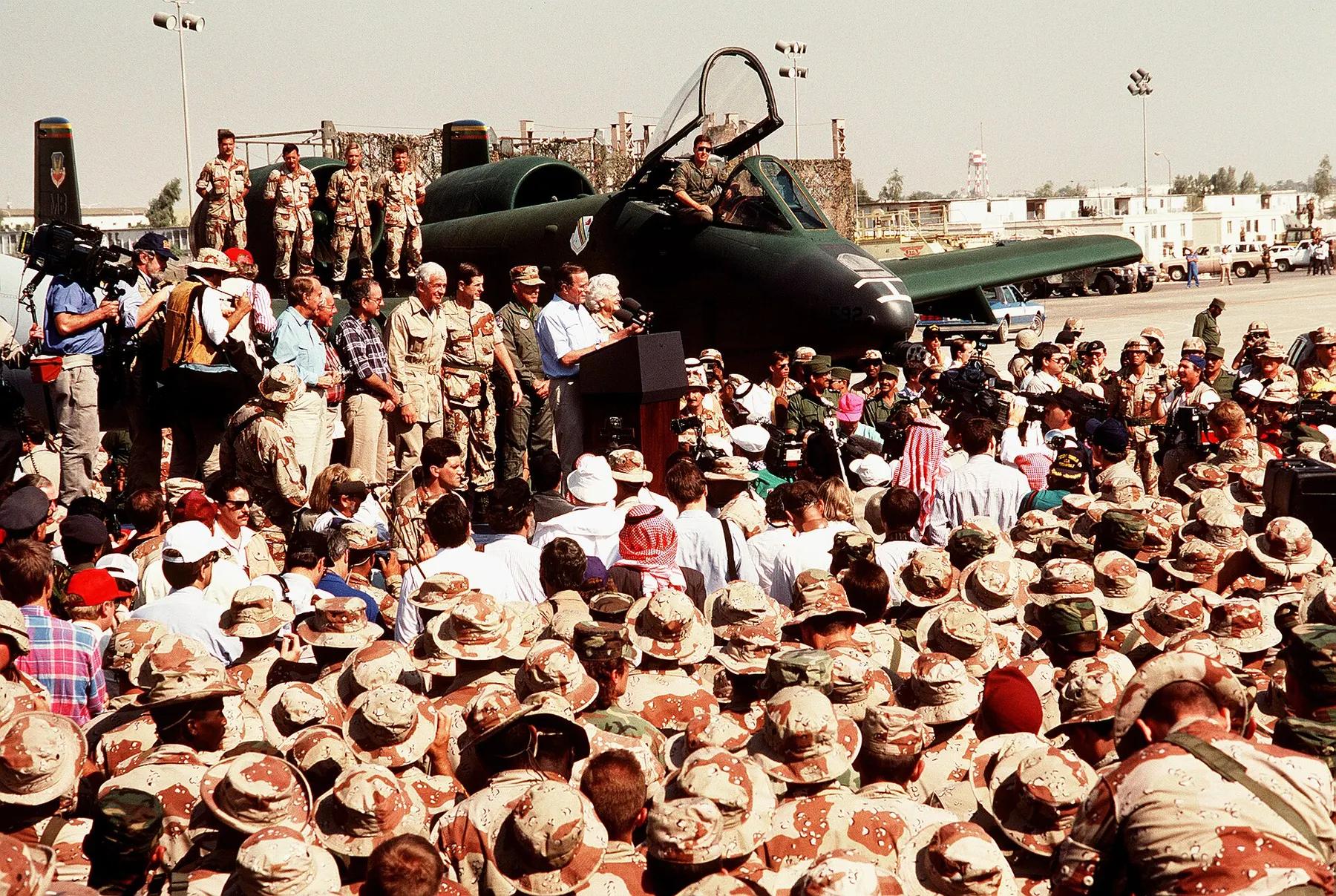
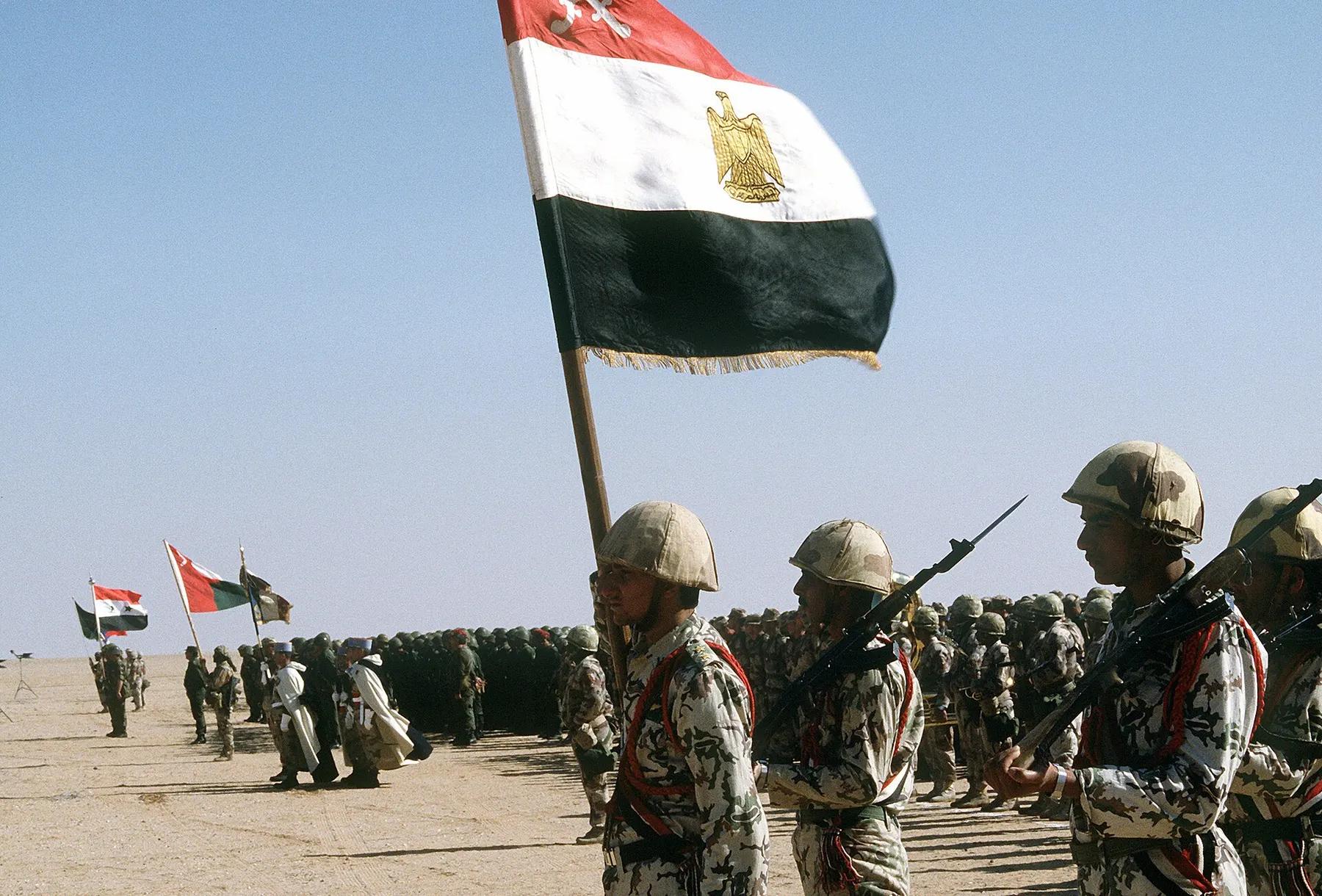
The Pentagon counted nearly 50 contributors, 38 of which deployed forces. Egypt sent two divisions and Syria one. Saudi Arabia, Kuwait and the smaller Gulf states formed Arab commands under Lt. Gen. Khalid bin Sultan, who shared authority with Schwarzkopf in parallel lines of command. Britain sent an armored division and France a light armored division. Kuwait rebuilt what remained of its forces at camps near King Khalid Military City. Money followed the troops: Saudi Arabia committed or spent more than $48 billion on the crisis by the end of January 1991, and allied governments together pledged almost $54 billion against American costs estimated at $61 billion.
The case each side made
The United States and its partners
A member of the United Nations had been erased by force. Left alone, Iraq would hold a dominant share of Gulf oil and threaten Saudi Arabia. Sanctions had been tried and were not producing withdrawal.
Iraq
Baghdad said it was the real target, and that America, with Soviet power fading, meant to control the region and cut Iraq down regardless of Kuwait. Tariq Aziz told James Baker that Iraq's problem was with the United States and not the international community. He called the supposed threat to Saudi Arabia a big lie.
Resolution 678, passed on November 29 by 12 votes to 2, gave Iraq until January 15, 1991, and authorized member states working with Kuwait to use all necessary means after that. Cuba and Yemen voted against it and China abstained. Many in the U.S. Congress argued that sanctions needed more time, and when the Senate voted on January 12 it approved force by only 52 votes to 47.
Three days before that vote, Secretary of State James Baker met Tariq Aziz in Geneva and handed him a letter from President Bush to Saddam Hussein. Aziz had told Saddam before leaving Baghdad that he expected a threat and would return it if he was right. By his account he read it carefully and gave it back, and Baker left it on the table between them.
“this is not the kind of correspondence between two heads of State, this is a letter of threat and I cannot receive from you a letter of threat to my President”
Iraq spent the months of diplomacy digging. Along the Saudi border its engineers, schooled in the war with Iran, sowed thousands of mines behind barbed wire, fire trenches, antitank ditches and berms. U.S. intelligence estimated 540,000 troops and more than 4,200 tanks in the Kuwait theater that January. The Gulf War Air Power Survey later put the real figure at no more than 336,000 troops, because units were under strength and men were on leave or had deserted. American planners feared what the border defenses would cost, and outside experts published forecasts that often ran from 12,000 to 30,000 American dead.
The air campaign
January 17 to February 23, 1991
The first weapons of the war left U.S. warships at about 0130 on January 17, 1991, when Tomahawk cruise missiles were launched toward Baghdad. They were still in flight at 0238, when helicopters attacked early warning radars in southern Iraq, and stealth fighters had by then slipped past those same sites. B-52s that had taken off from Louisiana fired 35 conventional cruise missiles from outside Iraqi air defenses, on round trips of more than 14,000 miles and 35 hours in the air, the longest combat missions flown up to that time.
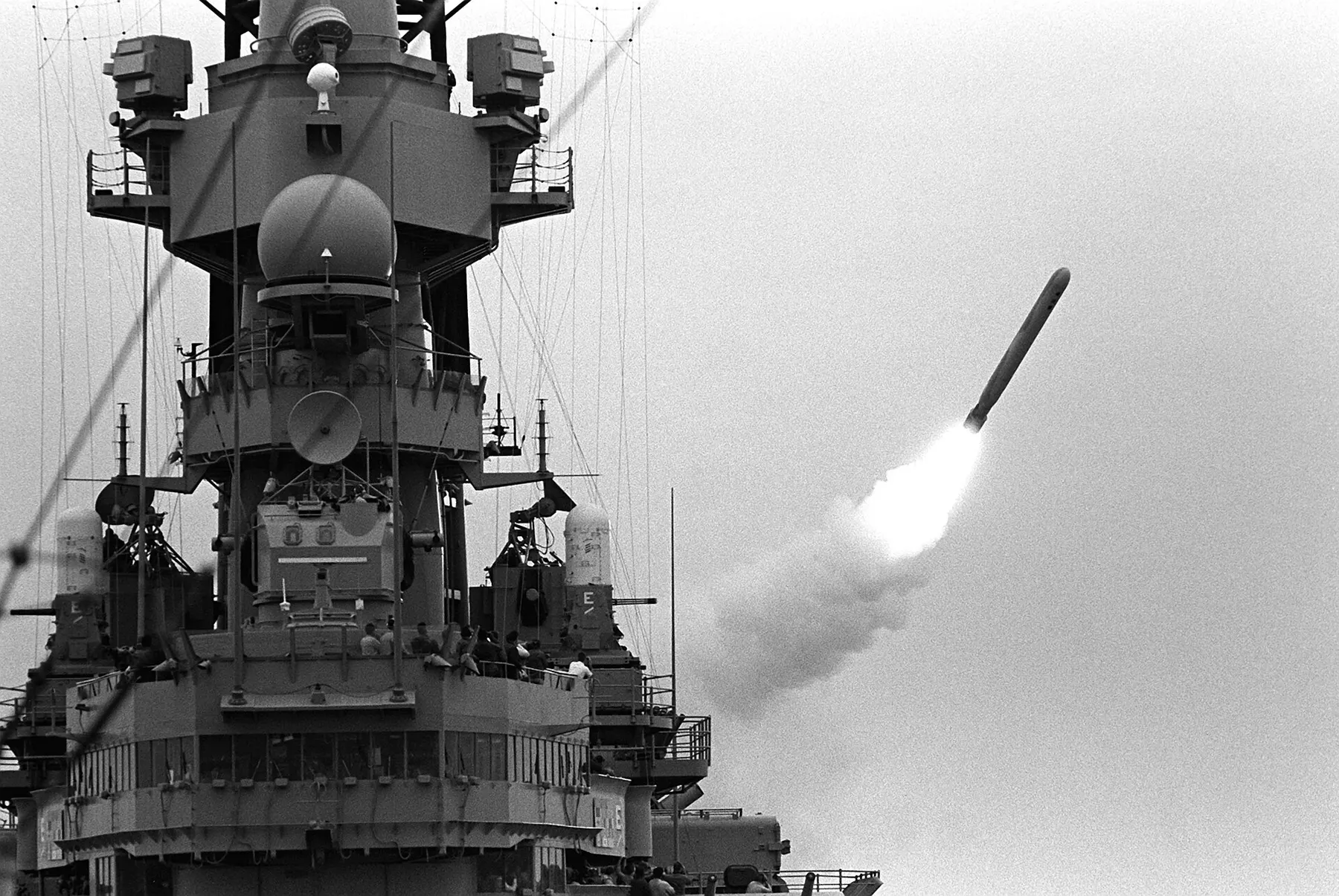
“The world could wait no longer.”
Air campaign totals
- 2,430
- Coalition fixed-wing aircraft in theater on the first day
- A little over a quarter came from countries other than the United States
- 100,000+
- Sorties, or single flights by one aircraft
- Cordesman and Wagner give about 112,000
- 38
- Coalition fixed-wing aircraft lost in combat
- Another 15 were lost to other causes
- 33
- Iraqi fixed-wing aircraft shot down
- Five helicopters were shot down as well
Iraq's air force fought for only a few days. Air combat cost the coalition at most one plane, the Navy F/A-18 flown by Michael Scott Speicher, who was shot down on the first night. His fate stayed open for 18 years, until Iraqi civilians led U.S. Marines in 2009 to a desert site in Anbar province where, one of them said, Bedouins had found the pilot dead and buried him. Dental records confirmed the identification that August. From late January, Iraqi pilots began flying to Iran, the country they had fought for eight years, and Iran kept the more than 130 military and civilian aircraft that arrived.
Television showed bombs going through doors and down ventilation shafts, which gave a false picture of the campaign as a whole. The General Accounting Office, the investigative arm of Congress, later broke down what was dropped. An ordinary unguided bomb averaged $649 and a laser-guided bomb cost more than $30,000, so a small share of the weight took most of the money. B-52s, dropping unguided bombs mostly on Iraqi forces in Kuwait, delivered about 32 percent of all bomb tonnage in the war.
- Unguided, share of tonnage92%
- Guided, share of tonnage8%
- Guided, share of cost84%
- Unguided, share of cost16%
Share of air-delivered munitions in Desert Storm, by weight and by cost. Percentages are the General Accounting Office's for U.S. strikes. Source: U.S. General Accounting Office, Operation Desert Storm: Evaluation of the Air Campaign, 1997.
The same auditors tested the campaign's most celebrated aircraft. The Pentagon reported that 42 F-117 stealth fighters flew about 2 percent of attack sorties, struck about 40 percent of strategic targets and hit with 80 percent of their bombs. The General Accounting Office found that about a third of the reported hits lacked support or conflicted with other data. It calculated that a scheduled F-117 mission had only a 75 percent chance of releasing its bomb and that the probability of a planned strike hitting its target lay between 41 and 60 percent. Across the campaign, each strategic target assessed as successfully destroyed took on average about 11 tons of guided and 44 tons of unguided munitions.
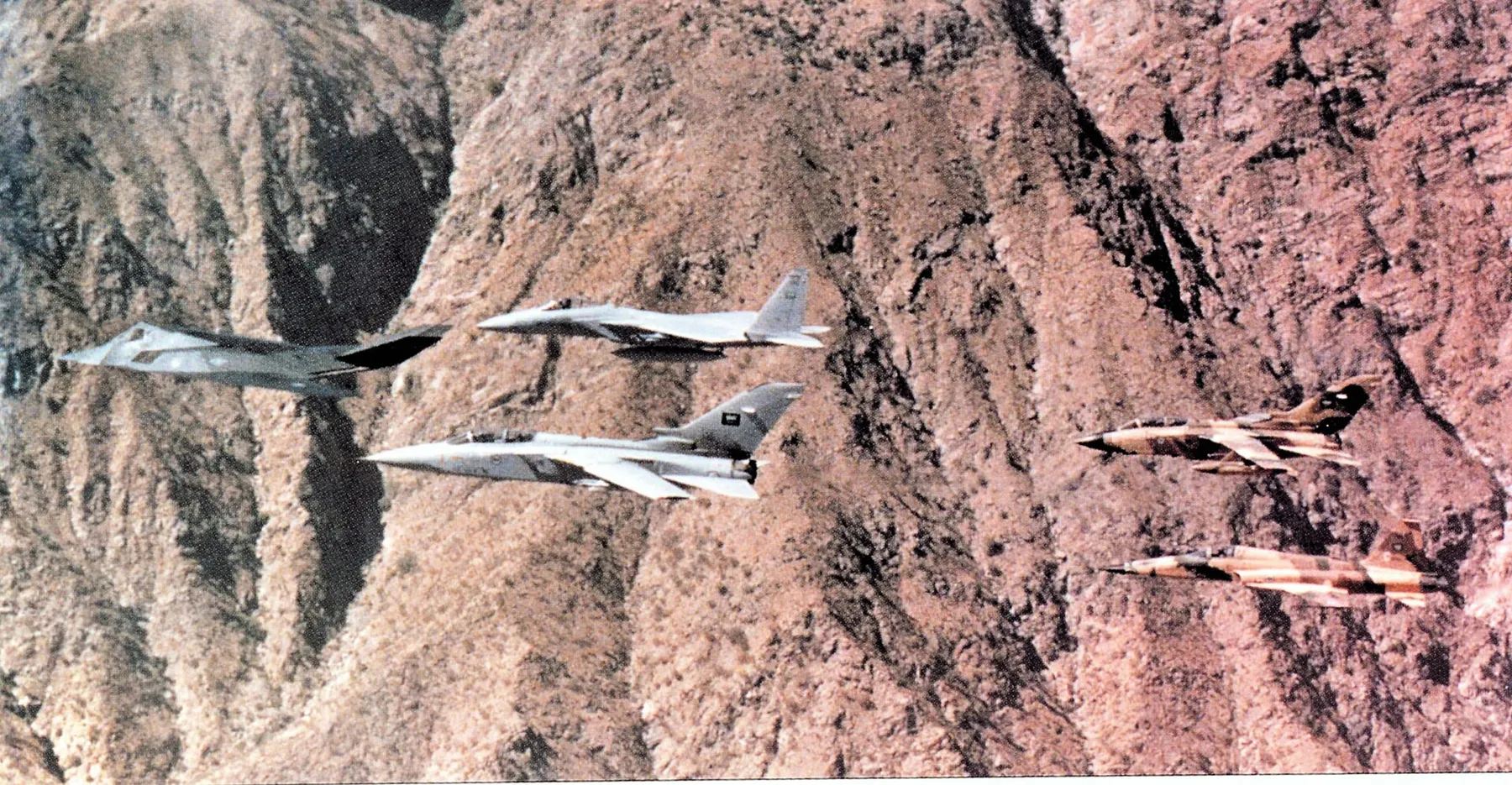
Attacks on Iraq's electrical grid reached furthest beyond the battlefield. Human Rights Watch noted that the allies virtually destroyed the system, including four of the five hydroelectric plants. Planners gave a military reason, since power ran command networks and war industry, and The Washington Post reported in June 1991 that some targets, especially late in the war, were bombed primarily to create postwar leverage over Iraq. The same power ran water treatment, sewage and hospitals. A United Nations mission led by Martti Ahtisaari reached Iraq in March and reported that most means of modern life support had been destroyed or made precarious.
“The recent conflict has wrought near-apocalyptic results upon the economic infrastructure of what had been, until January 1991, a rather highly urbanized and mechanized society.”
The shelter at Amiriyah
At about 0430 on February 13, two GBU-27 laser-guided bombs from F-117s struck a reinforced bunker in Baghdad's Amiriyah district, which American records call Al Firdos. People from the neighborhood had been sleeping there through the air raids. Iraqi reports said 200 to 300 civilians died, about 100 of them children. Later accounts commonly give about 408, while Gen. Merrill McPeak of the U.S. Air Force puts the number at 250, and no count has been firmly established. It was the largest loss of civilian life in a single incident of the air war.
Amiriyah, as each party described it
United States
Intelligence indicated the bunker had been activated as a command site, and it was treated as a legitimate military target. The Air Power Survey says the coalition did not know it was also serving as a civilian shelter. After the strike, Washington tightened control over attacks in central Baghdad.
Iraq
A civil defense shelter full of families had been destroyed. Baghdad reported about 100 children among the dead and presented the strike as an attack on civilians.
Human Rights Watch faulted the decision on narrower grounds. The Pentagon admitted knowing the building had served as a civil defense shelter during the Iran-Iraq War, the organization said, and it gave no warning that it now considered that protection ended, which Human Rights Watch called a serious violation of the laws of war. Witnesses told it that civilians had used the shelter from the first days of the bombing.
At Falluja on February 14, in daylight, a precision bomb from a British aircraft, aimed at a bridge, hit the town's market, and residents told Middle East Watch that some 200 civilians died. U.S. and British spokesmen first denied any bombing there, until a senior allied commander confirmed the miss. Middle East Watch estimated that the bombing as a whole directly killed no more than perhaps 2,500 to 3,000 Iraqi civilians. The demographer Beth Osborne Daponte, then at the U.S. Census Bureau, set that work beside Iraqi government records of 2,278 deaths and arrived at about 3,500.
Scuds over Tel Aviv and Dhahran
January 18 to February 25, 1991
Sirens sounded in Tel Aviv on the second night of the war. A staff member of the U.S. government's Foreign Broadcast Information Service there later described what people had been told to do: tape plastic over the windows and vents of one room, put on a gas mask, seal the door from inside and wait. They were preparing for chemical warheads. Iraq had used chemical weapons against Iran, and in April 1990 Saddam Hussein had threatened to make fire consume half of Israel if it attacked.
Iraq fired 88 modified Scuds during the war. Its engineers had stretched the Soviet design into the Al Husayn, with a range of about 600 kilometers, by trading away warhead weight, and the result was inaccurate and tended to break up as it came down. Gen. Wafiq al-Samarrai, the head of Iraqi military intelligence, later said the aim in firing at Israel was to draw it into the war and embarrass the Arab states standing with the coalition.
“to spread death and terror among those who terrorized our nation, defied its will, and desecrated its holy shrines.”
- Iraq
- Coalition Gulf states
- Israel
Approximate launch areas and targets of Iraq's modified Scuds. Arrows are schematic, because launchers moved constantly. Country shapes are Natural Earth, showing today's borders.
Of the 42 missiles fired toward Israel, 39 reached it. They directly killed two people and injured about 230, nearly all lightly, according to a 1993 study by George Lewis, Steve Fetter and Lisbeth Gronlund, which found fewer direct deaths and serious injuries than one average missile impact had caused in Tehran during the Iran-Iraq War. The indirect toll is harder to measure. A later Israeli study found 147 deaths nationwide on January 18, the day of the first attack, 58 percent above the same day a year earlier, with no one hit directly, and its authors pointed to fear and the strain of masks and sealed rooms. In Saudi Arabia, the official press agency reported one civilian death, in Riyadh on January 25, and some 77 injured. Human Rights Watch judged the attacks on cities to be violations of the laws of war, citing Iraq's own statements of intent.
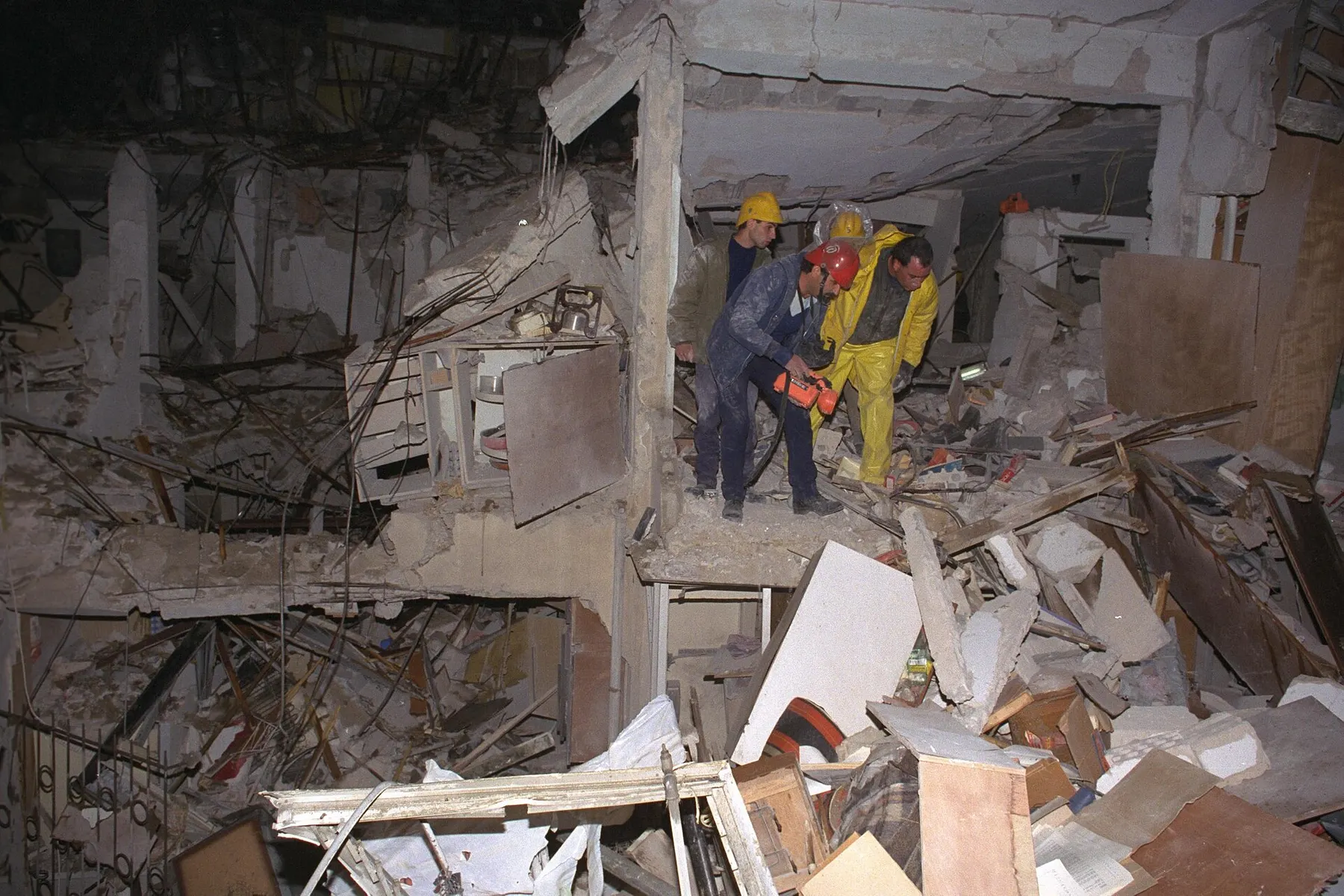
Israel did not retaliate. Washington worked closely with it, sending Patriot batteries and passing warning of launches, and the Pentagon's final report credited Israeli restraint with defeating Saddam's plan to turn the conflict into an Arab-Israeli war. Coalition aircraft meanwhile spent weeks hunting the mobile launchers across western Iraq, with nearly every type of strike and reconnaissance plane taking part. The Gulf War Air Power Survey found scant evidence of success. Launches fell from about five a day in the first 10 days to a little over one a day in February, but even the busiest day, 14 launches, did not exceed the number of mobile launchers known to have survived the war.
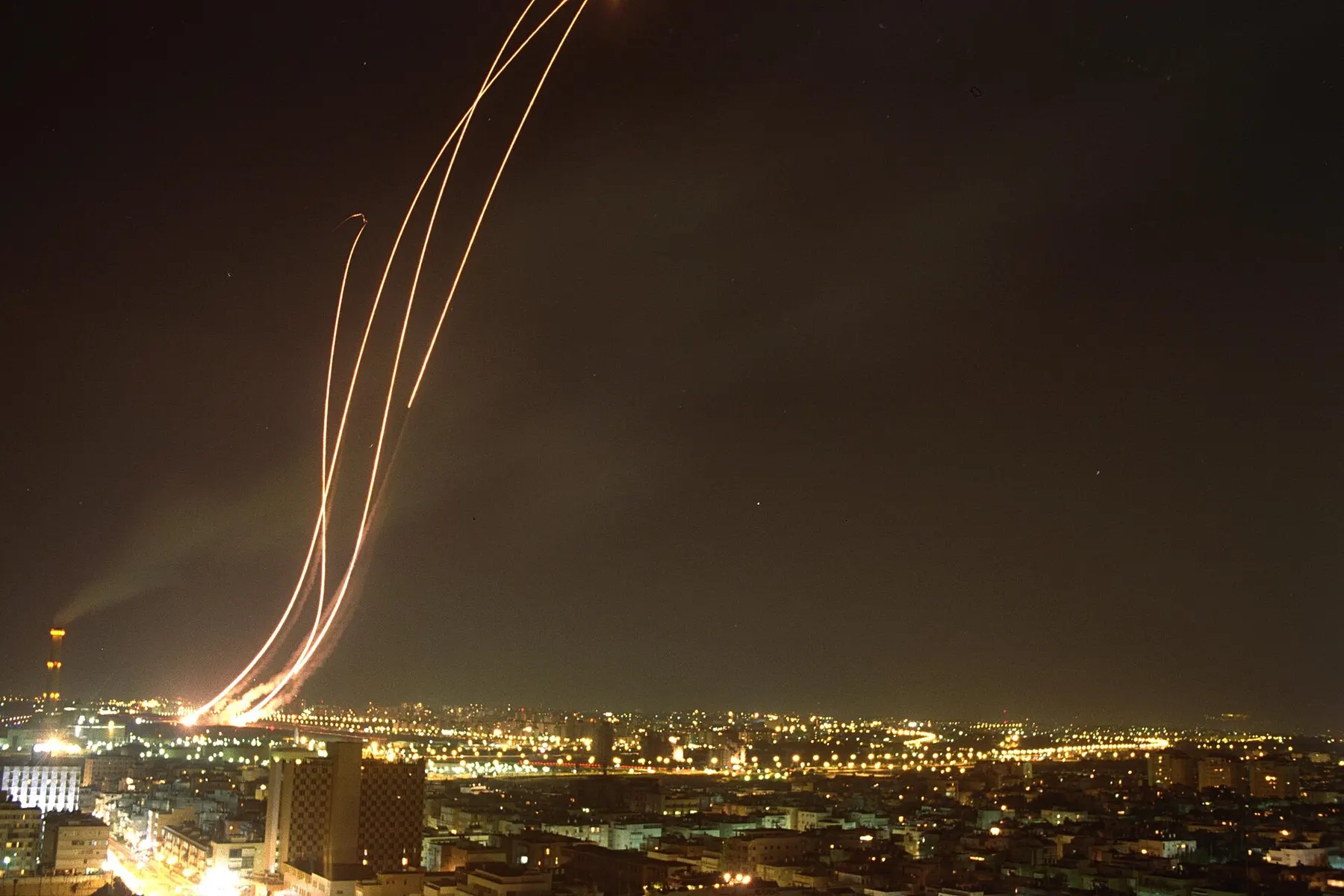
Scoring the Patriot
Early official claims for the Patriot air defense missile approached perfection, and a House committee report of 1992 traced how those numbers fell. Patriot had not been built with instruments to record each engagement, which left assessors with fragmentary video and reports. At least 45 percent of the 158 Patriots launched went after debris or false targets, because Scuds were breaking apart in flight and the radar saw the fragments.
- Wartime claim100%
- Testimony after the war96%
- Later Army claim80%
- Revised Army claim70%
- Army, as many as52%
- Army, high confidence25%
- Strongest evidence, reviewers9%
Stated share of Scuds destroyed or warheads hit, in the order the claims were made. The 25 percent is the Army's own high-confidence figure. The 9 percent is what the House committee's reviewers considered strongly supported. None of these is a settled measurement, and Pentagon reports said a final score might never be possible. Source: U.S. House Committee on Government Operations, Report 102-1086, 1992.
The deadliest missile of the war fell at 8:40 p.m. on February 25, the second day of the ground offensive, on a barracks in Dhahran, Saudi Arabia. It killed 28 American soldiers and wounded almost 100, more U.S. casualties than any single engagement of the war, in the Pentagon's words. Thirteen of the dead and 43 of the wounded belonged to the 14th Quartermaster Detachment, an Army Reserve water purification unit of 69 soldiers from Greensburg, Pennsylvania, which had reached Dhahran six days earlier.
The Patriot battery defending the city never engaged the missile. The General Accounting Office traced the failure to software in the weapons control computer. The battery had been running continuously for more than 100 hours, and its timing error had grown to about a third of a second, enough to shift the area its radar searched by 687 meters. Israeli data showing the problem had reached the Patriot project office on February 11, corrected software was released on February 16, and a message on February 21 cautioned that very long run times could cause trouble without saying how long was too long. The corrected software reached Dhahran on February 26, the day after the barracks was hit.
Iraq never fired a chemical warhead. General al-Samarrai said some missiles had been fitted with them and held back, and that Iraqi leaders had been warned of a possible nuclear response. Tariq Aziz, asked about it years later by Frontline, said only that Iraq had not thought it wise.
The ground war
January 29 to February 28, 1991
Iraq tried once to take the initiative. On the night of January 29, units of its III Corps crossed into Saudi Arabia at several points, and the Air Power Survey says Saddam wanted to provoke a ground war, lift his troops' morale and take prisoners. The largest thrust entered Khafji, an evacuated town on the coast. Saudi and Qatari troops, after a first attempt failed, retook it with U.S. Marine reconnaissance teams and heavy air support, while reconnaissance aircraft, including the new JSTARS radar plane, watched reinforcing columns form in Kuwait so they could be struck before reaching the fight.
A Marine Corps history counts 25 American dead at Khafji, 11 of them Marines killed by friendly fire when their light armored vehicles were hit and 14 aboard an AC-130 gunship that was shot down. Arab forces lost 18 dead. Iraqi losses ran to several hundred dead or captured, with scores of tanks and armored carriers destroyed.
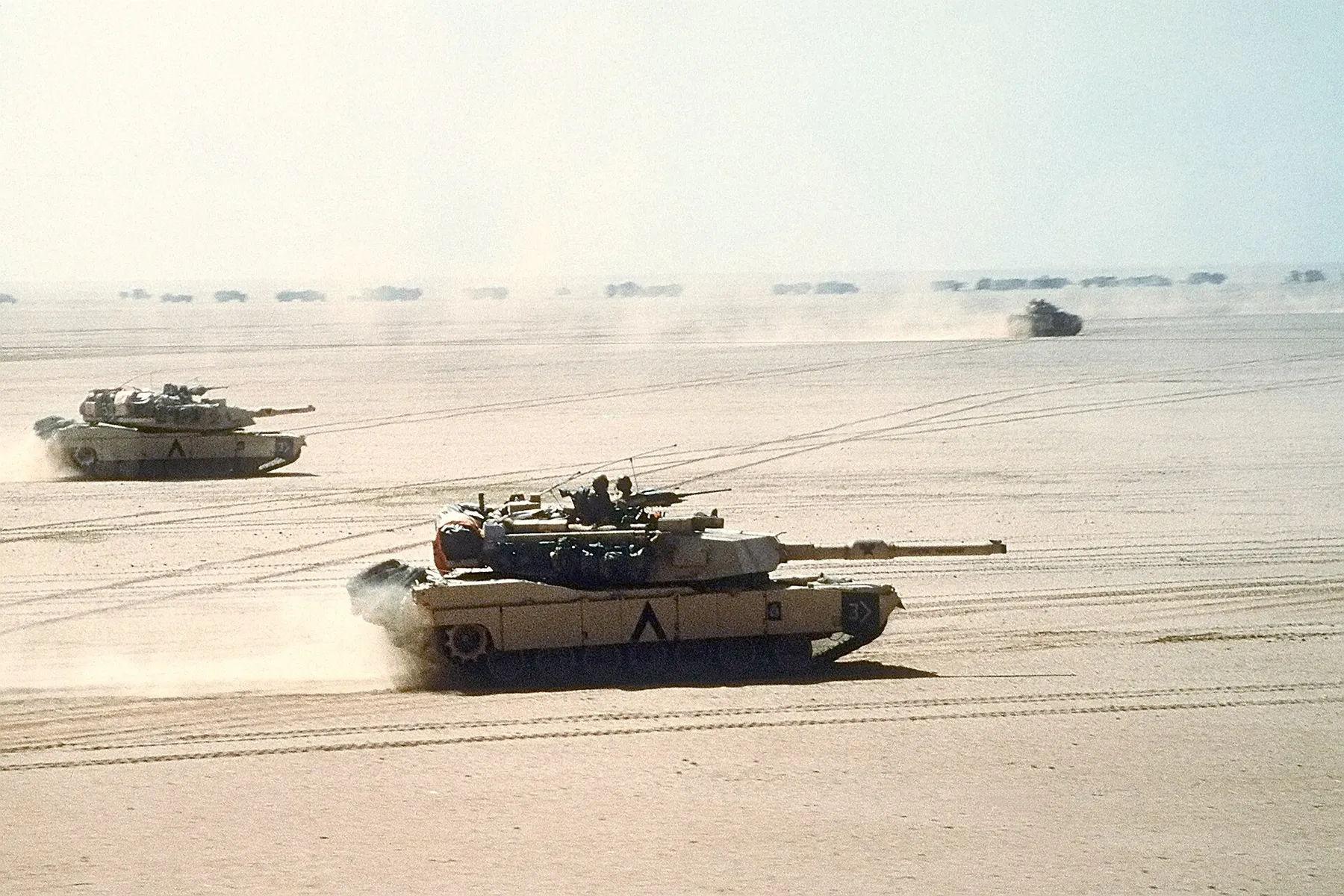
Schwarzkopf's main plan rested on deception. With Iraqi attention fixed on the Kuwaiti border and on Marines afloat in the Gulf, two American corps moved hundreds of kilometers west, more than 270,000 troops with their vehicles and supplies, and an Iraqi air force that had stopped flying could not see them go. Staged radio traffic suggested they had stayed in place, and naval gunfire and feints off the coast supported the idea of an amphibious landing that never came.
- Iraq
- Kuwait
- Saudi Arabia
The coalition's main attacks, drawn from the Pentagon's final report and the U.S. Army history of VII Corps. Arrows are simplified, and battle locations are approximate. The dashed line is Highway 8, the road the western corps was sent to cut. Country shapes are Natural Earth, showing today's borders.
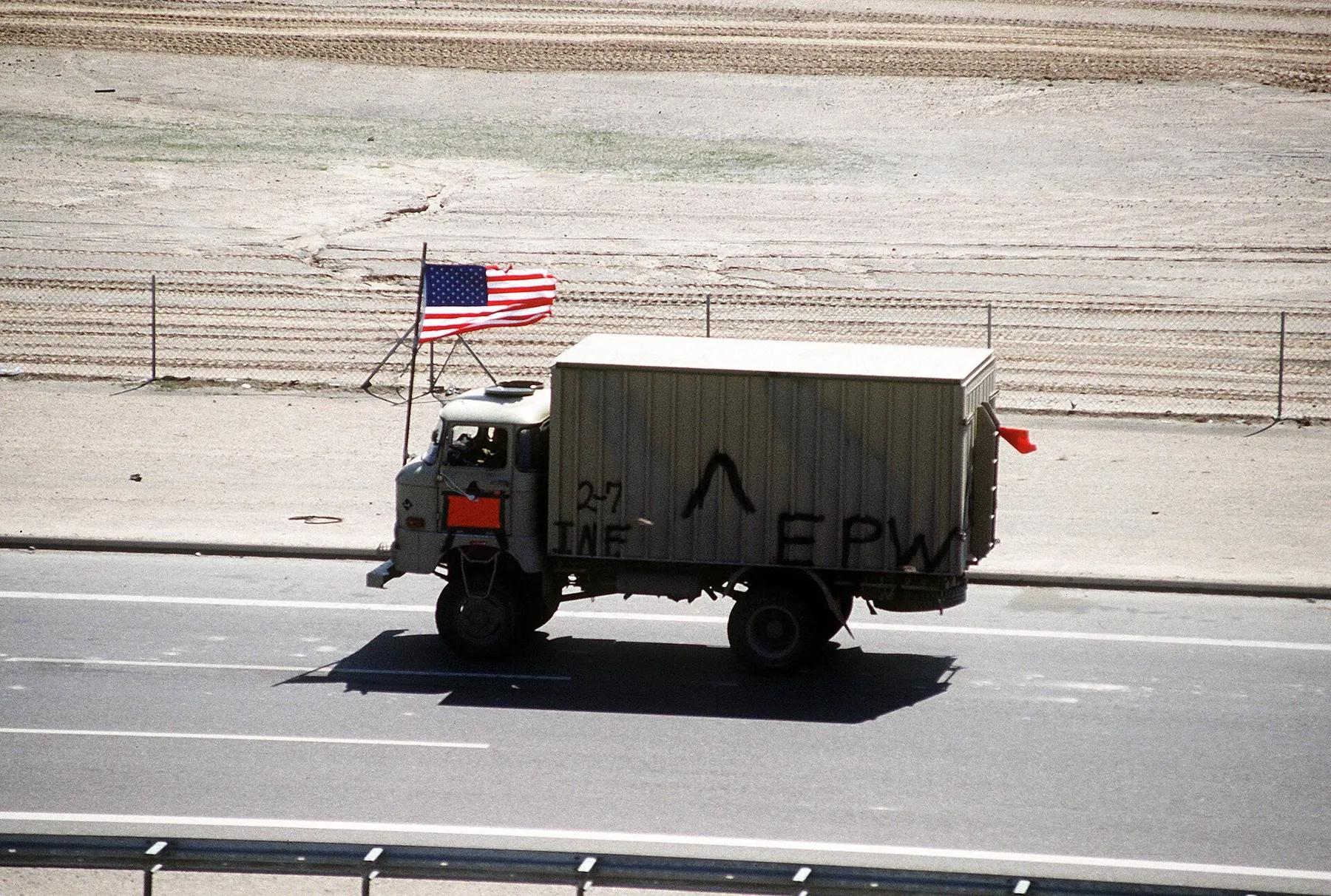
The assault began at 0400 on February 24 as the weather turned foul, and it stayed bad for the rest of the war. In the far west the French 6th Light Armored Division struck toward As Salman and took 2,500 prisoners at its first objective, and the 101st Airborne Division went forward by helicopter. Marines and the Arab commands drove straight into Kuwait, where Iraqi units already stripped by bombing and desertion often gave way and surrendered in large numbers. Central Command's estimate of prisoners for the war reached about 86,000, of whom about 64,000 were held by U.S. forces.
Division officers gave very different counts of what happened at one breach. As the U.S. 1st Infantry Division broke through the first defensive belt, plows mounted on tanks and earthmovers filled in trench lines, some with Iraqi soldiers still inside. One secret log recorded 150 buried. A brigade commander said thousands, for all he knew. Iraq reported recovering 44 bodies in October 1991 and later spoke of hundreds. The analyst Carl Conetta, weighing the testimony, settled on 250 to 500.
73 Easting
Late on February 26, in a sandstorm, the U.S. 2nd Armored Cavalry Regiment ran into the Republican Guard's Tawakalna Division and the Iraqi 12th Armored Division along a north-south map line called the 73 Easting. Eagle Troop, led by Capt. H. R. McMaster, came upon an Iraqi battalion strongpoint built around a small village where several desert trails met and attacked with two tank platoons abreast. Iraqi infantry fought back with rocket-propelled grenades and rifles. Thermal sights let American gunners see through the blowing sand and hit tanks at ranges the Iraqis could not match, and by one account an Iraqi T-72 unit that had lost only two tanks during the air campaign lost its remaining 37 in under six minutes.
The battle ran for roughly four hours, and an Army reconstruction cited by Conetta counted about 590 Iraqi dead. It became one of the most closely studied tank fights of the era. Cordesman and Wagner caution that detailed data exist only for narrow encounters like this one, which was not typical of the war, and the fight itself shows that many Iraqi units did stand and resist.
Medina Ridge
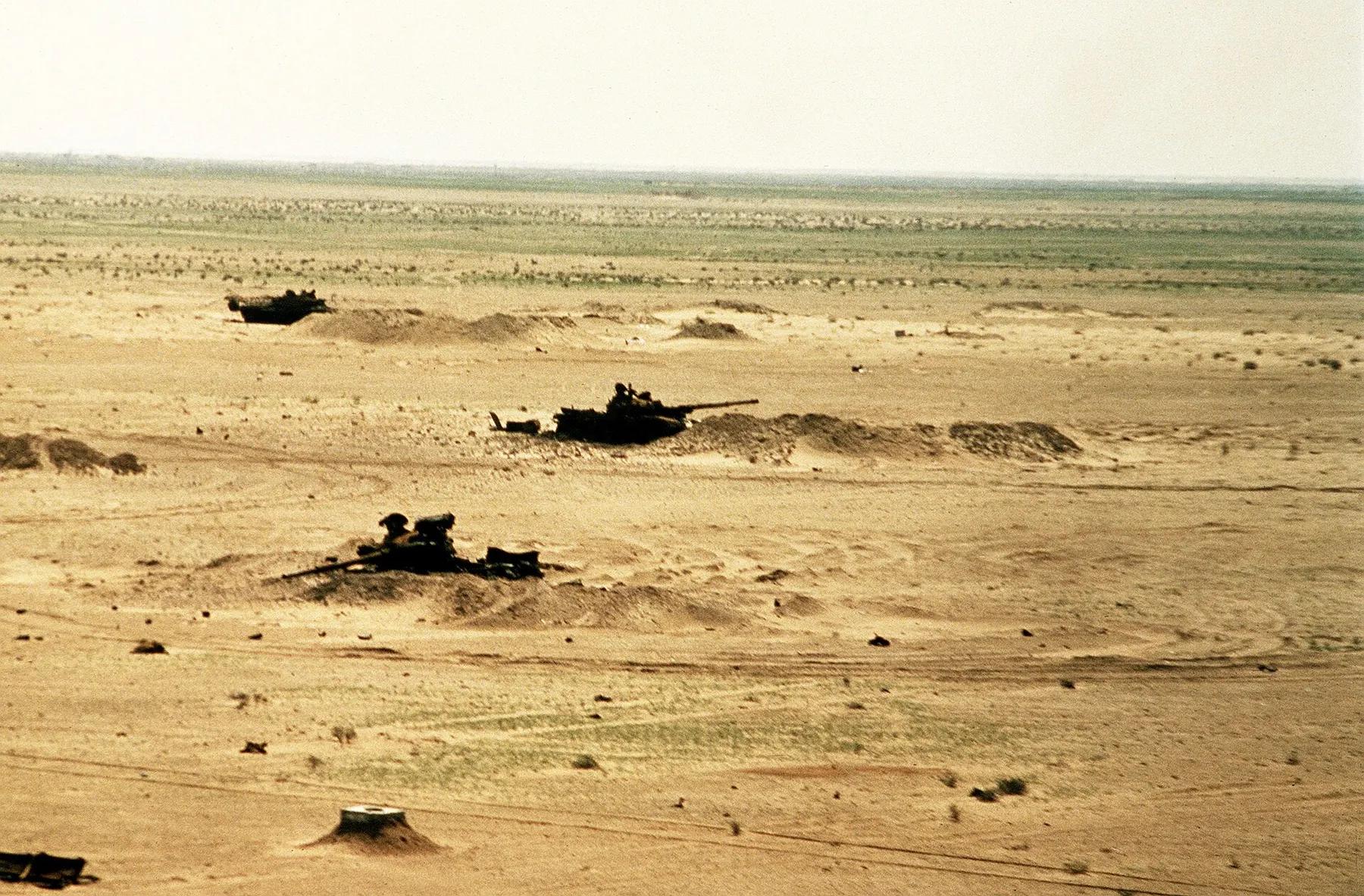
The next day the U.S. 1st Armored Division met the Republican Guard's Medina Armored Division, which had turned to defend a line west of the pipeline road. The close fight at Medina Ridge took about two hours. The Army's history of VII Corps says the corps inflicted a crushing defeat on the two heavy Guard divisions that stood and fought, with more than 800 tanks and 600 fighting vehicles attacking the 220 tanks and 270 fighting vehicles of the Tawakalna alone. There is no record of an Iraqi T-72 destroying an M1A1 even there.
When offensive operations ended, Central Command judged that only five to seven of Iraq's 43 divisions could still mount an attack. Cordesman and Wagner calculate that about a third of the tanks and heavy armor of the Republican Guard and regular army escaped into the Basra area and the north, and within days some of those units were firing on Iraqi cities.
From Mutla Ridge to Safwan
February 25 to March 3, 1991
Baghdad Radio carried Saddam Hussein's announcement on February 25 that Iraqi forces would withdraw from Kuwait, and Washington refused to treat it as a surrender. That night and the next day, columns of Iraqi troops and commandeered civilian vehicles left Kuwait City on the main highway north, over the Mutla Ridge toward Basra, and on a coastal road to the east. Coalition aircraft attacked through the night and into the day, with F-15Es working in weather that kept many others away, as American and British ground forces closed in. The Pentagon's own report uses the name the scene acquired, the Highway of Death.
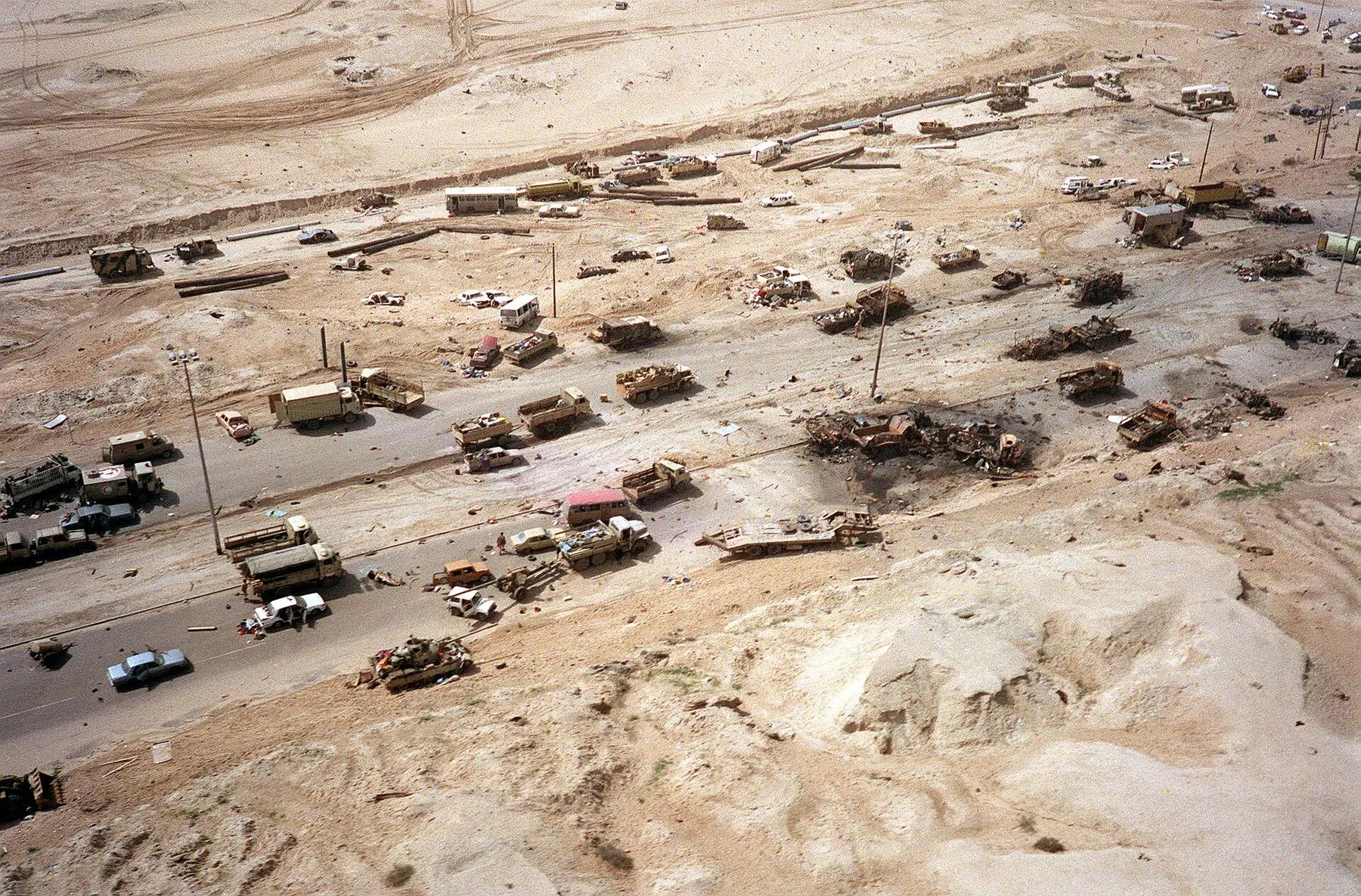
What happened on the Basra road
Coalition commanders
These were enemy forces leaving with their weapons, and they had not surrendered. At the United Nations, Ambassador Thomas Pickering said units moving as combat formations with their equipment would still be attacked.
Critics of the attacks
An army in flight, mixed with civilian vehicles, was being destroyed from the air after its leader had ordered withdrawal. Journalists reported hundreds of bodies along the route.
Later counts cut the scene down in size. Cordesman and Wagner say the name bore no relation to reality: most of the more than 1,400 vehicles on the main road were abandoned, only 28 were tanks or armored vehicles, and even 200 to 300 dead may be too high. Conetta, weighing reporting from the same period, estimates 800 to 1,000 dead across both roads. Claims of tens of thousands have not held up.
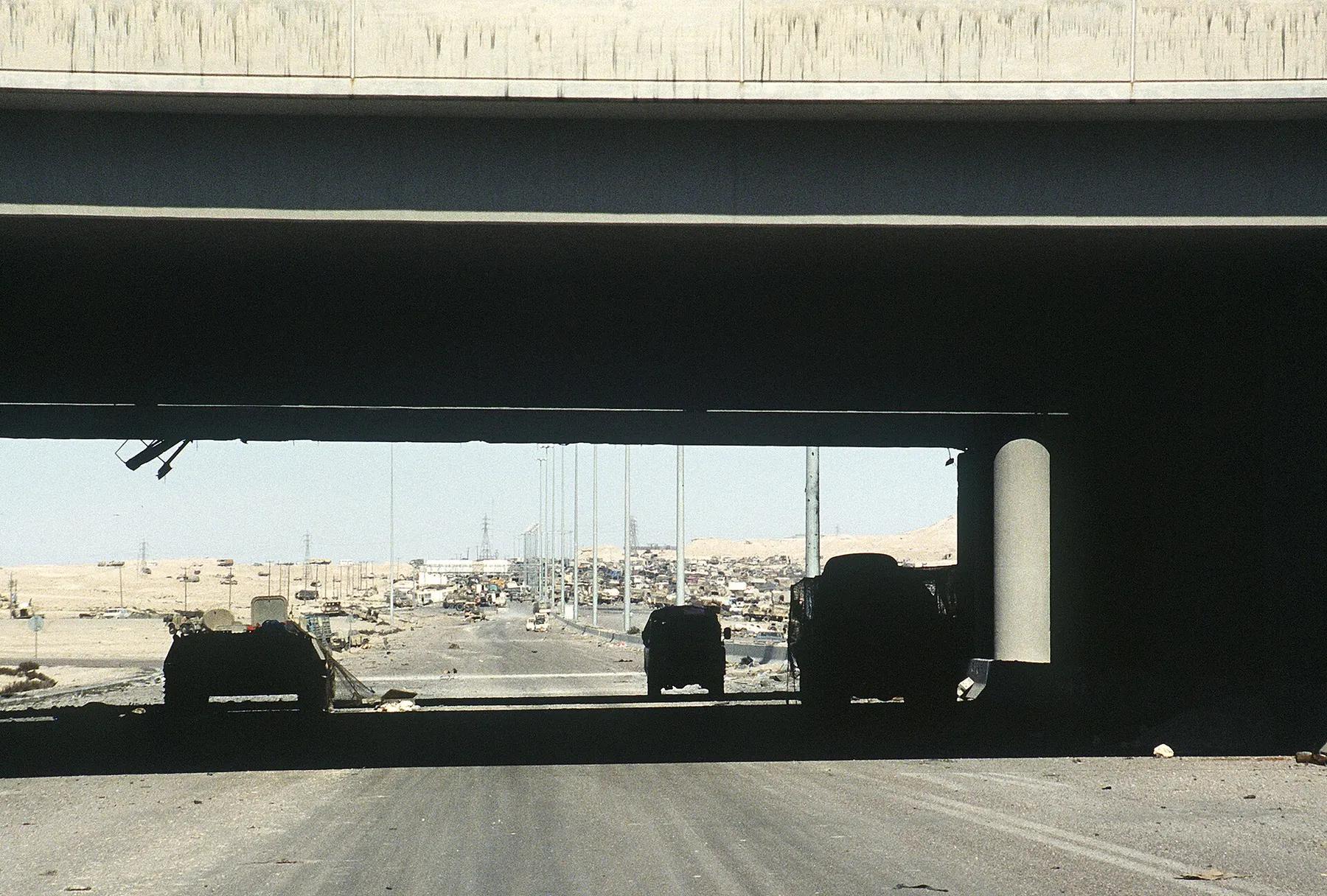
“Kuwait is liberated. Iraq's army is defeated. Our military objectives are met.”
Offensive operations stopped at 0800 local time on February 28, 100 hours after the ground attack began, on the 43rd day of the war. Two days later the fighting flared again. On March 2, after U.S. scouts came under fire, more than 200 T-72s and BMPs of the Hammurabi Division moved north past the U.S. 24th Infantry Division near the Rumaila oil field, apparently heading to help put down the uprisings, and the Americans struck the column. The Hammurabi lost about a brigade's worth of strength, and Conetta estimates at least 700 dead.
Because the clash came after the halt, it drew a long argument. Seymour Hersh reported in The New Yorker in 2000 that many generals he interviewed believed the attack went beyond the threat. Gen. Barry McCaffrey, the division's commander, answered that Iraqi forces had fired on his troops and that Army investigations had found the response justified, and the Army said there was no need to reopen the case.
- United States148
- Saudi Arabia29
- United Kingdom24
- Egypt12
- United Arab Emirates6
- Syria5
- France2
Killed in action. The U.S. figure is the Defense Department's. Allied figures are a revised count, and the authors warn that members reported differently. About 21 further allied battle deaths are not itemized in the source. Source: Congressional Research Service; UK Parliament; Cordesman and Wagner, The Lessons of Modern War, Vol. IV.
- Heidenrich, 1993, upper figure9,500
- Conetta, 2003, upper figure26,000
- Arkin, used by Daponte, midpoint56,000
- Defense Intelligence Agency, 1991100,000
- Greenpeace, 1991, upper figure120,000
Upper or central figures from published estimates of Iraqi military deaths in the war, leaving out the uprisings. None rests on a full count, and they measure different things by different methods. Source: Cordesman and Wagner, table of estimates; Conetta 2003; Daponte 1993.
Schwarzkopf met the Iraqi delegation, led by Lt. Gen. Sultan Hashim Ahmad, at 1100 on March 3 at the Safwan airstrip inside Iraq. He told Frontline that Washington had given him no terms of reference, so he wrote his own and sent them back, and they returned essentially unchanged. His first aim was to recover coalition prisoners. The talks also covered the missing, minefields and chemical storage sites. When the Iraqis asked about their own prisoners, he answered that the coalition held 50,000 and was still counting, and he said the number visibly shook them. The agreement barred Iraq's fixed-wing aircraft. One of the Iraqi officers then asked to fly helicopters for administrative purposes, pointing to the bridges and highways the bombing had destroyed between Safwan and Baghdad.
“And I knew the great devastation we had inflicted upon their roads and their bridges and that seemed like a very reasonable request to me. So I said "Fine, you may fly your helicopters."”
Schwarzkopf later concluded that the Iraqis had used the agreement as a ploy once the helicopters went into action against the rebellions around Basra. Cordesman and Wagner consider it likely that the request was made with the uprisings in mind, and they find that no effort was made at Safwan to consider the political upheaval then developing inside Iraq.
Kuwait's oil wells burn
January 25 to November 6, 1991
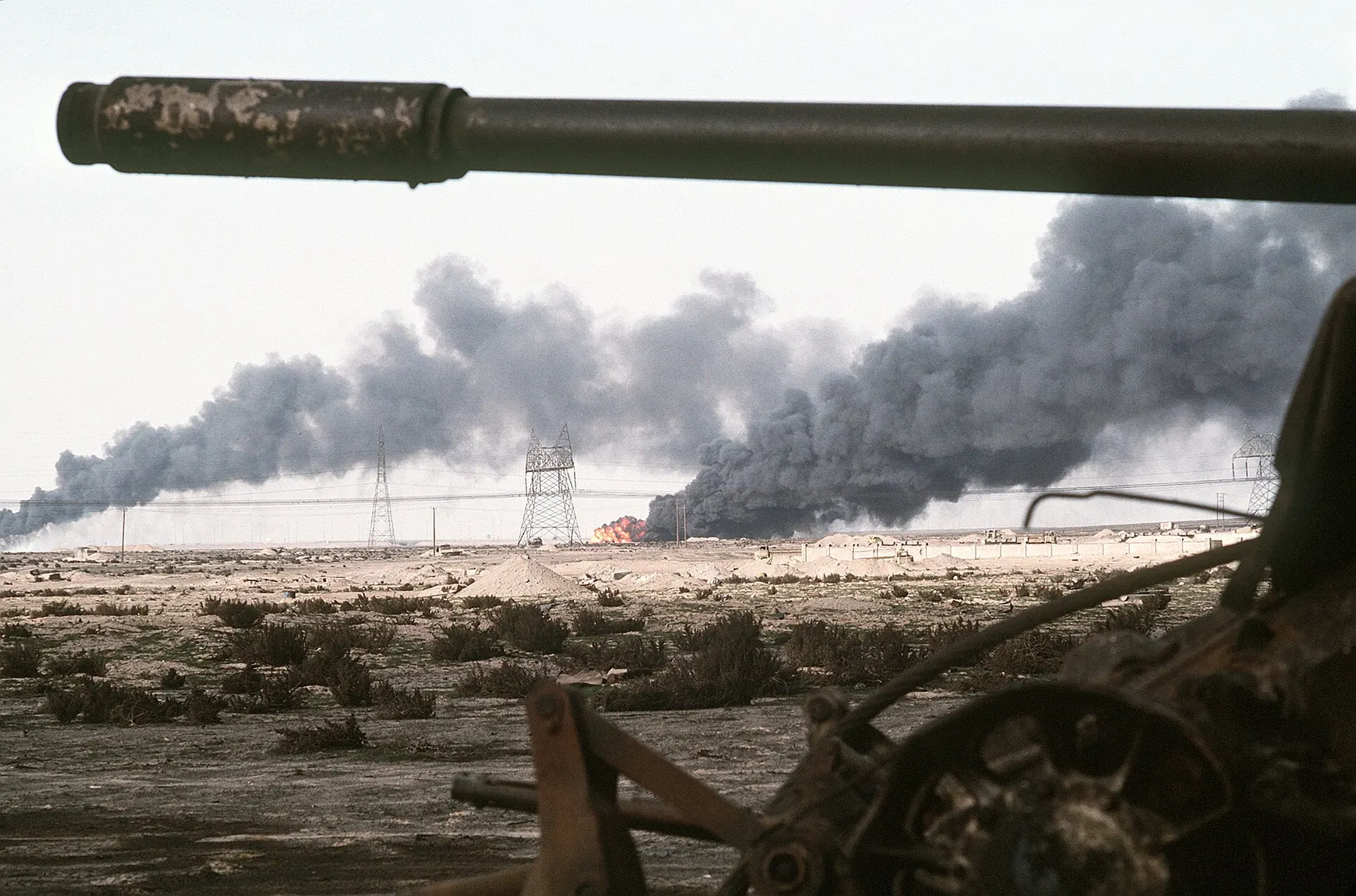
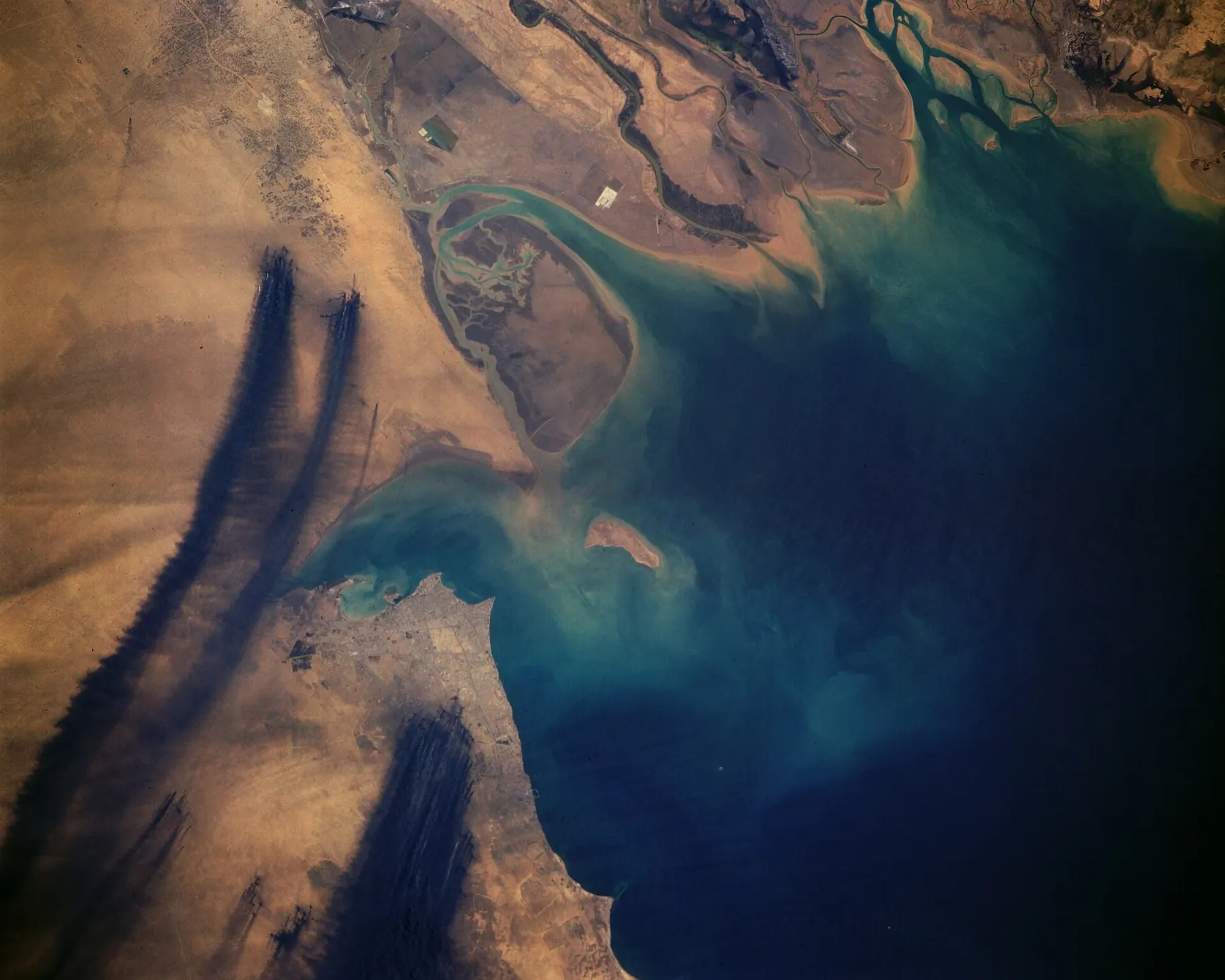
Crude began pouring into the northern Gulf from Kuwaiti terminals on January 25, a month before the ground war. The United States accused Iraq of deliberately pumping it, possibly to obstruct an amphibious landing or threaten Saudi desalination plants. Iraq charged that coalition bombing caused the slick. Two F-111s used guided bombs to destroy the manifolds and cut the flow, though damaged facilities went on leaking into April. A Library of Congress country study calls it the world's largest oil spill, at as much as 8 million barrels, and a later review by the Conflict and Environment Observatory says 11 million. It fouled the coasts of Kuwait and Iran and much of Saudi Arabia's Gulf shore.
On land, withdrawing Iraqi forces detonated charges around Kuwait's wellheads, pipelines and storage tanks. Ruptured pipes left pools of crude many acres wide. Over the Basra causeway smoke cut visibility to less than 1,000 meters, and helicopter crews flew entirely on thermal sights because it was so dark.
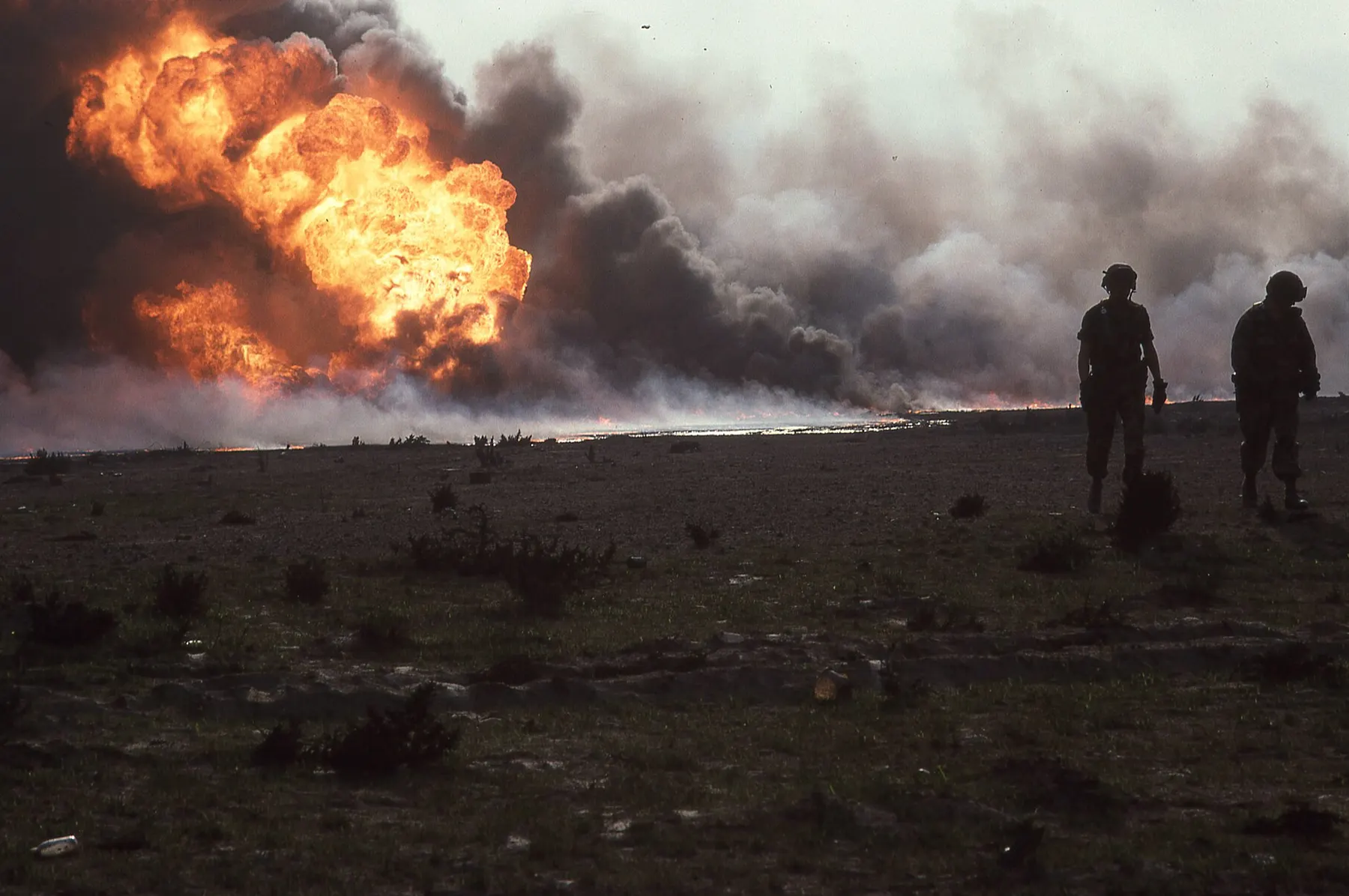
The environmental toll
- 737
- Wells blown up, by Kuwait's count
- The Pentagon says more than 700 burned
- 4 to 6 million
- Barrels of oil lost each day at the peak of the fires
- Up to 11 million
- Barrels spilled into the Gulf, at the high estimate
Crews from dozens of countries worked through the year to cap the wells, and the last fire went out on November 6, 1991. Wells that had been blown open had by then spilled crude into lakes covering at least 50 square kilometers, and falling smoke and oil left a hard crust known as tarcrete over more than 1,000 square kilometers of desert.
Iraq after the cease-fire
March 1991 to January 2022
On February 15, President Bush had said there was another way for the bloodshed to stop, and Iraqis heard his words on the Voice of America.
“for the Iraqi military and the Iraqi people to take matters into their own hands to force Saddam Hussein, the dictator, to step aside.”
On March 1, a day after the offensive stopped, defeated soldiers and townspeople rose in Basra. Within days the revolt had spread to Karbala, Najaf, Hilla, Nasiriyah, Amara, Samawa, Kut and Diwaniyya. Kurdish towns in the north followed, and by about March 20 rebels held Kirkuk. No single command led them. In the south there were local committees, clerics and opposition groups, and in the north the Kurdish parties, who wanted self-government.
Both sides killed in the first days. Middle East Watch recorded rebels killing Baath Party officials, secret police and soldiers in the streets of Basra. The government's answer was far larger. Republican Guard units that had escaped the coalition turned on the cities with artillery and the helicopters permitted at Safwan. Shelling damaged shrines in Najaf and Karbala, some of which were later demolished, and residents described mass arrests and executions. U.S. forces stationed a few miles from Nasiriyah, Samawa and Basra did nothing to help the rebels. On April 5 Iraq's Revolutionary Command Council, which called the rebellions sedition, sabotage and rioting, announced their complete crushing in all towns of Iraq.
No one made a full count of the dead. Middle East Watch wrote of tens of thousands of civilians killed, and figures reported at the time ran from 25,000 to 100,000, most of them in the south. Greenpeace and the demographer Daponte each arrived at about 30,000 civilians, with Greenpeace adding 5,000 soldiers.
Why the uprisings were left to fail
The Bush administration
Its mandate was to free Kuwait, and it did not mean to occupy Iraq or take sides in a civil war. Schwarzkopf said that emotionally he would have loved to go to Baghdad, but that stopping was a strategic decision.
Human rights critics
Middle East Watch argued that Washington had encouraged revolt and then stood by, and that allowing the helicopters contributed to the catastrophe.
- Iraq
- Places of refuge
Main centers of the 1991 uprisings, the routes of the mass flight, and the two no-fly zones, the northern set in 1991 and the southern in 1992. Refugee figures are Middle East Watch's. Country shapes are Natural Earth, showing today's borders.
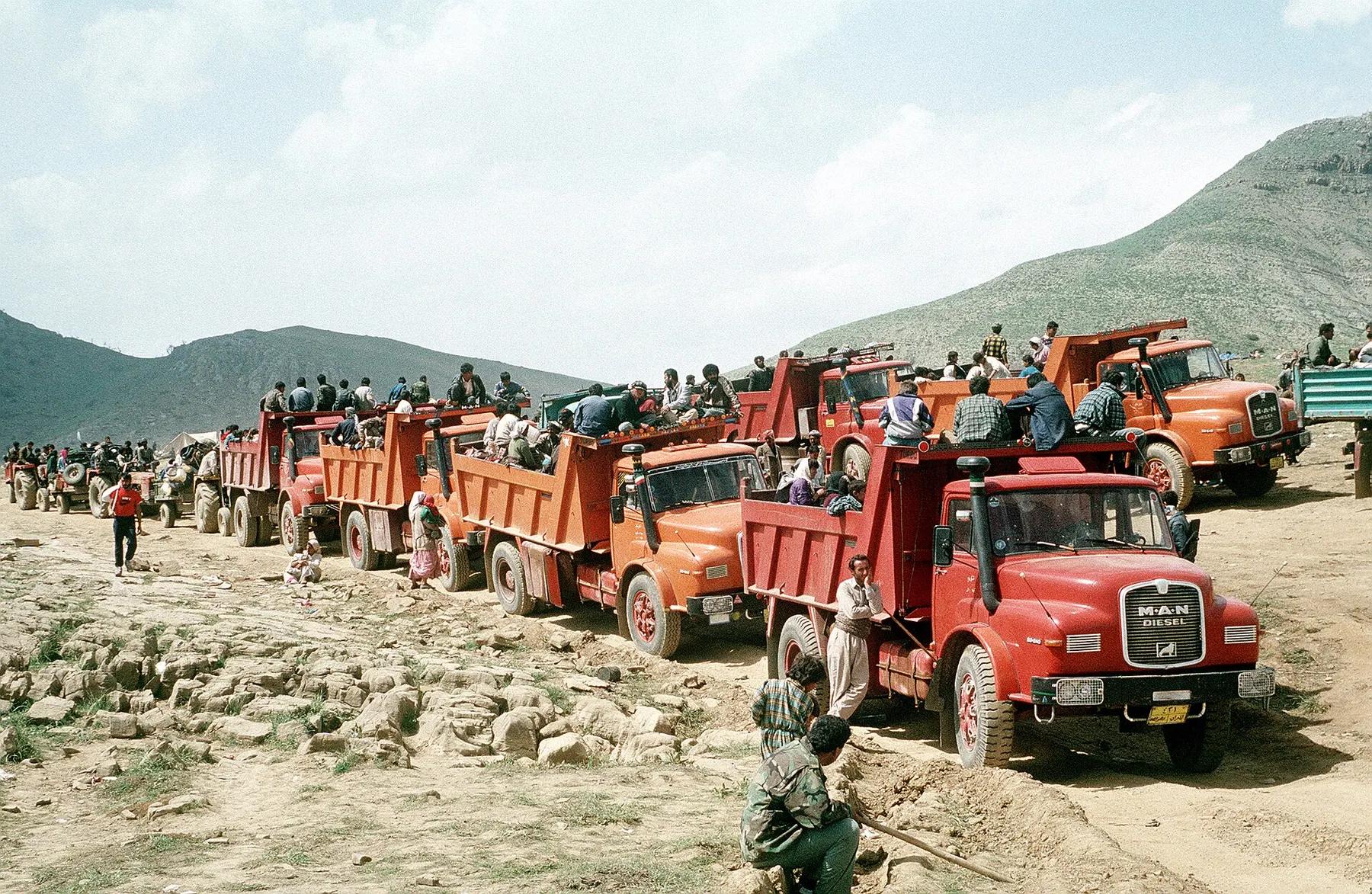
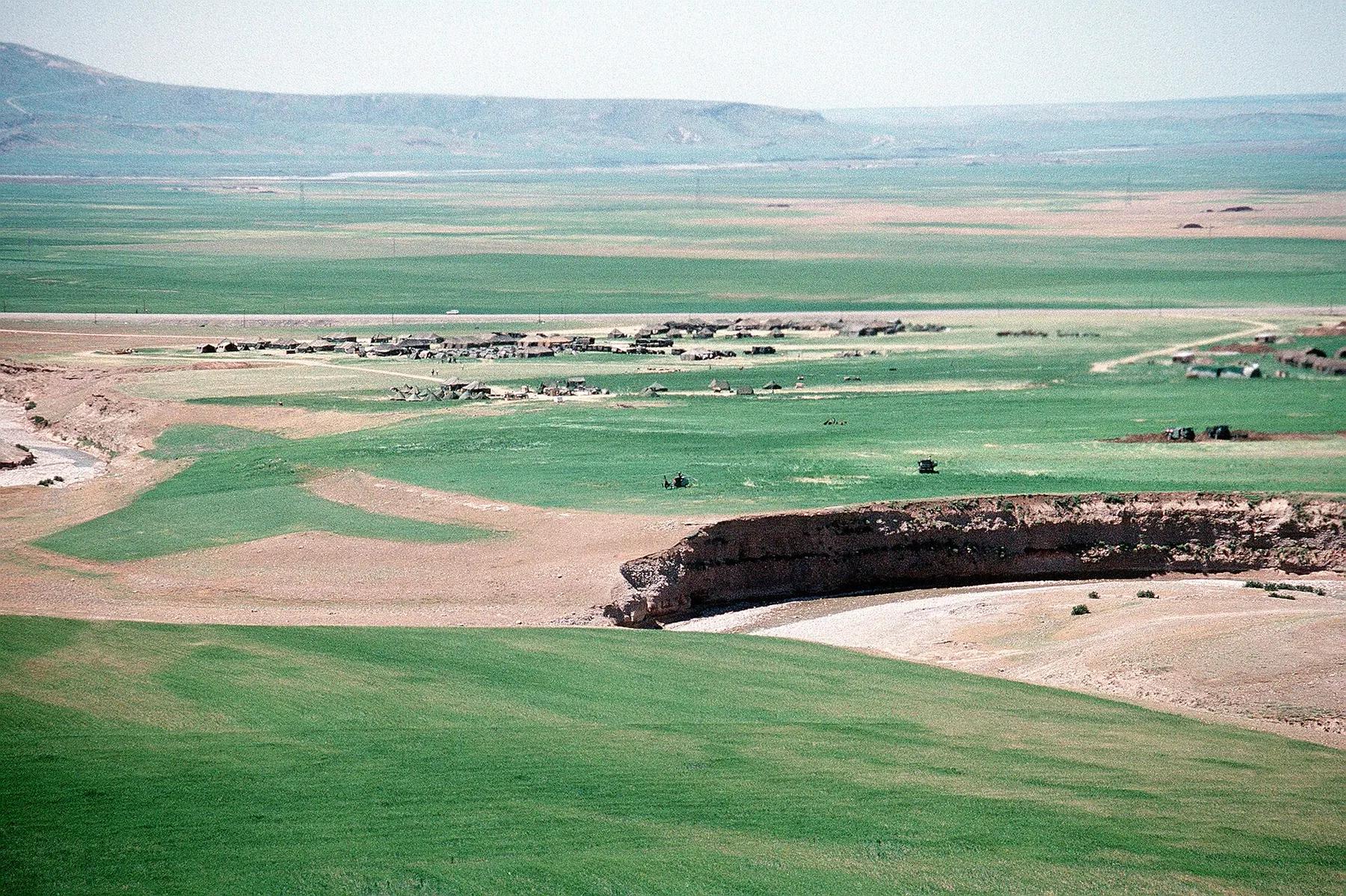
Nearly two million Iraqis fled in March and early April, more than a tenth of the population by Middle East Watch's count. Hundreds of thousands of Kurds gathered on cold mountain slopes along the Turkish border, short of food, clean water, blankets and shelter, and Greenpeace estimated that 1,000 refugees and displaced people a day were dying through April, May and June.
- Iran1.4 million
- Turkey450,000
- Saudi Arabia and Kuwait35,000
Middle East Watch figures for people who fled Iraq after the uprisings were suppressed in 1991. Others were displaced inside the country. Source: Middle East Watch, Endless Torment: The 1991 Uprising in Iraq and Its Aftermath, 1992.
“Condemns the repression of the Iraqi civilian population in many parts of Iraq, including most recently in Kurdish populated areas.”
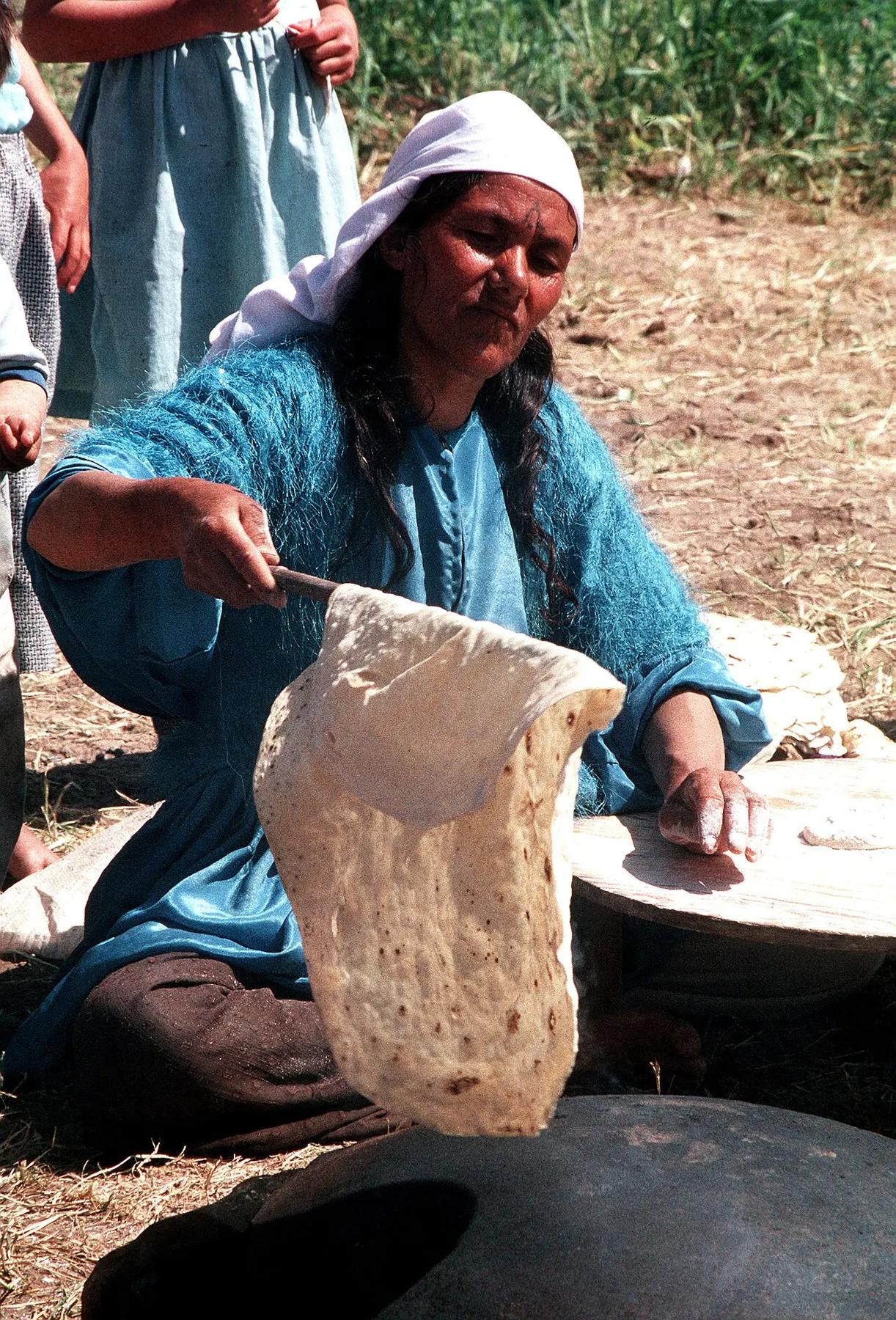
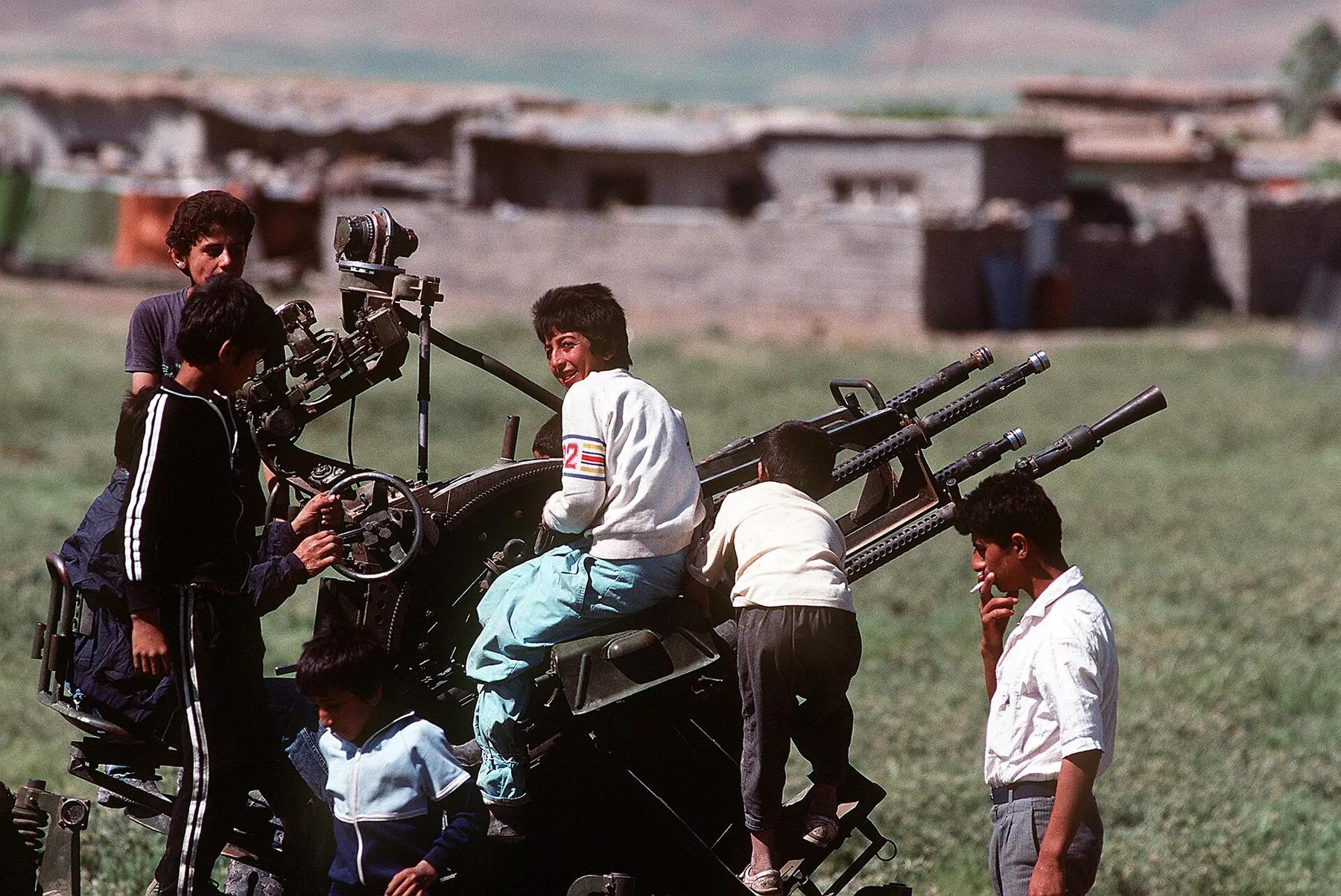
Resolution 688 did not authorize force, and the United States, Britain and France cited it anyway. Operation Provide Comfort began that month. American C-130s started dropping supplies to people on the mountainsides on April 7, and coalition troops then moved into northern Iraq, where Iraqi forces withdrew from a security zone taking in Zakho, Amadiya, Suri and Dohuk so that families could come down. By 1992, Middle East Watch reported, fewer than 100,000 of those who had crossed the borders were still abroad.
Twelve more years
Resolution 687, adopted on April 3, 1991, set the formal terms. Iraq was to accept the border, give up chemical and biological weapons and missiles with a range over 150 kilometers, submit to inspection and pay compensation, and sanctions stayed on. American, British and French aircraft barred Iraqi flights in the north and, from August 1992, south of the 32nd parallel. No Security Council resolution explicitly authorized those zones, and their legality was challenged for as long as they lasted. Saddam's government stayed in place behind them until 2003, as Tariq Aziz had told James Baker it would.
“in our region, when a leadership fights against the Americans, it politically survives.”
Daponte estimated that about 111,000 Iraqis died in 1991 from the war's health effects, 70,000 of them children under 15, while the U.S. Census Bureau reached about 70,000. A 1999 survey by UNICEF and the Iraqi government reported that child mortality had more than doubled, which produced the widely repeated claim of 500,000 excess child deaths from sanctions. In 2017 Tim Dyson and Valeria Cetorelli of the London School of Economics argued that the survey data had been rigged and that no such sustained rise took place. Their challenge is to that figure, and the hardship of the sanctions years is documented separately.
“Saddam, even today, looks at himself as victorious.”
A U.S. research advisory committee concluded that Gulf War illness, a chronic pattern of symptoms, is seen in about 25 to 30 percent of Gulf War veterans and affects at least 175,000 of the roughly 700,000 troops deployed, and it tied the illness to hazardous exposures including pesticides and the anti-nerve-agent drug pyridostigmine bromide. Kuwait is still searching for its missing. In January 2022 the United Nations Compensation Commission made its last payment, closing $52.4 billion in awards to more than 1.5 million claimants, paid from Iraqi oil revenue over three decades.
The arsenal
The soldier
Infantry on both sides carried familiar Cold War rifles and rocket launchers. Coalition soldiers had night vision and thermal sights that Iraqi units largely lacked, and they trained, and sometimes fought, in protective suits against a chemical attack that never came.
Coalition
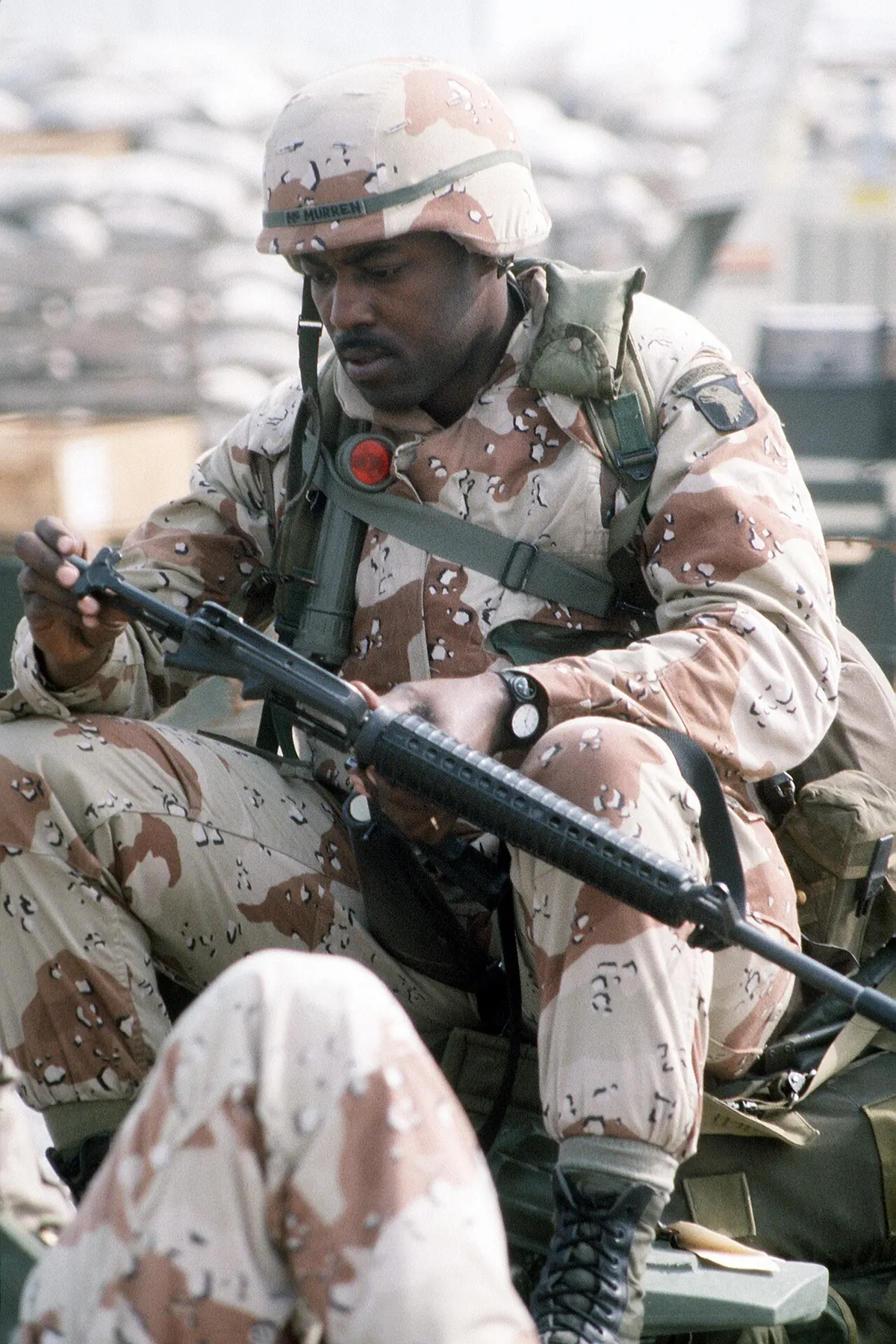
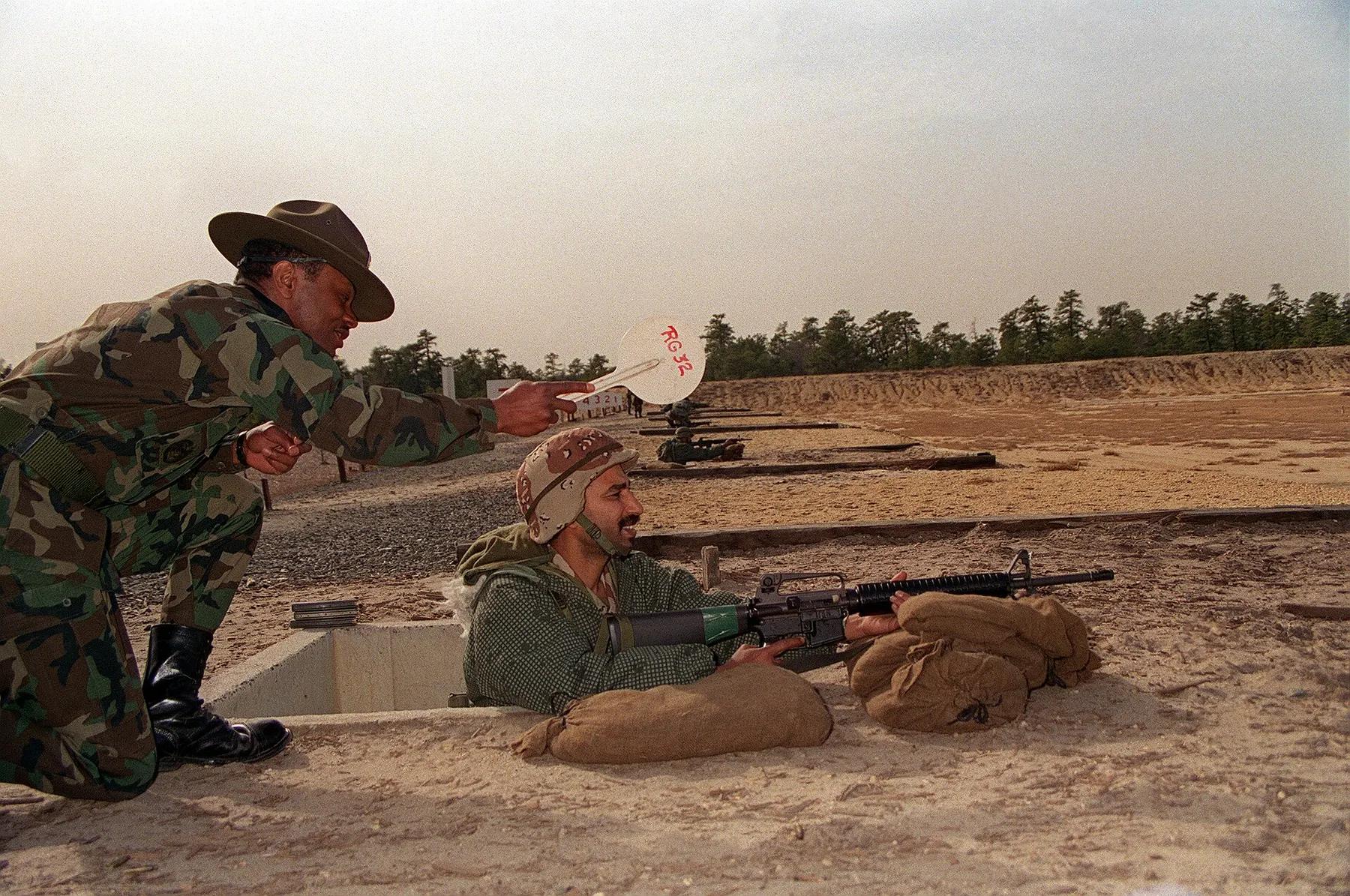
M16A2 rifle
Assault rifle, 5.56 mm. U.S. forces, also issued to Kuwaiti troops training in Saudi Arabia
Carried by American infantry through the war, and by Kuwaiti soldiers retraining in Saudi Arabia. U.S. Army guidance credits it with better penetration than the older M16A1 at longer ranges.
Sgt. Prentis Tramble, U.S. Army. Public domain. Source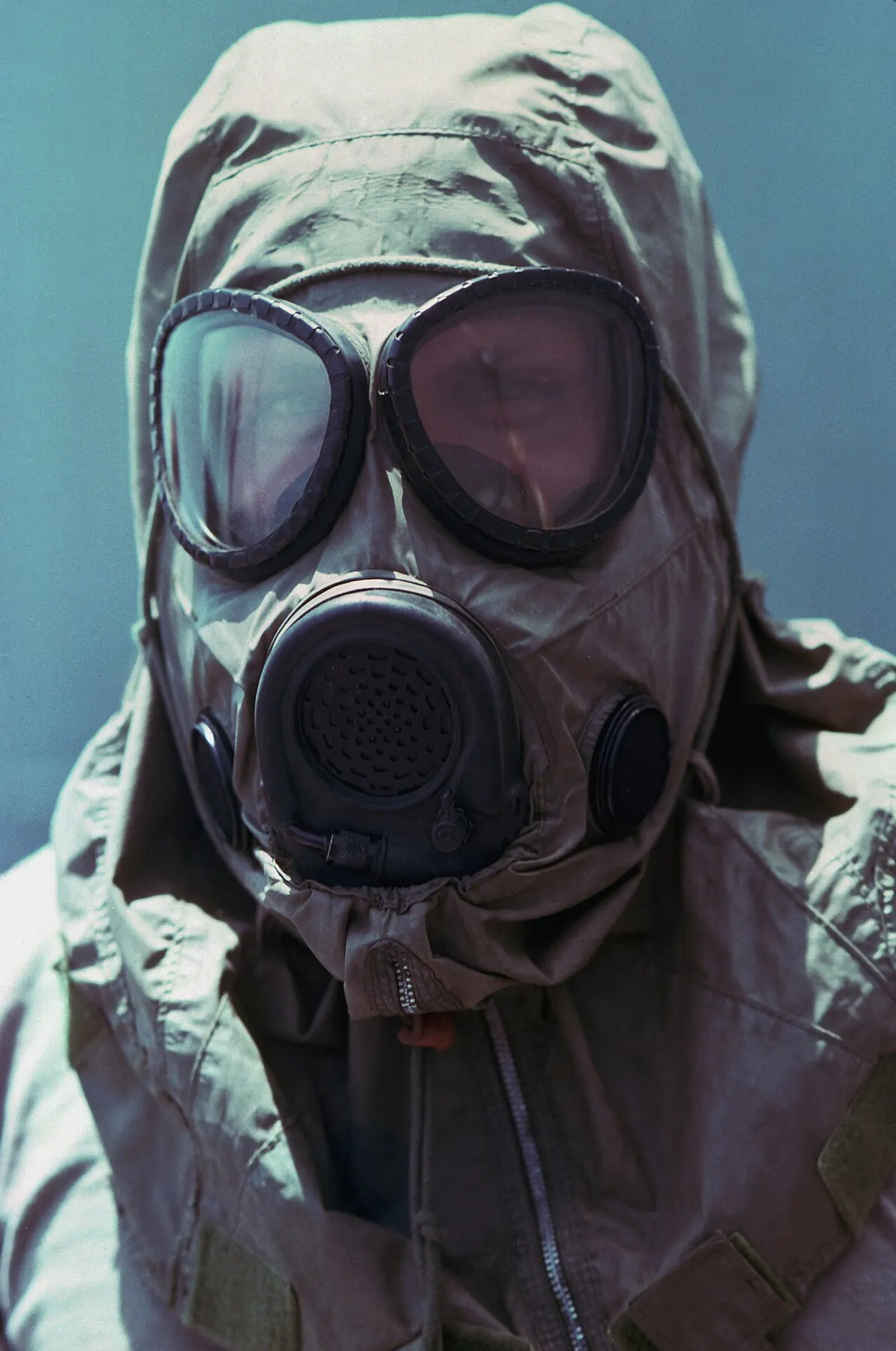
Protective suit and M17 mask
Chemical defense. U.S. and coalition troops
Stocks were shipped from Europe in the first months. Cordesman and Wagner report shortages of suits and modern masks and little ability to surge production. Iraq never used chemical weapons in the war.
PH1 Allen, U.S. Navy, via the National Archives. Public domain. SourcePyridostigmine bromide tablets
Nerve agent pretreatment. U.S. troops
Given as protection against nerve gas. The federal research advisory committee later linked the pills, along with pesticides, to Gulf War illness.
Night vision and thermal sights
Sensors. Coalition forces
Thermal sights on M1A1 tanks picked up targets at a median of 2,600 meters, through darkness, smoke and haze. Iraqi armor lacked comparable equipment.
Iraq
AK-47 family
Assault rifle, 7.62 mm. Iraqi army and Republican Guard
The Army's VII Corps history records Iraqi infantry fighting Eagle Troop with AK-47s and rocket-propelled grenades at 73 Easting.
RPG rocket launchers
Shoulder-fired antitank weapon. Iraqi infantry
Used against U.S. armor at close quarters, including at 73 Easting, where following scout vehicles cut down the infantry firing them.
Land
Iraq was thought to own 5,700 to 7,000 tanks, most of them older Soviet-pattern T-54s, T-55s and T-62s, with T-72s making up about a fifth. Coalition tanks outranged them and, with thermal sights, saw them first. The Republican Guard units that stood and fought at 73 Easting and Medina Ridge lost heavily to that combination.
Coalition
M1A1 Abrams
Main battle tank. U.S. Army and Marine Corps
About 2,300 went to the theater, of which the Army used 1,178 M1A1s and 594 heavy-armor versions. The Pentagon listed 15 U.S. combat tank losses.
PHC D. W. Holmes II, U.S. Navy. Public domain. SourceChallenger 1
Main battle tank. British 1st Armoured Division
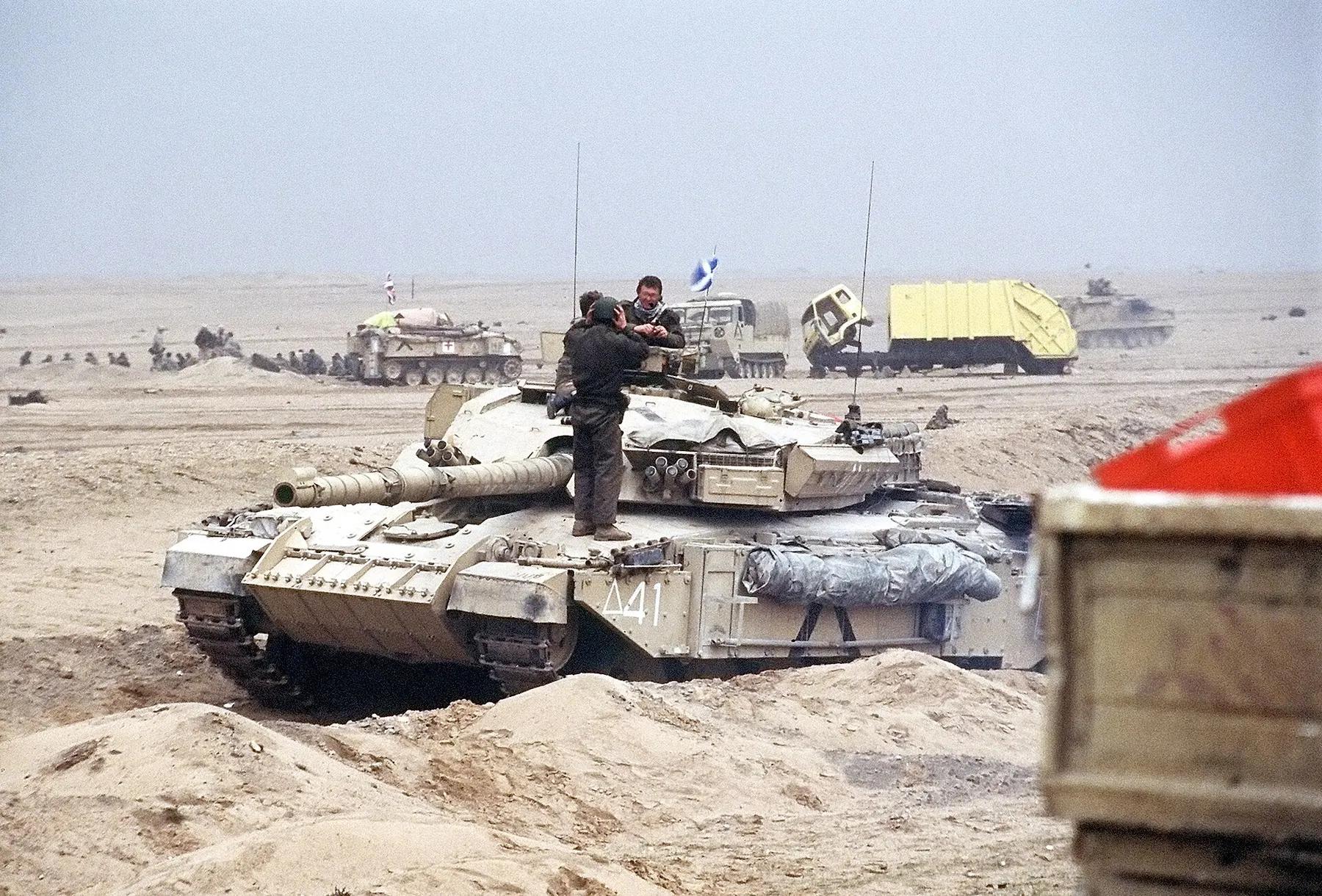
The division had 180 Challengers plus 41 in war reserve, by Cordesman and Wagner's count, with a stabilized 120 mm gun and thermal sights.
PHC Holmes, U.S. Navy. Public domain. SourceM2 and M3 Bradley
Infantry and cavalry fighting vehicle. U.S. Army
2,200 were in the theater for the ground campaign. Its TOW antitank missiles and 25 mm cannon fought alongside the tanks at 73 Easting.
Warrior
Infantry fighting vehicle. British Army
Two were destroyed by U.S. A-10s on February 26 in Britain's worst friendly-fire loss of the war.
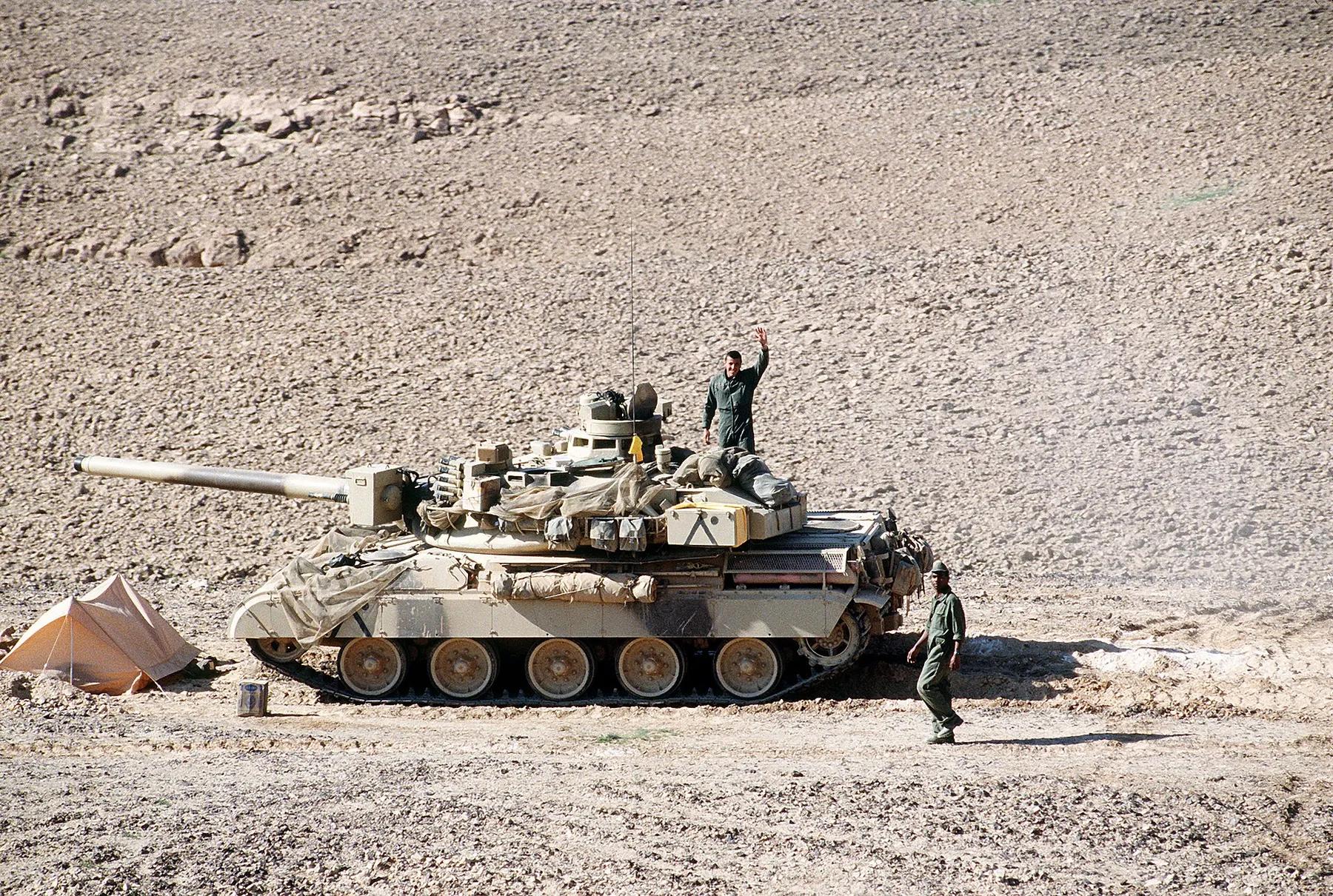
AMX-30
Main battle tank. France, Saudi Arabia, Qatar
Served with the French 6th Light Armored Division on the western flank. Saudi Arabia had 300 to 310, and two Qatari AMX-30s were lost at Khafji.
Staff Sgt. Dean Wagner, U.S. Air Force. Public domain. SourceM60
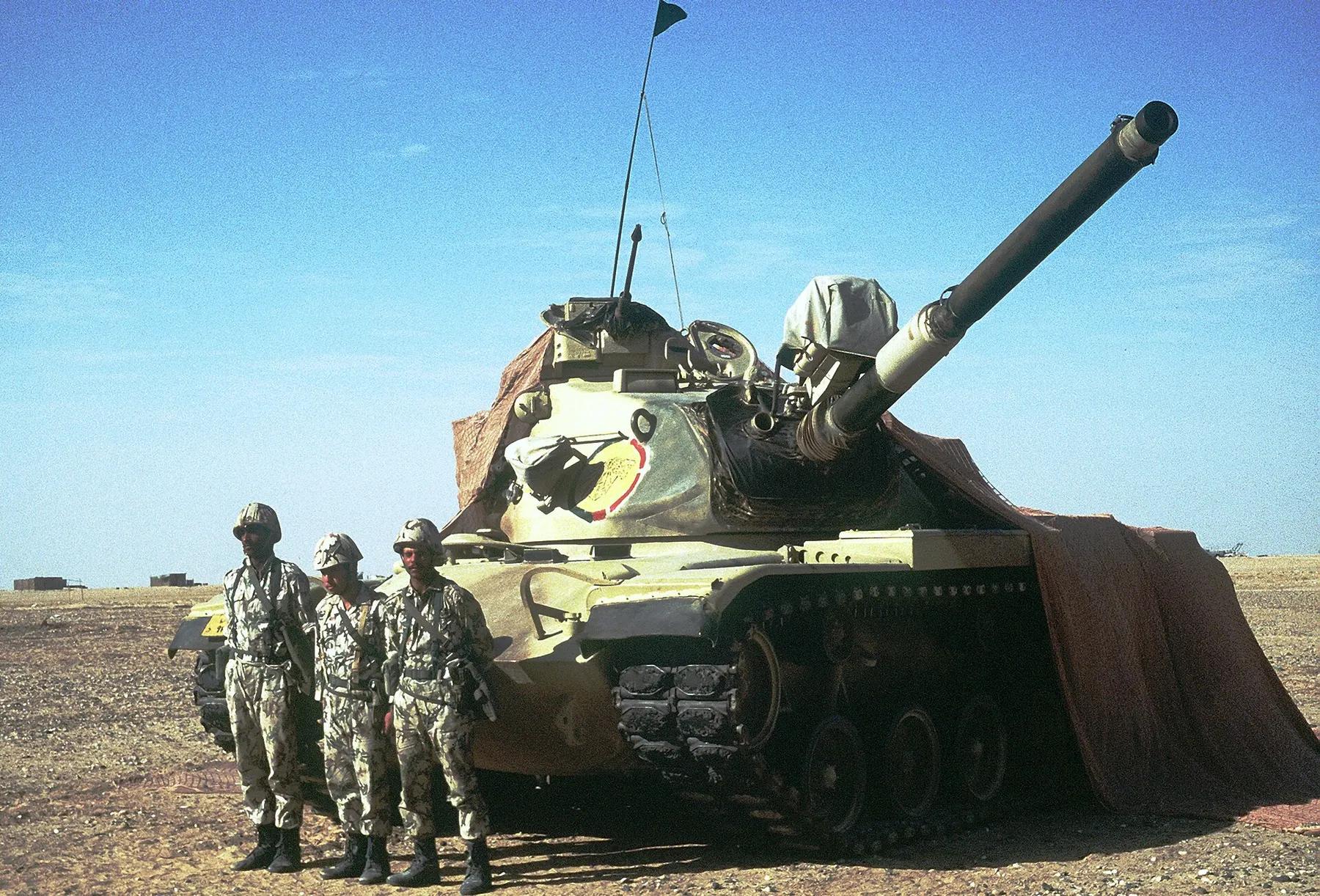
Main battle tank. Egypt, Saudi Arabia, U.S. Marines
Egypt's 3rd Armored Brigade crews trained on it in Saudi Arabia during Desert Shield.
Tech. Sgt. H. H. Deffner, U.S. Air Force. Public domain. SourceMLRS
Multiple rocket launcher. U.S. Army
189 U.S. launchers deployed and fired 9,660 rockets at artillery, convoys and troop positions.
Iraq
T-72 family
Main battle tank. Republican Guard and best Iraqi armored units
About a fifth of Iraq's tanks. Its 125 mm gun worried Western planners before the war, but crews had no thermal sights, and their ammunition proved weak. Iraq's locally assembled versions are not separately documented in the sources used here.
Staff Sgt. Reeve, U.S. Army. Public domain. SourceT-54, T-55 and T-62
Main battle tank. Iraqi army
The bulk of the 5,700 to 7,000 tanks Iraq was thought to own. The 1st Marine Division reported destroying about 250 T-54s and T-55s and 70 T-72s in one day's fighting near Kuwait International Airport.
JO1 Gawlowicz, U.S. Navy. Public domain. SourceBMP
Infantry fighting vehicle. Republican Guard
A Republican Guard mechanized division like the Tawakalna was authorized 284 infantry fighting vehicles and 220 T-72s.
Minefields and fire trenches
Border fortifications. Iraqi engineers
Thousands of mines behind barbed wire, antitank ditches and berms along the Saudi border drew on experience from the war with Iran. Fear of what they would cost fed prewar forecasts of 12,000 to 30,000 American dead.
Air
Air power was the coalition's largest advantage. Iraq had more than 700 combat aircraft on paper, but its pilots rarely engaged and more than 130 military and civilian aircraft went to Iran. Iraqi gunners and missile crews on the ground accounted for most of the coalition aircraft lost in combat.
Coalition
F-117A Nighthawk
Stealth attack aircraft. U.S. Air Force
42 aircraft flew about 2 percent of attack sorties and hit about 40 percent of strategic targets, by the Pentagon's count. The General Accounting Office put the chance that a planned strike hit its target at 41 to 60 percent.
U.S. Air Force. Public domain. SourceF-15C Eagle
Air superiority fighter. U.S. Air Force
Credited with 33 of the 38 air-to-air kills in the Pentagon's weapons appendix, with no F-15C lost in air combat.
F-16 Fighting Falcon
Multirole fighter. U.S. Air Force
244 appear in the Air Power Survey's table of U.S. surface-attack aircraft. With the B-52, the F-16 delivered most of the unguided tonnage dropped on strategic targets.
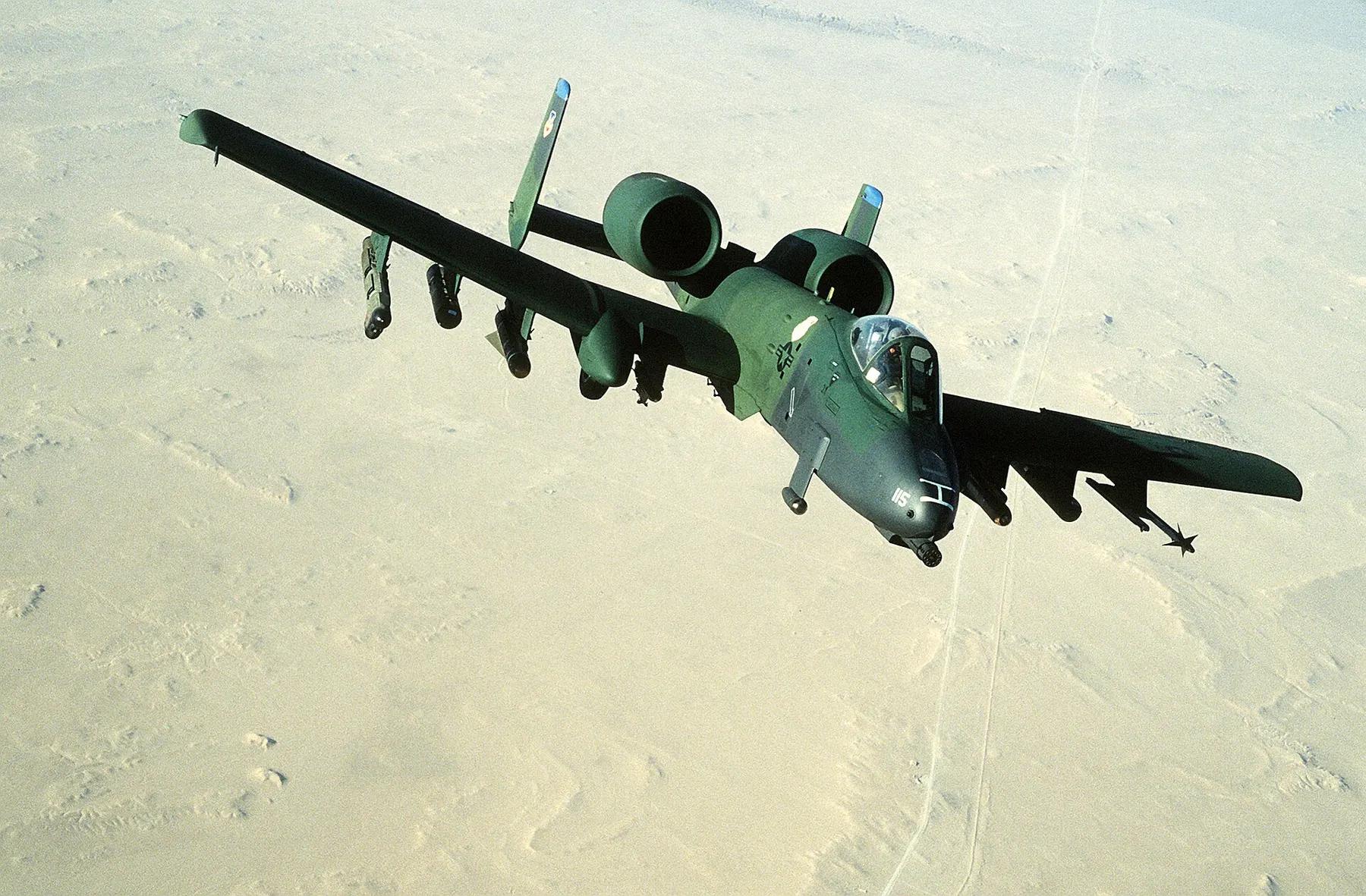
A-10 Thunderbolt II
Close air support aircraft. U.S. Air Force
Fired 4,801 Maverick missiles, more than 90 percent of the total. Six were lost in combat. A-10s were also involved in the attack on British Warriors.
U.S. Air Force. Public domain. Source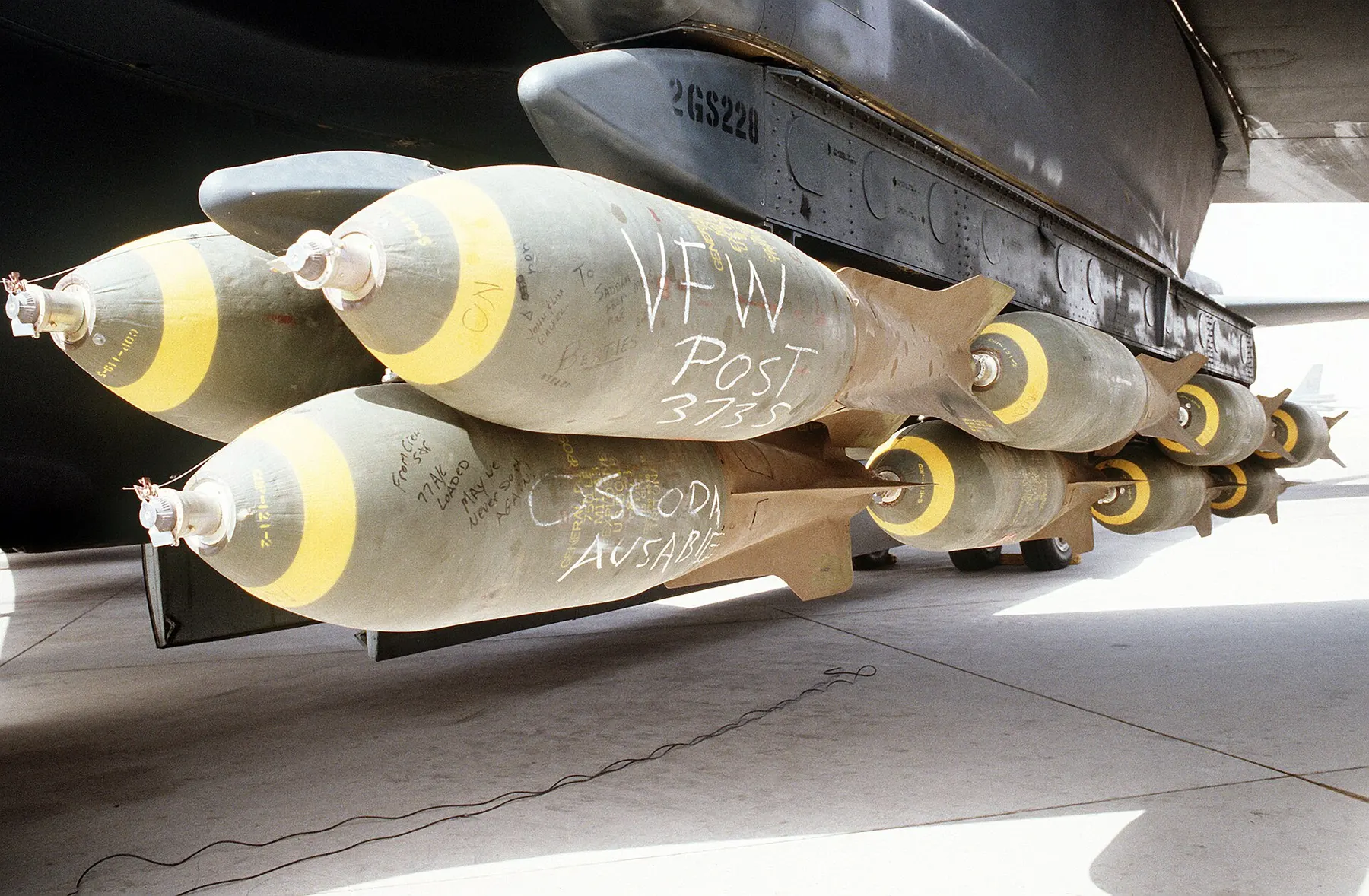
B-52G Stratofortress
Heavy bomber. U.S. Air Force
A force that grew to 68 aircraft delivered about 32 percent of all bomb tonnage, mostly unguided and mostly on Iraqi forces in Kuwait.
U.S. Air Force. Public domain. Source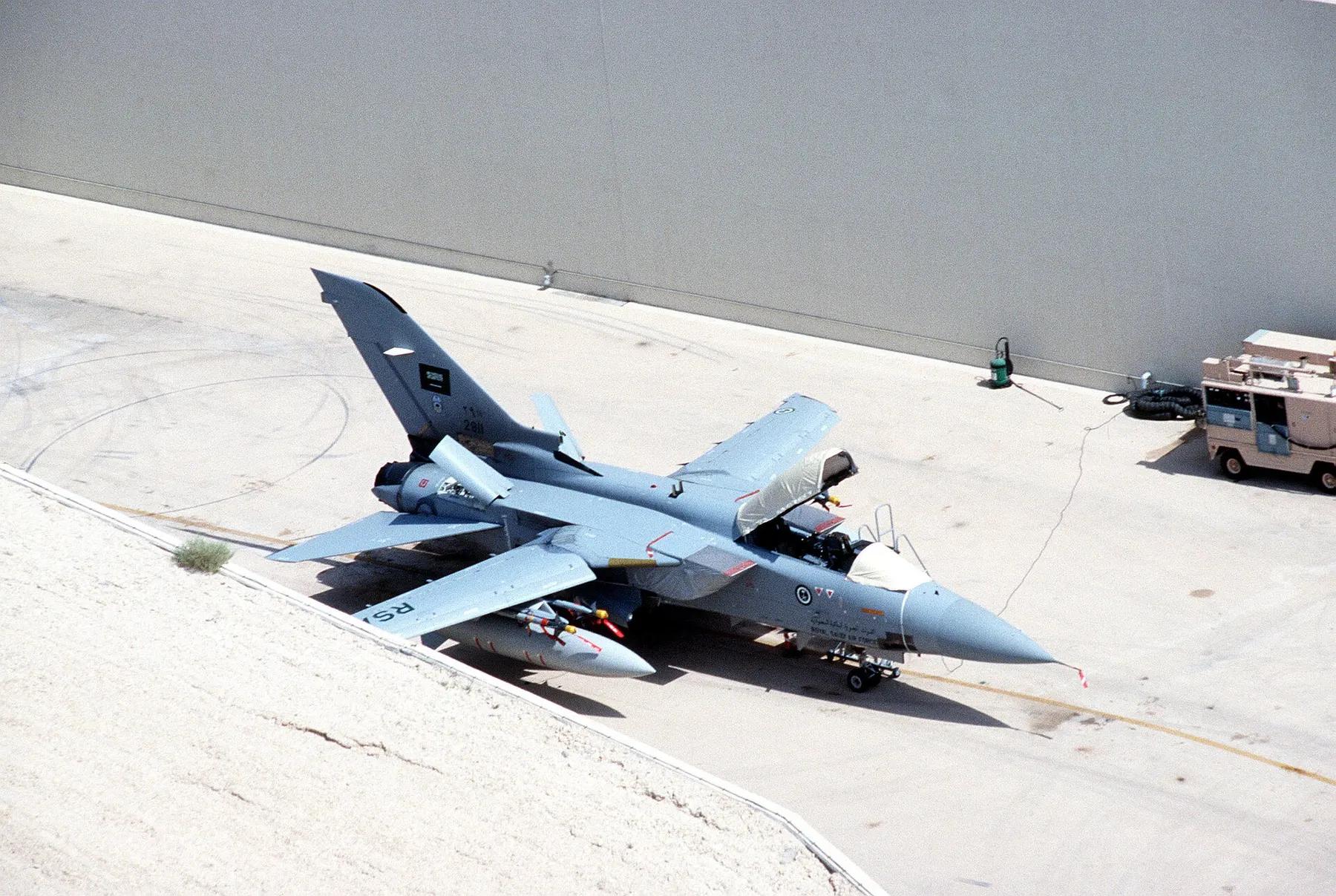
Tornado
Strike and interceptor aircraft. Britain, Saudi Arabia, Italy
British Tornados flew dangerous low-level airfield attacks in the opening days. Five had been lost by January 25, only one of them carrying the JP233 runway weapon.
U.S. Department of Defense. Public domain. Source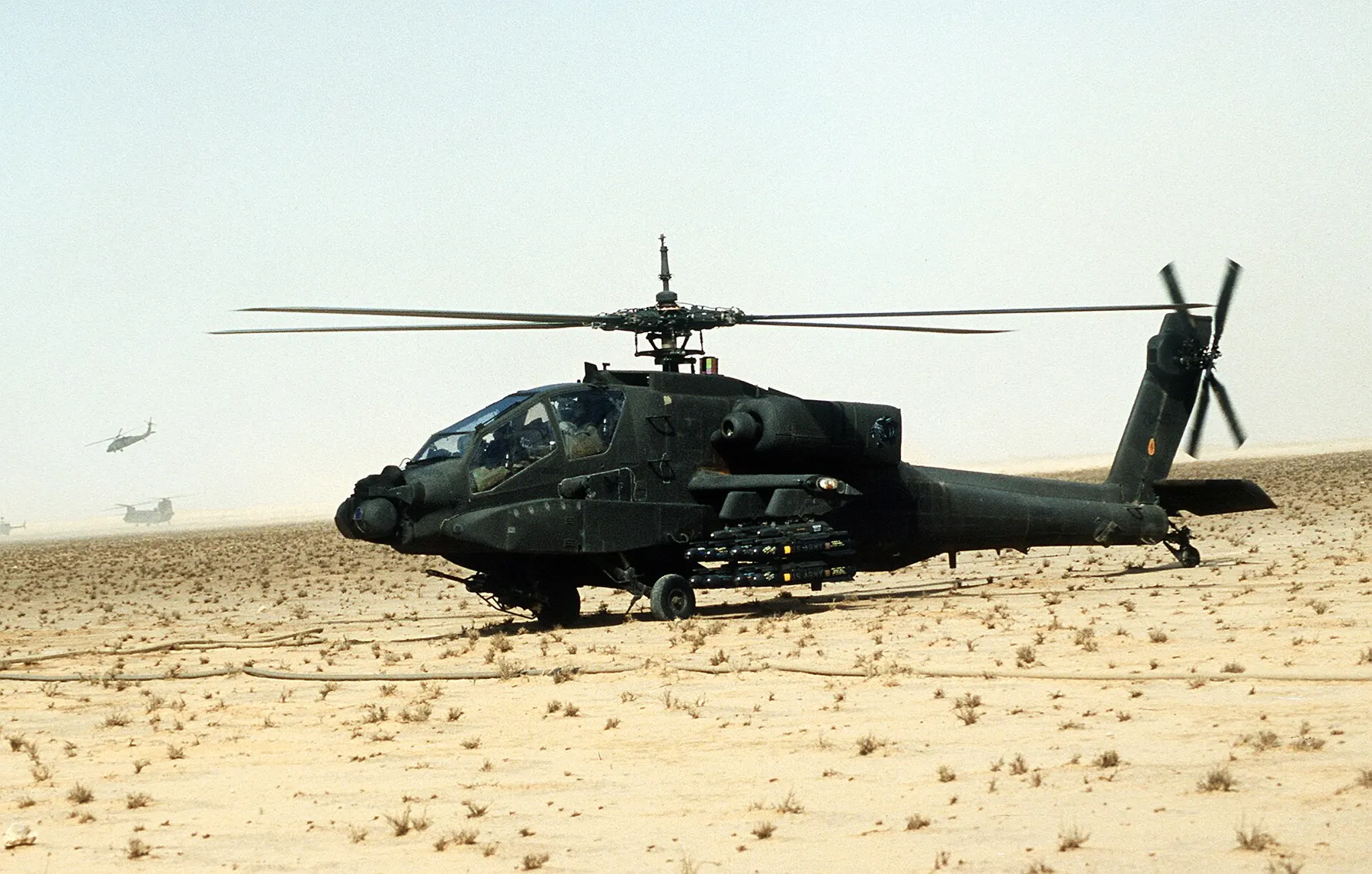
AH-64 Apache
Attack helicopter. U.S. Army
274 deployed and flew more than 18,700 hours. They fired some of the first shots of the war. One was lost to enemy action, and its crew was recovered.
Maj. Kuenning, U.S. Army. Public domain. Source
Iraq
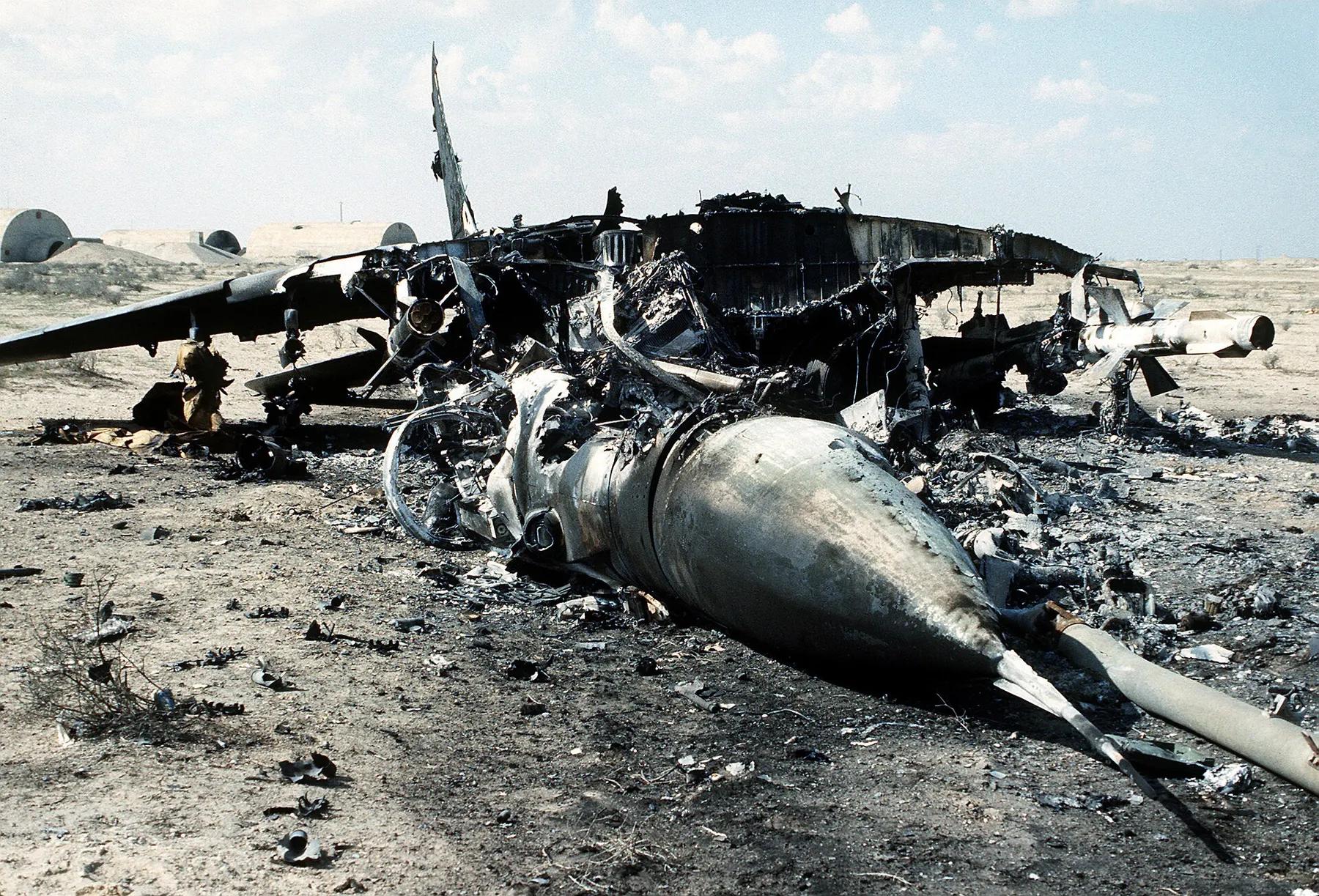
MiG-29
Fighter. Iraqi Air Force
Iraq had 41. Five were lost in air combat, nine in all were destroyed, and seven flew to Iran, by a table Cordesman and Wagner adapted from Marine Corps and Air Force data.
Staff Sgt. Jose Otero. Public domain. SourceMirage F1
Fighter and strike aircraft. Iraqi Air Force
Of 75, eight were lost in air combat, and 30 went to Iran. Iraqi F1s had made long-range attacks on Gulf shipping during the war with Iran.
Antiaircraft guns and surface-to-air missiles
Ground-based air defense. Iraqi air defense forces
Brought down most of the 38 coalition fixed-wing aircraft lost in combat. An AC-130 gunship was shot down during the fighting at Khafji with 14 aboard.
Sea
Coalition navies controlled the Gulf from the first day, enforcing the embargo and launching cruise missiles and carrier strikes, and Iraq's small navy was destroyed. The mine did Iraq the most good at sea, holing two U.S. warships and keeping the battleships from following the ground advance north.
Coalition
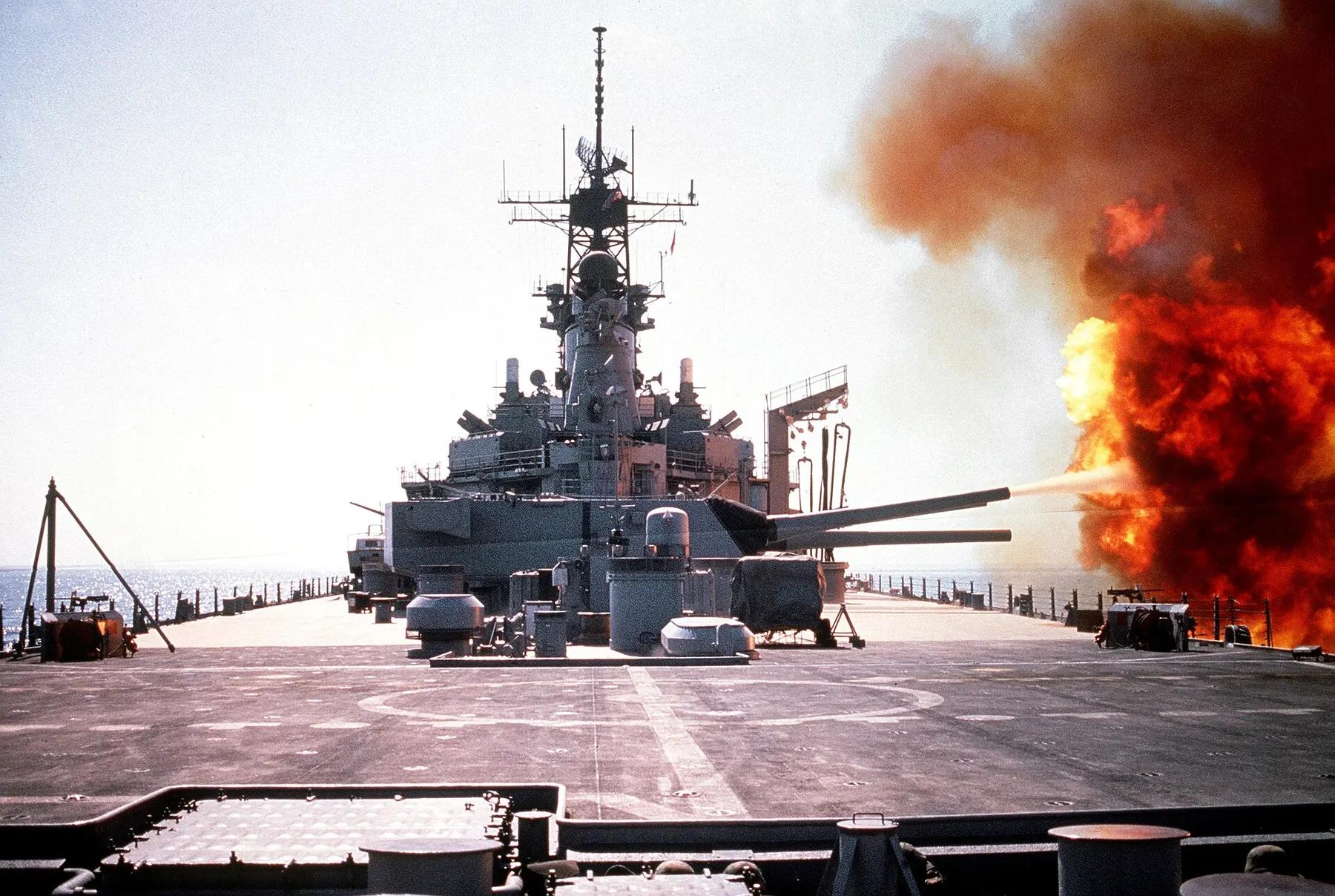
USS Missouri and USS Wisconsin
Battleships. U.S. Navy
Their 16-inch guns could fire a 1,900-pound high-capacity shore bombardment shell or a 2,700-pound armor-piercing shell. The Pentagon's account of Missouri's firing in February cites the 2,700-pound weight. Together they passed two million pounds of ordnance on Iraqi targets. Missouri also launched Tomahawks.
PH2 John Carnes, U.S. Navy. Public domain. SourceAircraft carriers
Carrier battle groups. U.S. Navy
Six carrier battle groups were in the Gulf and Red Sea when the air war began.
Tomahawk
Land-attack cruise missile. U.S. Navy
282 of 288 launched successfully from 16 surface ships and two submarines, 64 percent in the first 48 hours.
PH3 Brad Dillon, U.S. Navy. Public domain. Source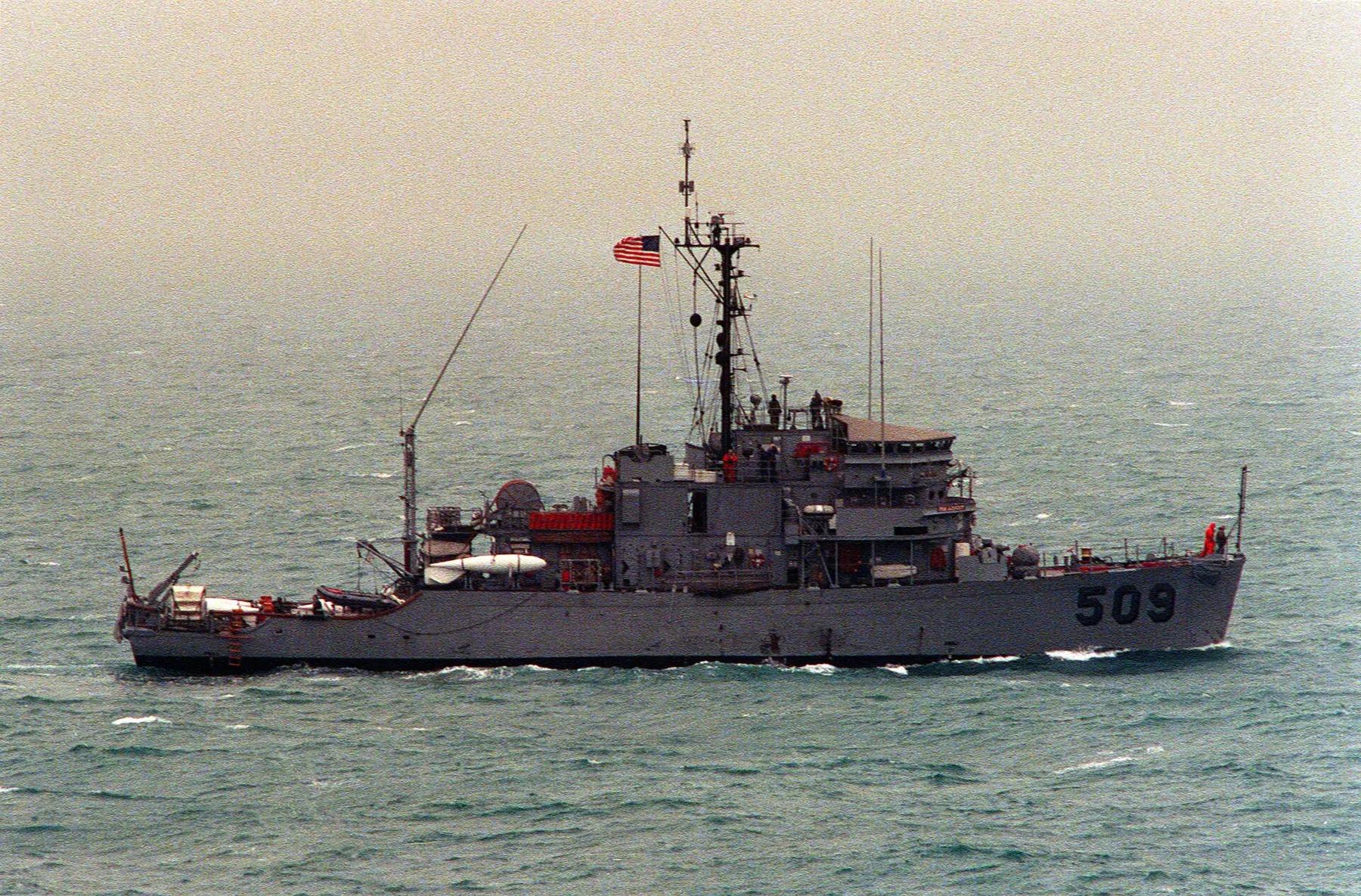
Minesweepers
Mine countermeasures ships. United States, Britain and others
Worked through the northern Gulf under threat from shore missiles, clearing lanes for the battleships.
JO1 Joe Gawlowicz, U.S. Navy. Public domain. Source
Iraq
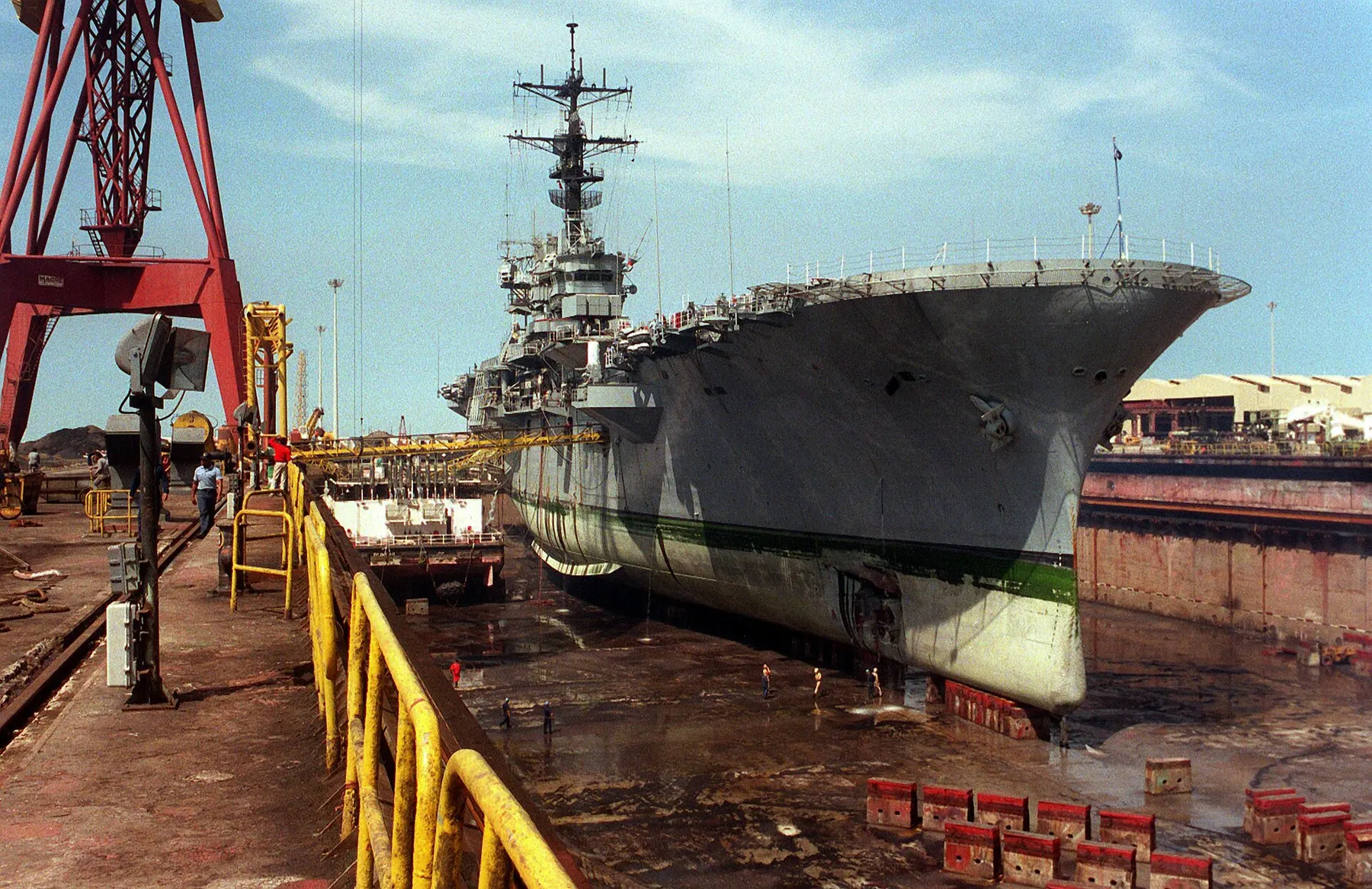
Sea mines
Naval mines. Iraqi Navy
Iraq said after the war that it had laid 1,167. On February 18 they holed USS Tripoli with a 16 by 20 foot gash and badly damaged USS Princeton. The mine threat also kept the battleships from following the ground advance north.
JO1 Gawlowicz, U.S. Navy. Public domain. SourceSilkworm
Shore-launched antiship missile. Iraq
Iraq had about 50 missiles and seven launchers at the start. Its radars targeted the mine-clearing force on February 17.
Exocet
Antiship missile. Iraq
Carried by Iraqi Mirage F1s and some helicopters. Iraq also seized Kuwait's eight missile patrol boats armed with it. The U.S. Navy estimated that it destroyed or damaged 143 Iraqi vessels.
Support and strategic
Satellites, tankers, radar aircraft and an enormous supply effort gave the coalition its speed. Iraq's strategic reply was the modified Scud, an inaccurate missile on mobile launchers that a sustained hunt failed to stop.
Coalition
Patriot
Air and missile defense. United States, Israel, Netherlands
29 batteries in Saudi Arabia, Israel and Turkey. 158 missiles were launched. Army claims of Scuds destroyed fell from near 100 percent to 25 percent with high confidence, and House reviewers found strong evidence for about 9 percent.
Nathan Alpert, Government Press Office of Israel. CC BY-SA 3.0. SourceGPS
Satellite navigation. U.S. and coalition forces
Let units cross featureless desert accurately. By March, 4,490 commercial and 842 military receivers had been issued. Almost 85 percent were commercial models.
E-8 JSTARS
Ground surveillance radar aircraft. U.S. Air Force and Army
Two development aircraft reached Saudi Arabia on January 12. On January 29 JSTARS tracked a convoy, and aircraft reportedly destroyed 58 of its 61 vehicles.
Aerial tankers
In-flight refueling. U.S. and allied air forces
About 360 tanker sorties a day. Some 60 percent of attack sorties needed refueling, and U.S. Strategic Air Command tankers alone refueled an average of 1,433 aircraft a day.
Airlift
Strategic transport. U.S. Air Force and others
Carried more than 500,000 people and 540,000 tons of cargo, by the Air Power Survey's figures.
Iraq
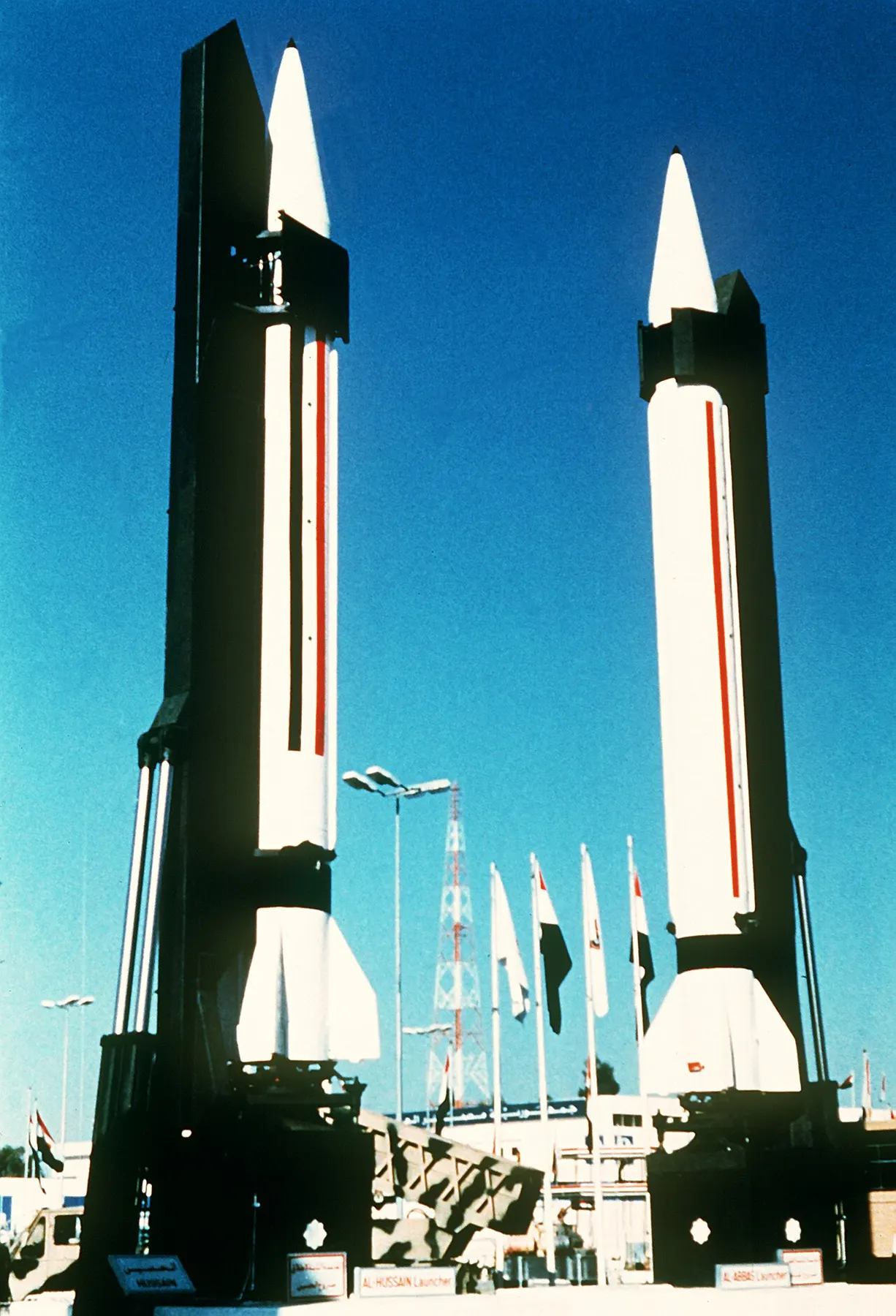
Scud and Al Husayn
Ballistic missile. Iraq
88 modified missiles fired, 42 toward Israel and 46 at Saudi Arabia and other Gulf states, with a range of about 600 kilometers. One killed 28 American soldiers at Dhahran.
U.S. Department of Defense. Public domain. SourceChemical warheads
Chemical weapons. Iraq
Iraq had used chemical weapons against Iran. Gen. Wafiq al-Samarrai said some missiles were fitted with chemical warheads and held back, and none was fired in this war.
Timeline
1990
July 17. Saddam accuses his neighbors
He charges Kuwait and the United Arab Emirates with cheating on oil quotas in collusion with the United States.
July 25. Saddam summons Ambassador Glaspie
Iraq's published transcript of the meeting has her saying the United States has no opinion on Arab border disputes.
August 1. Talks fail in Saudi Arabia
Izzat Ibrahim al-Duri walks out, complaining that Kuwait will neither discuss the islands nor forgive its loans.
August 2. Iraq invades Kuwait
Three Republican Guard divisions cross at 0100, Kuwait City is secure by 1900 and Security Council Resolution 660 condemns the attack by 14 votes to none.
August 6. King Fahd accepts U.S. forces
He gives Dick Cheney his answer in Saudi Arabia on the day Resolution 661 imposes sanctions on Iraq.
August 7. Desert Shield begins
Within 53 hours of the order to move, 45 F-15s from Virginia are on the ground in Saudi Arabia.
August 8. Iraq annexes Kuwait
On August 28 Baghdad goes further and proclaims the country its 19th governorate.
August 19. Westerners become human shields
Saddam announces that as many as 10,000 will be moved to strategic sites to deter attack.
October 10. The Nayirah testimony
A 15-year-old tells a congressional caucus that Iraqi soldiers took babies from incubators, an account later shown to be false.
November 29. Resolution 678 sets a deadline
By 12 votes to 2 with China abstaining, the Security Council authorizes all necessary means if Iraq has not left by January 15.
December 6. Hostages to go free
Saddam announces the release of all foreign detainees a week after the deadline is set.
1991
January 9 to 12, 1991. Geneva fails, Congress votes
Tariq Aziz hands back President Bush's letter to James Baker, and three days later the Senate backs force by 52 votes to 47.
January 17. The air war begins
Tomahawks launch at about 0130, and helicopters hit radar sites in southern Iraq at 0238.
January 18. Missiles fall on Israel
The first modified Scuds strike the country, which will be the target of 42 by the war's end.
January 25. Oil pours into the Gulf
Crude begins flowing from Kuwaiti terminals, and U.S. F-111s later bomb the manifolds to cut it off.
January 29 to 31, 1991. Battle for Khafji
Iraqi forces enter the evacuated Saudi town, and Saudi and Qatari troops retake it with U.S. air and Marine support.
February 13. Amiriyah shelter struck
Two U.S. bombs hit a Baghdad bunker at about 0430, and Iraqi reports give 200 to 300 civilian dead.
February 15. Bush appeals to Iraqis
The president says the Iraqi military and people could force Saddam Hussein aside.
February 18. Mines strike two warships
USS Tripoli and USS Princeton are both badly damaged in the northern Gulf.
February 24. The ground war begins
Coalition forces attack into Kuwait and Iraq at 0400 as the weather turns foul.
February 25. Scud hits Dhahran barracks
The missile kills 28 American soldiers on the day Saddam announces a withdrawal from Kuwait.
February 26. 73 Easting and the Basra road
U.S. cavalry meets Republican Guard armor in a sandstorm while aircraft strike the columns leaving Kuwait City.
February 27. Medina Ridge
The U.S. 1st Armored Division fights the Medina Division for about two hours, and President Bush announces that Kuwait is liberated.
February 28. Offensive operations stop
The halt comes at 0800 local time, 100 hours after the ground attack began.
March 1. Basra rises
The uprising in Iraq's second city spreads across the south and then to the Kurdish north.
March 2 to 3, 1991. Rumaila and Safwan
The U.S. 24th Infantry Division fights the Hammurabi Division, and the next day coalition and Iraqi generals meet at Safwan.
April 3 and 5, 1991. Resolutions 687 and 688
The Security Council sets the cease-fire terms and then condemns the repression of Iraqi civilians.
November 6. The last well is capped
Kuwait puts out its final fire more than eight months after the fighting stopped.
1992
August. A second no-fly zone
The United States, Britain and France bar Iraqi aircraft south of the 32nd parallel.
2022
January. The last reparations payment
The UN Compensation Commission closes out $52.4 billion in awards paid from Iraqi oil revenue.
After action report
The U.S.-led coalition won the war.
It expelled Iraq from Kuwait and restored the Kuwaiti government, which was the limit of its UN mandate. Saddam Hussein kept power, and his government claimed the result as a victory in what it called the Mother of All Battles.
- On the battlefield
- The coalition held the field. Iraqi forces had been driven from Kuwait, coalition troops held a slice of southern Iraq, and U.S. Central Command judged that only five to seven of 43 Iraqi divisions in the theater could still mount an attack. About a third of the armor of the Republican Guard and regular army escaped north.
- In the political outcome
- Kuwait's independence and government were restored and Saudi Arabia was secure. The Iraqi government survived, crushed the uprisings of 1991 and stayed in place for 12 more years under sanctions, weapons inspections and no-fly zones.
- How it ended
- Offensive operations stopped at 0800 local time on February 28, 1991. Generals discussed military terms at Safwan on March 3. Security Council Resolution 687 of April 3 set the formal cease-fire conditions, which took effect after Iraq accepted them. No peace treaty followed.
Iraq invaded Kuwait on August 2, 1990, after a dispute over debts, oil and borders, and annexed it within a week. A UN-authorized coalition led by the United States drove Iraqi forces out with a 38-day air campaign and a 100-hour ground offensive.
Coalition battle deaths were about 247. No one counted the Iraqi military dead: frequently cited studies fall between about 20,000 and 56,000, and published figures run from 1,500 to 150,000.
Civilians bore much of the cost after the shooting stopped. Tens of thousands died when the 1991 uprisings were suppressed, nearly two million Iraqis fled, and demographers estimate that 70,000 to 111,000 died that year from the collapse of health care, power and water.
Kuwait was restored and Saddam Hussein stayed in power. U.S. forces returned to Iraq in 2003.
Objectives, side by side
Coalition
Achieved
Immediate and unconditional Iraqi withdrawal from Kuwait
Completed by force by February 28, 1991.
Achieved
Restoration of Kuwait's legitimate government
The government returned after the liberation. Human rights groups then documented abuses by its security forces.
Partly achieved
Security and stability of Saudi Arabia and the Gulf
The Iraqi threat was sharply reduced, but containing Iraq required sanctions, inspections and patrols for 12 more years.
Partly achieved
Destruction of the Republican Guard as a fighting force
Several Guard divisions were broken. A large part of its armor escaped and helped suppress the uprisings.
Achieved
End the occupation and restore the state
The cost included burned oil fields, looted institutions and hundreds of people still missing decades later.
Iraq
Not achieved
Keep Kuwait as Iraq's 19th province
Iraqi forces were expelled, and Resolution 687 required Iraq to respect the boundary.
Not achieved
Escape its debts and raise oil revenue
Sanctions cut off normal oil exports, and Iraq paid $52.4 billion in compensation through a levy on its oil sales.
Not achieved
Split the coalition by drawing Israel into the war
Israel did not retaliate, and the Arab members of the coalition stayed.
Achieved
Keep the government in power
This is the basis of Iraq's claim to victory. Tariq Aziz had predicted it to James Baker.
Also involved
Not achieved
Overthrow the Baath government
The uprisings were crushed by April 1991.
Partly achieved
Win self-rule in the north
The revolt was defeated, but coalition protection gave part of the Kurdish north a security zone from which Iraqi forces withdrew.
Estimated deaths
- Military
- Coalition: about 247 battle deaths, and about 900 deaths from all causes including accidents and illness. Iraq: unknown, with frequently cited estimates between 20,000 and 56,000 and published extremes from 1,500 to 150,000.
- Civilian
- Iraq: about 3,500 killed directly by the war, 25,000 to 100,000 in the uprisings, and an estimated 70,000 to 111,000 from health effects in 1991. Kuwait: 552 to 5,000, with more than 1,000 by its own count. Israel and Saudi Arabia: three direct deaths between them.
These ranges come from different methods and cannot simply be added together. Iraqi figures in particular were never established by a full count, and some estimates overlap. Each bar spans the low and high estimates on a logarithmic scale, where every step is ten times the last, so small and very large losses fit one chart.
Military
Coalition
U.S. military
148 in battle, 383 from all causes
467 wounded. 35 of the battle dead and 72 of the wounded were hit by friendly fire
How this was counted
Defense Department count covering Desert Shield and Desert Storm. Of the 235 other deaths, most were accidents and illness. Some reports give 147 battle deaths.
Congressional Research Service, American War and Military Operations Casualties
British military
24 killed in action, 47 from all causes
9 of the 24 were killed by U.S. aircraft. 42 wounded in action
How this was counted
Figures given to Parliament in June 1991, with the breakdown in Cordesman and Wagner.
Saudi military
29 killed in action
53 wounded
How this was counted
From a revised allied count compiled for the U.S. Congress. The authors warn that coalition members reported differently.
Egyptian military
12 killed
92 injured
How this was counted
Same allied count.
United Arab Emirates military
6 killed in action
How this was counted
Same allied count.
Syrian military
5 killed
How this was counted
Same allied count.
French military
2 killed in action
28 wounded
How this was counted
Same allied count.
Other coalition forces
About 21, not itemized
How this was counted
Calculated: the allied total of 99 killed in action, minus 24 British, 29 Saudi, 12 Egyptian, 6 Emirati, 5 Syrian and 2 French, leaves 21. Allied deaths from all causes, including accidents, were far higher: about 510.
Calculated from Cordesman and Wagner, The Lessons of Modern War, Vol. IV
Kuwaiti armed forces, August 1990
About 118
How this was counted
A later estimate from a regional reference work. The Pentagon described losses in the invasion as apparently light and the numbers as unknown.
Iraq
Iraqi military, during the war
Unknown. Common estimates 20,000 to 56,000. Published extremes 1,500 to 150,000
About 86,000 prisoners. U.S. intelligence estimated 300,000 wounded in 1991, a figure with the same weaknesses as its death count
How this was counted
No count exists. John Heidenrich argued for a minimum of 1,500 and up to 9,500. Carl Conetta built up 20,000 to 26,000 from unit data and battle reconstructions. William Arkin estimated 49,000 to 63,000, and Beth Daponte used his midpoint of 56,000. The Defense Intelligence Agency offered 100,000 with an error of 50 percent. Cordesman and Wagner describe many of the early estimates as exaggerated. Iraq itself reported 20,000 dead, 19,000 of them military, during the air war.
Conetta, The Wages of War, Appendix 2; Daponte 1993; table in Cordesman and Wagner
Iraqi military, in the uprisings (separate from the war)
About 5,000
How this was counted
Greenpeace and U.S. Census Bureau estimates, based on thin information. Greenpeace said little authoritative information was available.
Civilian
Iraqi civilians, direct effects of the war
About 3,500. Estimates run from 2,278 to 15,000
How this was counted
Iraq's government reported 2,278. Middle East Watch put the limit at 2,500 to 3,000. Daponte combined the sources for 3,664 and rounded to 3,500. Greenpeace estimated 5,000 to 15,000 in 1991.
Daponte, A Case Study in Estimating Casualties from War and Its Aftermath
Iraqi civilians, health effects in 1991
About 70,000 to 111,000
About 70,000 of Daponte's 111,000 were children under 15
How this was counted
Excess deaths estimated from census data and survey-based mortality rates, reflecting damage to power, water and health care as well as sanctions. These are statistical estimates, not counted deaths.
Daponte, A Case Study in Estimating Casualties from War and Its Aftermath
Iraqis killed in the 1991 uprisings (separate from the war)
25,000 to 100,000 reported. About 30,000 civilians in two estimates
How this was counted
Middle East Watch said tens of thousands of civilians were killed. The 25,000 to 100,000 range comes from figures reported in 1991, most of the dead in the south. Rebels also killed officials and soldiers.
Kurdish and other refugees, 1991
15,000 to 30,000
Nearly two million displaced
How this was counted
A Greenpeace estimate for Kurdish deaths in the flight. It also estimated about 1,000 deaths a day among refugees and displaced people from April to June.
Table in Cordesman and Wagner; Middle East Watch, Endless Torment
Kuwaiti civilians and residents
More than 1,000, by Kuwait's count. Other estimates 552 to 5,000
About 605 missing, 246 of them later identified
How this was counted
Kuwait's government reported more than 1,000 murdered. One tally lists 113 Kuwaiti civilians and 439 non-nationals, a total of 552. Greenpeace estimated 2,000 to 5,000. Wartime claims of at least 4,000 executed resisters were later judged exaggerated.
U.S. Department of Defense final report; Fanack; Gulf News on Kuwait's missing-persons committee
Israeli civilians
2 by direct hits
About 230 injured directly. Further deaths from heart failure and stress were reported
How this was counted
Direct deaths are well established. Indirect deaths are harder to count: one study found 147 deaths on January 18, 1991, 58 percent above the same date a year earlier.
Lewis, Fetter and Gronlund, Casualties and Damage from Scud Attacks in the 1991 Gulf War
Saudi civilians
1
About 77 injured
How this was counted
Saudi Press Agency figures reported by Middle East Watch. They could not be independently confirmed.
Kill and loss ratios
A ratio compares reported losses. It depends on who did the counting, it does not measure who was right, and it often says little about who won.
33 to 1
Published figure
Coalition air-to-air, fixed-wing aircraft
Coalition fighters shot down 33 Iraqi fixed-wing aircraft for at most one coalition aircraft lost to an Iraqi fighter.
The Gulf War Air Power Survey calls it the "thirty-three to one box score": 33 Iraqi fixed-wing kills against one possible loss, a U.S. Navy F/A-18 on the first night.
Caution: The one loss is itself a judgment drawn from reconstruction. Iraq's air force largely stopped flying after about nine days and many aircraft fled to Iran, so the number says little about a sustained contest.
38 to 1
Calculated here
Coalition air-to-air, including helicopters
Counting helicopters, 38 Iraqi aircraft were shot down for at most one coalition aircraft.
33 fixed-wing aircraft plus 5 helicopters = 38, divided by 1 possible loss = 38.
Caution: Helicopters are much easier targets than fighters. Other official tallies differ: the Pentagon's overview gives 41 aircraft and helicopters and no confirmed loss.
Calculated from Keaney and Cohen, Gulf War Air Power Survey: Summary Report
About 253 to 1
Calculated here
Iraqi tanks lost per U.S. tank lost in combat, wartime estimate
U.S. Central Command's wartime estimate of Iraqi tank losses, against U.S. tanks lost to combat.
3,800 Iraqi tanks divided by 15 U.S. combat tank losses = 253.
Caution: The Iraqi number includes tanks destroyed from the air and tanks abandoned, the U.S. number leaves out other coalition tanks, and the 3,800 was later revised down.
Calculated from U.S. Department of Defense, Conduct of the Persian Gulf War
About 176 to 1
Calculated here
Iraqi tanks lost per U.S. tank lost in combat, imagery count
Iraqi tanks destroyed or abandoned in the Kuwait theater, by later imagery count, against U.S. combat tank losses.
2,633 Iraqi tanks divided by 15 U.S. combat tank losses = 176.
Caution: Of 163 abandoned or destroyed tanks that study groups could inspect, about half, 78, showed no sign of having been hit by any munition. Many crews had left their tanks, so the figure counts desertion along with combat.
About 6 to 1
Calculated here
Iraqi to coalition military deaths, lowest published estimate
Iraqi military dead for each coalition battle death, at the lowest published Iraqi figure.
1,500 divided by 247 (148 U.S. plus 99 allied battle deaths) = 6.1.
Caution: John Heidenrich's 1,500 is a stated minimum, not a best estimate. The Iraqi side of every ratio in this group is uncertain by a wide margin.
Calculated from the table in Cordesman and Wagner, The Lessons of Modern War, Vol. IV
About 81 to 105 to 1
Calculated here
Iraqi to coalition military deaths, Conetta estimate
Iraqi military dead for each coalition battle death, using a bottom-up estimate of 20,000 to 26,000.
20,000 divided by 247 = 81. 26,000 divided by 247 = 105.
Caution: Conetta's estimate depends on assumed fatality rates and battle reconstructions. The ratio reflects the conditions of the war, including coalition air supremacy.
About 227 to 1
Calculated here
Iraqi to coalition military deaths, Daponte's figure
Iraqi military dead for each coalition battle death, using 56,000.
56,000 divided by 247 = 227.
Caution: The 56,000 is the midpoint of William Arkin's estimate, which Daponte adopted for a demographic study.
Calculated from Daponte, A Case Study in Estimating Casualties
About 405 to 607 to 1
Calculated here
Iraqi to coalition military deaths, highest published estimate
Iraqi military dead for each coalition battle death, at the Defense Intelligence Agency's central figure and its upper bound.
100,000 divided by 247 = 405. 150,000 divided by 247 = 607.
Caution: The agency attached an error of 50 percent to this 1991 figure, and later estimates are far lower. It marks the top of the published range.
Calculated from the table in Cordesman and Wagner, The Lessons of Modern War, Vol. IV
What it cost
- About $61 billion
- U.S. incremental cost
- The Pentagon's estimate. Allies committed almost $54 billion of it, roughly two-thirds from the Gulf states.
- More than $48 billion
- Saudi spending and pledges
- From August 1990 to the end of January 1991, by Cordesman and Wagner's estimate.
- $52.4 billion
- Reparations paid by Iraq
- To more than 1.5 million claimants, completed in January 2022.
- 2,633 of 3,475 lost
- Iraqi tanks in the Kuwait theater
- Destroyed or abandoned, by imagery count. 842 remained under Iraqi control on March 1, 1991.
- 38 lost in combat, 15 otherwise
- Coalition aircraft
- Across more than 100,000 sorties.
- 33 fixed-wing shot down, more than 130 flown to Iran
- Iraqi aircraft
- Those sent to Iran, military and civilian, were impounded.
- More than 700 burned
- Kuwaiti oil wells
- Kuwait counts 737. The last fire was out on November 6, 1991.
- As much as 8 million to 11 million barrels
- Oil in the Gulf
- The Library of Congress gives as much as 8 million and the Conflict and Environment Observatory 11 million.
- Nearly 2 million in 1991
- People displaced from Iraq
- 1.4 million to Iran and 450,000 to Turkey crossed the borders.
- From more than 350,000 to about 80,000
- Palestinians in Kuwait
- By November 1991, through flight during the occupation and pressure and expulsion after it.
Lessons drawn
- United States: air power and its limits
- The Gulf War Air Power Survey concluded that air power essentially paralyzed or demoralized Iraq's heavy divisions. The General Accounting Office found some claims for advanced weapons overstated and the promised result of one target, one bomb undemonstrated.
- United States: technology and training
- Thermal sights, GPS and long-range tank guns gave coalition crews a large edge, and the Pentagon credited crew skill and training as well. The same speed and range raised the danger of friendly fire, which caused about a quarter of U.S. battle deaths.
- Coalition: plan the ending
- Cordesman and Wagner call Safwan a lesson in making the end of a conflict a basic aim of war before the war is won. Schwarzkopf wrote his own terms without guidance from Washington, and the upheaval inside Iraq went unconsidered.
- Iraq: survival as victory
- Tariq Aziz told James Baker that a leadership that fights America survives politically. The government lost most of its army in the Kuwait theater in 1991 and kept the state.
- Iraq: the limits of a defensive war
- A strategy built on the trench battles of the war with Iran met an opponent that controlled the air, moved around the flank and fought at night. Its military intelligence chief later said of Saddam, "We always had to give him the information he liked."
- Civilians and infrastructure
- Strikes on power and water showed that a campaign killing relatively few people directly can still do lasting harm. Human Rights Watch pressed for review of attacks on such dual-use targets.
- Claims outran the evidence
- The incubator story and the early Patriot numbers both spread worldwide before anyone tested them, and both were corrected after the political decisions they supported had been made.
Still disputed
- How many Iraqi soldiers died?
- John Heidenrich argued for a minimum of 1,500 and up to 9,500. Carl Conetta built up 20,000 to 26,000 from unit data. William Arkin estimated 49,000 to 63,000, and Beth Daponte used his midpoint of 56,000. The Defense Intelligence Agency offered 100,000 with an error of 50 percent. The U.S. government made no final count, and Iraq's records were never opened to a full accounting.
- Did the United States signal that it would tolerate an invasion?
- Critics of U.S. policy cite the Iraqi transcript of the Glaspie meeting. Glaspie testified that she warned Saddam against force, the American cable has her pressing him about troops on the border, and Tariq Aziz called the idea that Washington would stand aside nonsense.
- Should the coalition have gone on?
- Critics point to the third of Iraq's armor that Cordesman and Wagner calculate escaped, and they argue that stopping at 100 hours left the Republican Guard able to crush the uprisings. Schwarzkopf called stopping a strategic decision, and the Bush administration held that its mandate was the liberation of Kuwait.
- How much did air power achieve against Iraqi armor?
- Wartime estimates claimed high attrition before the ground attack. Postwar sampling found only 10 to 20 percent of inspected tanks hit from the air and about half not hit at all, though the sample was small.
- Was the Amiriyah shelter a lawful target?
- U.S. officials and the Air Power Survey describe a military command site not known to hold civilians. Iraq described an attack on sheltering families. Human Rights Watch called the failure to warn a serious violation of the laws of war.
- Was the attack at Rumaila justified?
- Seymour Hersh reported in 2000 that many generals he interviewed believed the March 2 attack went beyond the threat. Gen. Barry McCaffrey said Iraqi forces fired first and that Army investigations found his response justified.
- How well did Patriot work?
- Army estimates fell from near 100 percent to 52 percent, and to 25 percent with high confidence. Reviewers for a House committee found strong evidence for about 9 percent. Pentagon reports said the data might never allow a final score.
- What caused Gulf War illness?
- The federal research advisory committee ties it to exposures including pesticides and pyridostigmine bromide. Researchers have not settled how those exposures produce the illness or whether others contributed.
- How many children died under sanctions?
- A 1999 survey by UNICEF and the Iraqi government underlay claims of 500,000 excess child deaths. Tim Dyson and Valeria Cetorelli argue that the survey data were rigged and that no such sustained rise took place.
Sources
Figures for wars are estimates, and many are disputed. Where credible sources differ, this page gives the range and says who counts what. Maps are drawn from Natural Earth country shapes, which show today's borders.
- Conduct of the Persian Gulf War: Final Report to Congress, U.S. Department of Defense, 1992 (archived copy)
- Conduct of the Persian Gulf War, Appendix T: Performance of Selected Weapon Systems, U.S. Department of Defense, 1992 (archived copy)
- Gulf War Air Power Survey: Summary Report, Thomas A. Keaney and Eliot A. Cohen, U.S. Air Force, 1993 (archived copy)
- Operation Desert Storm: Evaluation of the Air Campaign, U.S. General Accounting Office, 1997
- The Lessons of Modern War, Volume IV: The Gulf War, Anthony H. Cordesman and Abraham R. Wagner, Center for Strategic and International Studies
- Jayhawk! The VII Corps in the Persian Gulf War, Stephen A. Bourque, U.S. Army Center of Military History, 2002
- U.S. Marines at Al-Khafji, brief history, U.S. Marine Corps History Division
- Who Goes There: Friend or Foe?, U.S. Congress, Office of Technology Assessment, 1993 (archived copy)
- Operation Desert Storm: Apache Helicopter Fratricide Incident, U.S. General Accounting Office, 1993
- American War and Military Operations Casualties: Lists and Statistics, Congressional Research Service
- Performance of the Patriot Missile in the Gulf War, U.S. House Committee on Government Operations, Report 102-1086, 1992
- The Wages of War, Appendix 2: Iraqi Combatant and Noncombatant Fatalities in the 1991 Gulf War, Carl Conetta, Project on Defense Alternatives, 2003
- A Case Study in Estimating Casualties from War and Its Aftermath: The 1991 Persian Gulf War, Beth Osborne Daponte, 1993 (reproduced text)
- Needless Deaths in the Gulf War, Middle East Watch / Human Rights Watch, 1991
- Endless Torment: The 1991 Uprising in Iraq and Its Aftermath, Middle East Watch / Human Rights Watch, 1992
- World Report 1992: Kuwait, Human Rights Watch
- Iraq/Occupied Kuwait: Human Rights Violations Since 2 August, Amnesty International, 1990
- Casualties and Damage from Scud Attacks in the 1991 Gulf War, George N. Lewis, Steve Fetter and Lisbeth Gronlund, MIT Defense and Arms Control Studies Program, 1993
- Iraqi Document on Meeting with U.S. Envoy, The New York Times, September 23, 1990, reproduced by GlobalSecurity.org
- The Gulf War: oral histories of Tariq Aziz, Wafiq al-Samarrai and H. Norman Schwarzkopf, PBS Frontline
- Report to the Secretary-General on Humanitarian Needs in Iraq (excerpts), UN mission led by Martti Ahtisaari, 1991, reproduced by MERIP
- Allied Air War Struck Broadly in Iraq, Barton Gellman, The Washington Post, June 23, 1991, reproduced by Global Policy Forum
- Gulf War General Fires At Critics, CBS News, May 15, 2000
- Overwhelming Force, Seymour Hersh, The New Yorker, May 22, 2000, reproduced text
- Statement of Barry McCaffrey on the New Yorker article, Office of National Drug Control Policy, May 15, 2000, via GlobalSecurity.org
- Amiriyah bombing, 30 years on, Al Jazeera, 2021
- Amiriya bomb shelter: America's legacy in Iraq, Gulf News
- Chronology of the Gulf crisis, August 1990, Keesing's Record of World Events
- Mark 7 16-inch/50 caliber gun, Federation of American Scientists
- Security Council Resolutions 660, 661, 678 and 688, United Nations, texts at Wikisource
- UNSCOM: Basic Facts, United Nations
- United Nations Compensation Commission Pays Out Final Compensation, United Nations Office at Geneva, 2022
- Changing Views on Child Mortality and Economic Sanctions in Iraq (press summary), London School of Economics, 2017
- Gulf War Illness and the Health of Gulf War Veterans: Research Update and Recommendations, Research Advisory Committee on Gulf War Veterans' Illnesses, via CDC Stacks
- Air Force history of Operation Provide Comfort, Daniel L. Haulman, U.S. Air Force
- UK Ministry of Defence briefing on the Iraq no-fly zones, Iraq Inquiry, UK National Archives
- Saudi Arabia: The Environment and the 1991 Persian Gulf War, Library of Congress country study
- What the Environmental Legacy of the Gulf War Should Teach Us, Conflict and Environment Observatory
- Interview with Dick Cheney, The Gulf War oral history, PBS Frontline
- Interview with H. Norman Schwarzkopf, The Gulf War oral history, PBS Frontline
- U.S. Army Engineers in the Gulf War (EP 870-1-50), U.S. Army Corps of Engineers, reproduced by Integrated Publishing
- Patriot Missile Defense: Software Problem Led to System Failure at Dhahran, Saudi Arabia (IMTEC-92-26), U.S. General Accounting Office, February 4, 1992, text reproduced by New York University
- 35 Years Later, PWED Remembers Fallen 14th QM Detachment, Defense Visual Information Distribution Service
- Officials Identify Gulf War Pilot's Remains, Defense Visual Information Distribution Service
- Obituary: Ali Hassan al-Majid, Al Jazeera, 2010
- Sheikh Fahad Al-Ahmad Al-Sabah, Olympedia
- Kuwait's "Stolen" Incubators: The Widespread Repercussions of a Murky Incident, Middle East Watch, 1992
- US Bombing Slows Growth Of Massive Gulf Oil Spill, The Christian Science Monitor, January 29, 1991
- March 3, 1991, Air Force Historical Foundation