Articles & BlogBy Trapper W. Brown7 min readCurrent to 10 November 2026
Security+ SY0-701, Objective 5.5: Explain the types and purposes of audits and assessments
Why would you pay a stranger to break into your own network? Because someone else is already trying for free, and they will not send you a report afterward.
Audits and assessments are how an organization checks its own claims. An audit asks whether you did what you said you would do. A penetration test asks whether it worked. Security+ puts both in Domain 5, along with a short vocabulary for who does the checking and how much they are told in advance.
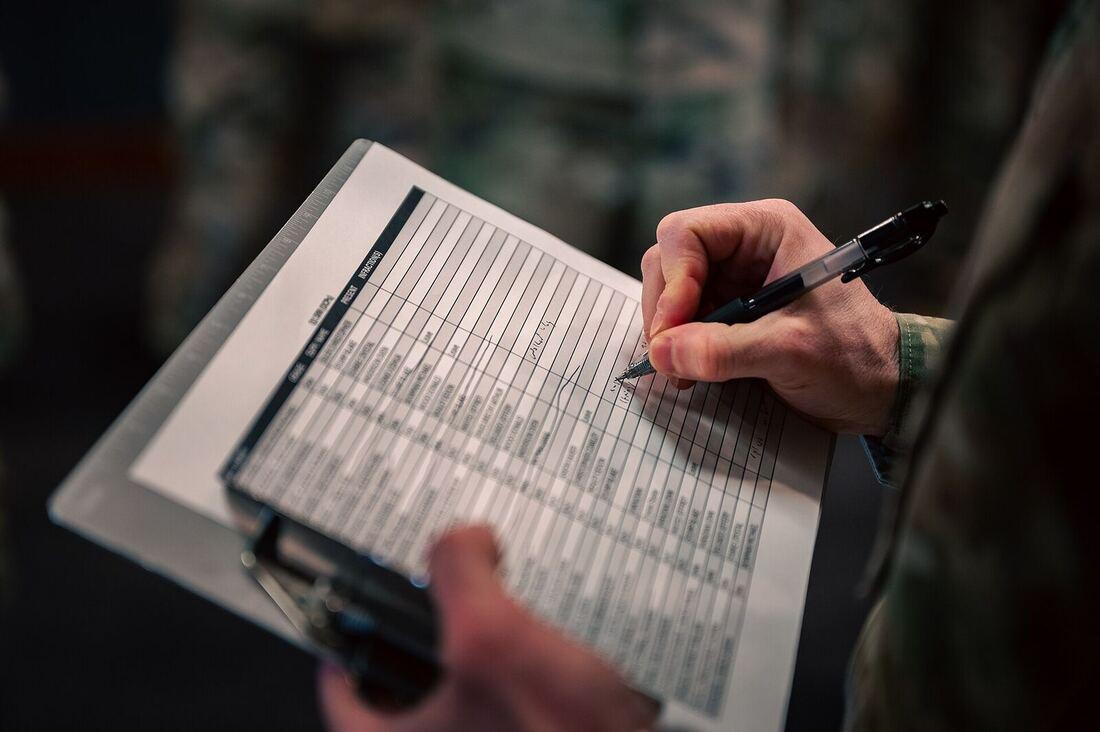
 A physical penetration tester's kit can be this small. Photo by Sohc4, public domain, via Wikimedia Commons.
I think of these as opposite ends of one question. The auditor reads your password standard and confirms it says 14 characters. The penetration tester finds the one service account whose password is still the vendor default. You need both people.
Audit, assessment and attestation
The words are used loosely at work, so pin them down for the exam.
An audit is a formal check against a defined standard, with evidence, done by someone independent of the work being checked. It ends in findings. An assessment is broader and usually friendlier: a review of how well something works and where it is weak, which may follow no fixed standard at all.
Here is the difference in practice. An auditor checking a clinic's access control asks for the list of people who left last year and tests whether each account was disabled on time. An assessor looks at the whole offboarding process and tells you where it is likely to fail next.
Attestation is what comes out at the end: a formal statement, signed by someone with the standing to make it, that something is true. An outside auditor attests that your controls met a standard during a stated period. An executive attests that the yearly access review was done. The statement matters because other people rely on it without redoing the work, and because the signer is accountable if it is false.
Looking at yourself
Internal reviews are done by your own people. The exam lists three things here.
Compliance is the purpose of many internal audits: checking your practices against the laws, regulations and contracts you are bound by, before an outsider does.
The audit committee is a group of board members who oversee auditing. Internal auditors report to it and not to the managers whose work they examine. That reporting line is what lets an internal auditor write an unwelcome finding and keep their job.
Self-assessments are the lightest form. A department scores itself against a checklist or a framework. They are cheap and fast, and they are useful for finding gaps early. They are also graded by the student. Treat a self-assessment as a to-do list, never as proof.
For a 12-person clinic, internal review might be the office manager walking through a checklist once a quarter. A hospital system has an internal audit department with its own staff and a yearly plan approved by the audit committee. The principle is the same at both sizes: look before someone else does.
Letting outsiders look
External reviews are done by someone who does not work for you. The exam lists four.
| External review | Who does it | Why |
|---|---|---|
| Regulatory | A government agency or a body it authorizes | To confirm you follow the law that applies to your sector |
| Examination | An examiner, often from a regulator, following a formal method | To test specific claims in detail and reach an official conclusion |
| Assessment | An outside firm you hire | To find weaknesses and recommend fixes |
| Independent third-party audit | An audit firm with no stake in the result | To give customers and partners an opinion they can trust |
The value of an outsider is independence. They have no reason to protect a colleague, and they have seen how fifty other organizations do the same thing.
Watch out
Passing an audit does not mean you are secure. An audit samples: it checks some systems, for some controls, over some period. It tells you the controls it looked at were in place. It does not tell you an attacker cannot get in.
Four kinds of penetration test
A penetration test is an authorized, simulated attack. A vulnerability scan lists the weaknesses a tool can detect. A penetration tester goes further and tries to use them, to show what an attacker could actually reach.
There is no shortage of weaknesses to try. The Known Exploited Vulnerabilities catalog kept by CISA, the United States cybersecurity agency, lists flaws that attackers have used in real attacks. As of 10 November 2026 it held 1,779 entries.
| 2022 | 555 |
|---|---|
| 2023 | 187 |
| 2024 | 186 |
| 2025 | 245 |
| 2026 so far | 295 |
Source: CISA Known Exploited Vulnerabilities catalog, version 2026.11.10 (2026 counted to 10 November)
Attackers use them. Verizon's 2026 Data Breach Investigations Report found that exploiting a vulnerability was the first step in 31 percent of breaches where the way in was known, a count that leaves out errors and misuse. Credential abuse was the first step in 13 percent on the same basis.
The exam names four kinds of penetration test.
| Type | What happens | Example |
|---|---|---|
| Physical | Testers try to get into the building and the rooms that matter | Following an employee through a badge door and reaching the server closet |
| Offensive | A red team attacks the way a real adversary would | Phishing a user, then moving from that laptop toward the patient database |
| Defensive | A blue team's ability to detect and respond is the thing being tested | Checking whether the monitoring team notices the attack and how fast it reacts |
| Integrated | Attackers and defenders work together and share notes as they go | A purple team exercise: red runs a technique, blue tunes its alerts, repeat |
An offensive test with no defensive lesson is half used. If the red team got in and the blue team never learned how, you paid for a report and nothing else. That is the case for integrated testing, and it is where I would spend a limited budget.
Every test starts with written permission and rules of engagement: what is in scope, when, and who to call if something breaks.
How much does the tester know?
The exam describes three test environments by how much information the tester is given.
| Environment | What the tester starts with | What it simulates |
|---|---|---|
| Known | Full details: network diagrams, source code, accounts | An insider, or the most thorough review per hour paid |
| Partially known | Some details, such as a user login or a list of addresses | An attacker who already has a foothold, or a business partner |
| Unknown | Nothing but the organization's name | An outside attacker starting cold |
You may know these by older names: white box, gray box and black box.
An unknown test feels the most realistic, but much of the paid time goes to finding out what exists. A known test skips that and spends the hours on depth. A small clinic buying three days of testing will usually get more from a known or partially known environment.
Tip
Match the amount of information to the term. Everything given is known. Nothing given is unknown. Anything in between is partially known. If the question mentions source code or full documentation, it is a known environment.
Reconnaissance: passive and active
Before attacking anything, a tester gathers information. The exam splits this in two.
Passive reconnaissance collects what is already public without touching the target's systems: the company website, job postings that name the software in use, public domain records, staff profiles on social media. The target has no means of noticing, because nothing was sent to it.
Active reconnaissance interacts with the target directly: scanning ports, probing services, calling the front desk to ask who runs IT. It gives better detail, and it can be seen in logs.
Defenders should run the passive half on themselves. Search for your own organization the way a tester would and see what turns up: the format of staff email addresses, a forgotten test site, a vendor's case study that names your systems. Anything you can find in an afternoon, an attacker can find too.
The dividing line is contact. Reading a job posting is passive. Sending one packet to the company's mail server is active.
What to remember
- An audit checks against a standard. An assessment looks for weaknesses. An attestation is the signed statement that something is true.
- Internal: compliance checks, the audit committee and self-assessments.
- External: regulatory reviews, examinations, assessments and independent third-party audits.
- Penetration tests are physical, offensive, defensive or integrated.
- Known, partially known and unknown describe how much the tester is told.
- Passive reconnaissance makes no contact with the target. Active reconnaissance does.
- No testing without written permission and rules of engagement.
A clean audit and a rough penetration test in the same year are not a contradiction. The first says you did what you wrote down. The second shows what you still need to write.