Articles & BlogBy Trapper W. Brown6 min read
For renters and owners who want a safer home without buying a system.
What should you buy first to protect your home? Probably nothing. The measures that matter most are the ones you already own and may not be using.
That is good news for a small budget. Home security gets sold as cameras, apps and monthly plans, and those have a place. But the order matters. Habits come first because they are free. Doors and windows come next, then lights, then cameras and alarms. If you spend in that order, each dollar lands where it does the most.
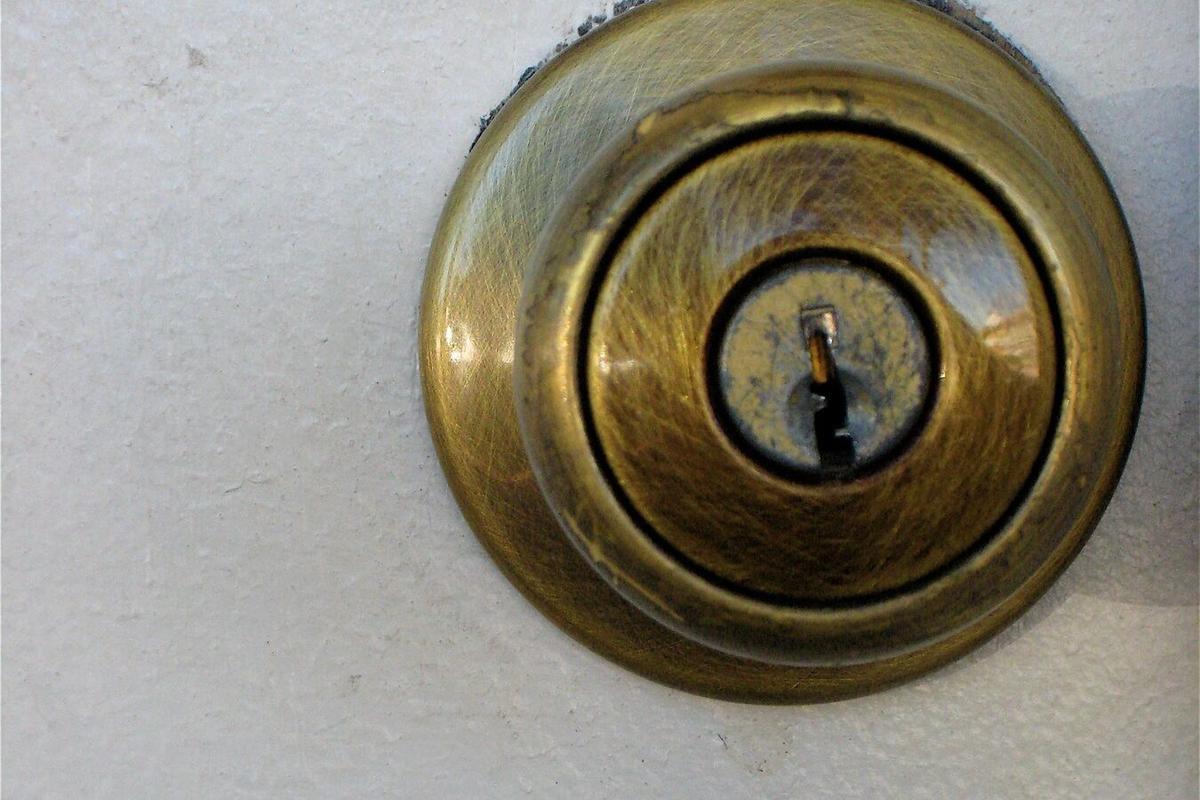 The lock you already own is the first thing to use. Photo by cogdogblog, CC0, via Wikimedia Commons.
What do the numbers say?
Start with some calm. Burglary in the United States has been falling for a long time. The FBI's Summary of Reported Crimes in the Nation, 2025 estimated that burglary fell 15.8% from 2024. The rate was 193.6 burglaries per 100,000 people in 2025, down from 231.0 in 2024 and from 731.7 in 2006.
| 2006 | 731.7 |
|---|---|
| 2024 | 231 |
| 2025 | 193.6 |
Source: FBI, Summary of Reported Crimes in the Nation, 2025
The same report found that burglaries were most often reported between noon and 5:59 p.m. That surprises people who picture a break-in at midnight. Afternoon is when many homes sit empty, which is a likely reason, and it tells you when your home needs to look after itself.
The second source is older, and I want to be clear about that. The Bureau of Justice Statistics report Victimization During Household Burglary was published in 2010 and covers 2003 to 2007. Nothing newer asks the same questions in the same detail. It found that where no one was home, entry was through an unlocked door or window in 40% of burglaries and through an open one in 17%.
| Unlocked door or window | 40% |
|---|---|
| Open door or window | 17% |
Source: Bureau of Justice Statistics, Victimization During Household Burglary, 2010
Put those two together and more than half of those entries needed no force at all. That is the case for starting with habits.
| Finding | Figure | Source |
|---|---|---|
| Change in burglary from 2024 | Down an estimated 15.8% | FBI, 2025 |
| When burglaries were most often reported | Noon to 5:59 p.m. | FBI, 2025 |
| Entry through an unlocked door or window, no one home | 40% | Bureau of Justice Statistics, 2003 to 2007 |
| Entry through an open door or window, no one home | 17% | Bureau of Justice Statistics, 2003 to 2007 |
Free: the habits
The cheapest security measure is turning a lock you already have.
Lock every exterior door when you leave, including the door from the garage into the house. Close and lock ground-floor windows, even on a short trip. Shut the garage door. Do the same before bed. Make it a routine tied to something you already do, like picking up your keys.
A few more habits cost nothing:
- Keep keys, wallets and bags out of sight from windows and away from the door.
- Do not hide a spare key outside. Leave one with a neighbor you trust.
- Bring in packages and mail promptly, or ask someone to do it when you are away.
- Get to know the people next door. A neighbor who knows your car and your routine will notice when something does not fit.
Watch out
The common mistake is buying a camera before fixing the habits. A camera on a house with an unlocked back door records the loss in good detail. Lock first, then spend.
Cheap: doors and windows
Once the locks are being used, make them worth using. Look at each exterior door and ask three things. Is the door solid? Does it have a deadbolt? Is the strike plate, the metal piece on the frame that the bolt slides into, held by screws long enough to reach the framing behind it? Longer screws are one of the least expensive improvements you can make, and a hardware store can tell you what fits.
Sliding doors and windows deserve a look too. Many have weak latches, and an inexpensive secondary lock or a bar in the track adds a second step.
If you rent, ask your landlord before changing hardware, and ask whether the locks were changed after the last tenant left. That is a fair question, and many landlords will do it on request.
Then lights, and cameras last
Light makes a home easier to watch, for you and for your neighbors. A porch light on a dusk-to-dawn bulb and a motion light over the back door or driveway cover most homes. Solar motion lights need no wiring, which suits renters.
Inside, a lamp on a timer makes an empty house look occupied through the afternoon and evening. Trim shrubs near doors and windows so the light has something to show.
Cameras and alarms are useful. They come last because they do the least on their own. A doorbell camera lets you see and speak to whoever is at the door, whether you are in the kitchen or at work. An alarm tells you, or a monitoring service, that a door has opened.
Before you buy, decide who will receive the alert and what they will do about it. If the honest answer is "nobody, most of the time," buy the light.
| Step | Rough cost | What it does |
|---|---|---|
| Lock doors and windows every time | Free | Removes the most common way in |
| Hide valuables, collect mail, know neighbors | Free | Makes the home less inviting and better watched |
| Longer strike plate screws, window and slider locks | Low | Slows forced entry |
| A deadbolt or a solid door where one is missing | Low to moderate | Slows forced entry |
| Dusk-to-dawn and motion lights, a lamp timer | Low to moderate | Makes the home visible and look occupied |
| Doorbell camera | Moderate | Lets you see and answer the door from anywhere |
| Alarm, with or without monitoring | Moderate to ongoing | Alerts someone when a door or window opens |
If someone is home
Most burglaries happen to empty houses, but not all. The same Bureau of Justice Statistics report found that someone was home in about 28% of household burglaries, and that violence occurred in 7%. Those are figures from 2003 to 2007, and they describe a small share of a crime that has become much less common since.
The practical advice is short. Property can be replaced. If you come home and a door is open or a window is broken, do not go in. Go to a neighbor's house or back to your car, and call 911. If you are inside and hear someone, get yourself and your family behind a locked door or out of the house, and call 911 from there.
Tip
Answer the door without opening it. Speaking through the door or a doorbell camera shows that someone is home, and you decide whether to open it.
What you can do today
- Walk the outside of your home and try every door and ground-floor window.
- Check the door between the garage and the house.
- Bring in any spare key hidden outside.
- Look in through your front windows. Move anything valuable that you can see.
- Turn on the porch light at dusk tonight, and note the dark corners.
- Trade phone numbers with one neighbor.
What to remember
- Burglary is far less common than it was, and most often reported in the afternoon.
- In the older federal data, most entries to empty homes came through an unlocked or open door or window.
- Spend in order: habits, doors and windows, lights, then cameras and alarms.
- An alert only helps when someone is ready to act on it.
- If something looks wrong when you get home, stay out and call 911.
A safer home is mostly a matter of routine. The hardware helps, but the lock you turn every time you leave does more than the camera you bought once and stopped checking.