Articles & BlogBy Trapper W. Brown6 min read
For drivers, and for anyone who carries a bank card.
Where are you most distracted on an ordinary day? Probably somewhere dull: a parking space, a cash machine, a fuel pump.
These places have something in common. You are standing still, your attention is on a screen or a keypad, and you have a card, cash or keys in your hand. Nothing about them is especially dangerous. People use them every day without a problem. They are simply the moments when a little attention goes a long way, and the habits that help are small enough to keep.
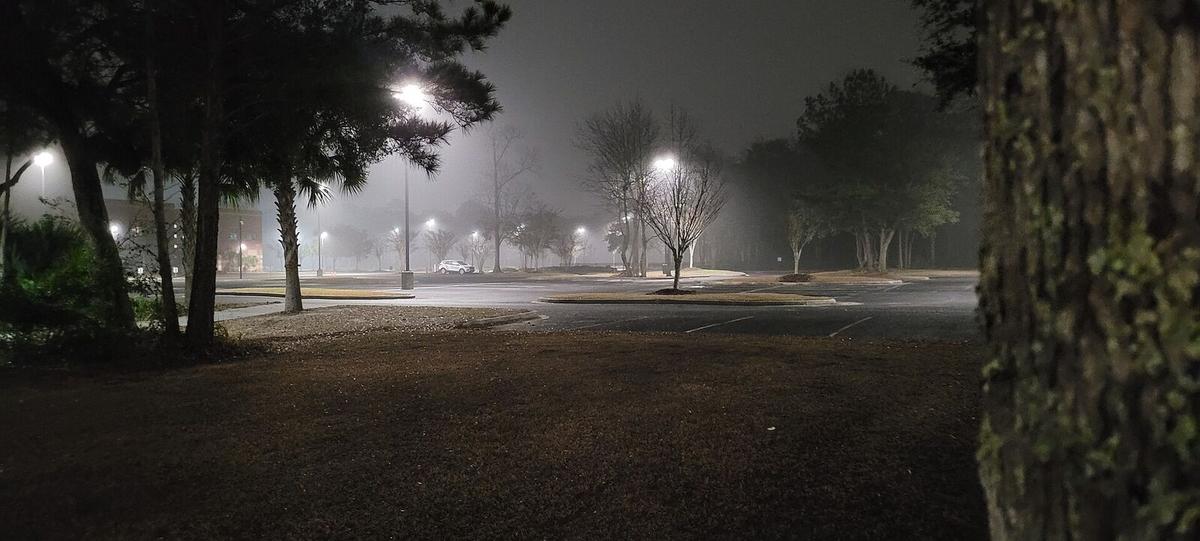 Good light and a clear view are what you are looking for when you choose a place to park. Photo by Drakeerv, CC0, via Wikimedia Commons.
What do the numbers say?
Start with good news. The FBI's Summary of Reported Crimes in the Nation, 2025 estimated that motor vehicle theft fell 22.7% from 2024. The rate was 197.0 thefts per 100,000 people in 2025, down from 256.0 in 2024 and 321.9 in 2023.
| 2023 | 321.9 |
|---|---|
| 2024 | 256 |
| 2025 | 197 |
Source: FBI, Summary of Reported Crimes in the Nation, 2025
The same report found that vehicle thefts were most often reported between 6:00 p.m. and 11:59 p.m. That is the evening: dinner, a film, a shift, a car left in one spot for hours after dark.
Card fraud is the other half. The FBI says skimming, which is copying card details with a hidden device on a card reader, "costs financial institutions and consumers more than $1 billion each year". And the Federal Trade Commission counted about 3 million fraud reports in 2025, with $15.9 billion in reported losses across every kind of fraud.
Parking lots
A parking lot is a transition. You are moving between a building and a car with your hands full and your mind on the next thing. Two things are at risk here, the car and your attention, and they call for different habits.
For the car, the basics do most of the work:
- Lock it every time, and close the windows, even for a short stop.
- Take the keys or the fob with you. Do not leave a spare in the car.
- Never leave the engine running while you step away.
- Put bags, chargers and anything that looks valuable in the trunk before you arrive, not after you park.
- At night, park under a light and where people pass by.
Given the FBI's finding on evening thefts, the last parking decision of the day deserves the most thought. The spot that was fine at noon may be dark and empty when you come back.
For yourself, the habit is about timing. Find your keys before you leave the building. Walk with your phone away and your head up. Glance around and inside the car as you approach. Get in, lock the doors, and start the car. Then answer the message.
If something about the lot bothers you, go back inside. Ask a store employee or a security guard to walk out with you.
ATMs
At a cash machine you are concerned with two things: the machine and the people near it.
The FBI's advice on skimming is practical and takes a few seconds:
- Inspect the card reader before you use it. Look for anything loose, crooked, damaged or out of place.
- Pull at the edges of the keypad. A false cover placed over the real keys may shift.
- Cover the keypad with your other hand when you enter your PIN.
- Prefer tap or chip over swiping the stripe.
- Use credit over debit where you can, so that your bank account is not the one exposed.
If a machine does not look right, do not use it. Tell the bank or the business, and find another.
For the people nearby, choose your machine. One inside a bank lobby or a busy store is better than one alone on a dark wall. If someone is standing too close, wait or leave. When the cash comes out, put it and the card away before you turn around, and count it later.
Watch out
If someone demands your cash, card or car, give it up. Do not argue and do not hold on. Get away, get somewhere safe, and call 911. Everything in your wallet can be replaced.
Gas pumps
A fuel pump combines the other two. It is an outdoor card reader that many people use and few people watch, and your car sits unlocked beside it while you stand with your back turned.
The FBI's skimming advice applies here as well: look at the reader before you put your card in, and tap to pay if the pump allows it. My own additions are to compare the reader with the ones on the pumps beside it, and to pay inside when anything looks different. If a pump looks tampered with, use another and tell the attendant.
Then the car. Turn off the engine, take the keys, and lock the doors while you pump, including the passenger side. Keep your bag and phone out of sight, not on the seat. Stay with the car instead of sitting in it with your eyes on a screen. If you go inside to pay, lock up first.
| Place | What is at risk | The habits that cover most of it |
|---|---|---|
| Parking lot | The car, what is in it, your attention | Lock up, hide valuables early, keys ready, phone away |
| ATM | Your card, PIN and cash | Check the reader, cover the PIN, pick a busy spot |
| Gas pump | Your card and the open car | Check the reader, tap or pay inside, lock while pumping |
If your card is copied anyway
Sometimes you do everything right and a charge appears that you did not make. That is not a failure on your part. Skimming devices are built to be missed.
Call the number printed on the back of your card and tell your bank or card issuer. Then report it to the FBI's Internet Crime Complaint Center at ic3.gov, which is where the FBI asks for skimming reports. Scams and bad business practices go to the FTC at reportfraud.ftc.gov.
| What happened | Whom to tell |
|---|---|
| A charge you did not make | Your bank or card issuer, using the number on the card |
| A skimming device, or a card copied by one | The FBI's Internet Crime Complaint Center, ic3.gov |
| A scam call, text or bad business practice | The FTC, reportfraud.ftc.gov |
| A theft or a threat happening now | 911 |
Be careful with what comes next. The FTC says imposter scams drew more than 1 million reports and more than $3.5 billion in losses in 2025, with business impersonators accounting for nearly $1 billion. A call or text about "suspicious activity on your card" may be real, or it may be someone pretending to be your bank. Do not use the number or link in the message. Hang up and call the number on your card.
Tip
Turn on transaction alerts in your bank's app. A message for every charge means you learn about a copied card within minutes, without waiting for a statement.
What you can do today
- Turn on transaction alerts for each card you carry.
- Set up tap to pay, on the card or on your phone.
- Clear your car of anything visible: bags, cords, coins, mail.
- Take any spare key or fob out of the car.
- At your next fill-up, look at the card reader and lock the doors while you pump.
- Save your bank's phone number from the back of your card into your contacts.
What to remember
- Vehicle theft is falling, and is most often reported in the evening.
- Look at any card reader before you use it, and cover your PIN.
- Tap or chip, and credit over debit, limit what a skimmer can take.
- Lock the car at the pump and in the lot, every time.
- Keys out and phone away between the door and the car.
- If someone demands property, hand it over and call 911.
These stops take a few minutes out of a day. A few seconds of looking at the start of each one is a fair price, and after a week you will do it without thinking.